Key Takeaways:
- Tiered Margins: The nagaland lottery distributor commission is the difference between the discounted bulk rate the state sets and the face value of the ticket.
- Strict TDS Rules: The government deducts a 2% TDS under Section 393 (formerly 194G) on all distributor and sub-agent commission. * Unsold Risk: Distributors must carefully manage inventory, because unsold tickets directly eat into the overall lottery distributor margin.
- Official Verification: Always verify official distributorships directly through the Directorate of Nagaland State Lotteries to avoid recruitment fraud. The lure of selling Dear Lottery tickets draws many people, but you must understand the actual nagaland lottery distributor commission before you invest money. State authorities heavily control the profit margins in the paper lottery business.
Whether you want to understand the broader or focus strictly on Nagaland’s high-volume daily draws, the real math determines your success. This guide explains how distributors and agents earn, the taxes the government deducts, and the business risks you face.
How the Dear Lottery Commission Structure Works
The Nagaland State Lottery (widely known as the Dear Lottery) uses a high-volume, low-margin model. The state does not pay a flat “salary” or post-sale percentage. Instead, the state builds the dear lottery commission directly into the pricing structure.
The Directorate of Nagaland State Lotteries sells bulk tickets to official, licensed super-distributors at a discounted rate below the ticket’s printed face value (like Rs. 6). The difference between this bulk price and the face value creates the total gross profit.
Distributor vs. Sub-Agent Margins
Sellers must then split this gross profit down the supply chain.
A primary dear lottery distributor buys in massive volumes. They keep a small fraction of the discount as their own profit and pass the tickets down to sub-agents and local retail sellers at a slightly higher wholesale price.
The local nagaland lottery agent (the person selling directly to the public) keeps the final piece of the discount when they sell the ticket at full face value. Therefore, the sub-agent commission is the difference between what they paid the distributor and the Rs. 6 retail price.
Verify Margins Officially: Specific discount rates change based on the lottery scheme (like Dear Morning vs. Bumper draws). Always refer to the official tender documents from the Directorate of Nagaland State Lotteries for the exact mandated rates. ## What TDS Applies to Distributor Commission?
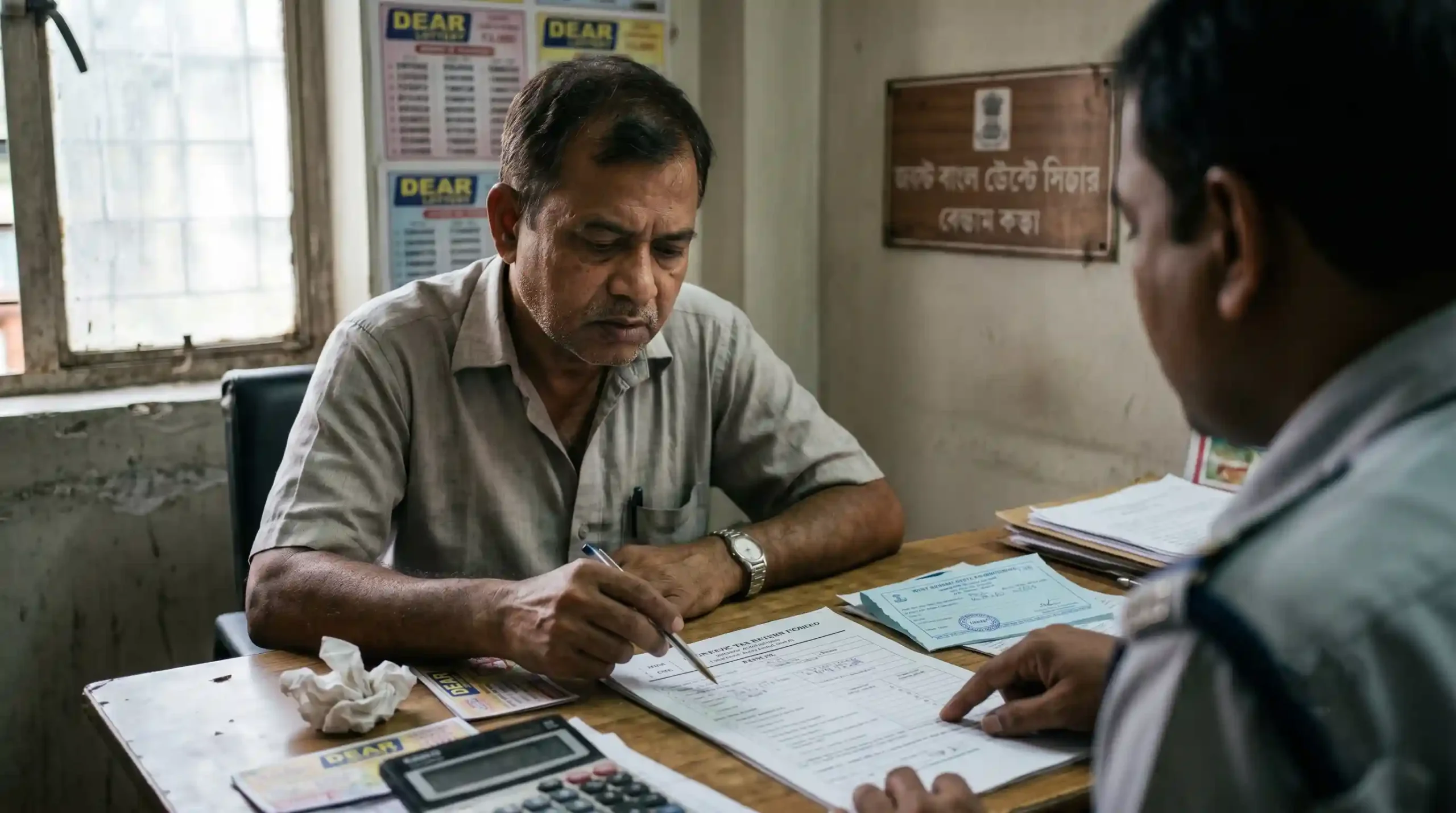
Taxes heavily impact your take-home pay. If you want to know whether an , you must account for Tax Deducted at Source (TDS).
Under current Indian tax law, the government taxes lottery commission as business income. When a distributor passes margins down to a sub-agent, the law requires the distributor to deduct TDS.
The 2% TDS Rule: Effective October 1, 2024, the TDS rate on lottery agent commission dropped from 5% to 2%. Starting April 1, 2025, the threshold for this deduction is Rs. 20,000 annually. By April 1, 2026, this rule shifts from Section 194G to the new Section 393(3) Table Sl.No.4. For a deep dive into how to claim this credit back when you file your returns, read our full guide on the new rules.
Navigating Unsold Tickets and Payouts
Unsold inventory poses the biggest threat to a dear lottery distributor. In most state lottery schemes, distributors cannot return tickets to the state if they fail to sell them before the draw.
If a distributor buys 100,000 tickets but only sells 90,000 to sub-agents, the distributor bears the entire cost of the 10,000 unsold tickets. This loss can instantly wipe out the thin lottery distributor margin earned on the sold tickets. Efficient inventory distribution is the core skill of a profitable lottery business.
How to Verify an Official Nagaland Distributor
Because the Dear Lottery is so popular, the market is full of fake “dealership” offers. Scammers often demand upfront “registration fees” for guaranteed distributorships that simply do not exist.
To protect yourself, never pay an individual for a dealership via WhatsApp or Telegram. The state licenses, documents, and registers all official distributors.
Protect Your Investment: Always verify a distributor’s credentials directly with the Directorate of Nagaland State Lotteries. If you suspect a fake dealership offer, do not send money. Report the fraud immediately to the National Cyber Crime Reporting Portal at cybercrime.gov.in or call the 1930 helpline. For broader context on how state lotteries operate nationwide, review our .
Frequently Asked Questions
Commission & Margin Rules
1. How much commission do Nagaland lottery distributors earn? Distributor earnings depend entirely on sales volume. They earn a small fraction of a rupee per ticket, which is the difference between the state’s bulk discount rate and the wholesale rate they offer to sub-agents.
2. How does the Dear lottery commission structure work? It is a tiered discount model. The state sells to top distributors at a base rate. Distributors sell to agents at a slightly higher rate. Agents sell to the public at face value (like Rs. 6). The price steps dictate the commission.
3. What is the difference between a distributor and an agent? A distributor holds a primary contract with the state to buy tickets in massive bulk. An agent (or sub-agent) buys smaller batches from the distributor to sell directly to the consumer public.
4. What dictates sub-agent margins? The wholesale price set by the distributor dictates sub-agent margins, bounded by the rules of the state’s lottery scheme. It is the gap between their purchase price and the final ticket face value.
5. How do unsold tickets affect distributor income? Unsold tickets cause a direct financial loss. Since distributors usually cannot return paper tickets to the state post-draw, the distributor absorbs the full cost of any inventory they fail to distribute, severely impacting net profit.
Licensing & Tax Rules
6. What TDS applies to distributor commission? The government deducts a 2% TDS on commission income exceeding Rs. 20,000 annually. This falls under Section 393(3) Table Sl.No.4 (formerly Section 194G). 7. Is a distributor licence different from an agent licence? Yes. A primary distributor licence involves heavy security deposits, strict KYC checks, and direct agreements with the Directorate of Nagaland State Lotteries. Local municipal authorities or the distributors themselves often manage agent licences.
8. How do distributors collect their commissions? The state does not “pay” commissions as an after-the-fact bonus. Distributors realize their profit upfront at the point of sale, because they keep the price difference between what they paid the state and what they charge the sub-agents.
9. Can I become a Dear lottery distributor? Becoming a primary Dear lottery distributor requires significant funding, a strong business setup, and an open state tender. Most new entrants start by becoming local sub-agents under an established regional distributor.
10. How do I verify an official Nagaland distributor? You can verify an official distributor by requesting their state-issued license and cross-referencing it with the Directorate of Nagaland State Lotteries. Never trust a distributor who only communicates via unverified social media channels. —
Next Steps: If you plan to enter the lottery business, ensure you understand the legal and tax requirements. Read our step-by-step guide on the correct to keep your business compliant and successfully claim back your 2% TDS.