
Key Takeaways:
- Volume is King: The lottery agent commission per ticket is usually just a few rupees or less. Profit relies on selling high volumes daily.
- Bulk Discount Model: You do not receive a “salary.” Your commission is the gap between the discounted wholesale price you pay and the printed face value you charge customers.
- Unsold Risk: Unsold tickets are your biggest financial threat. The cost of just a few leftover tickets can easily erase the profit from an entire book.
- TDS Applies: The 2% government tax deduction applies to your bulk discounts before you even sell to the public. When planning to open a ticket stall, the most common question people ask is exactly how much they will earn on every sale. State lottery businesses operate on incredibly tight, volume-driven margins.
To understand the broader , you must first break down the math at the smallest level. You need to know exactly what goes into your pocket every time a customer hands you cash.
This guide provides clear, illustrative math so you can calculate your true commission per lottery ticket, figure out your book margins, and spot the hidden costs that eat into your daily profits.
How is Lottery Agent Commission Per Ticket Calculated?
In the Indian paper lottery system, your earnings are built into the purchase price. The state sells tickets to massive distributors at a steep discount. Those distributors sell the tickets to sub-agents (retailers) at a slightly smaller discount.
As a retail agent, you buy the tickets from the distributor at a wholesale rate and sell them to the public at the exact printed face value. Your lottery agent margin is simply the difference between those two numbers.
Example Math: Agent Earning Per Ticket and Per Book
Note: The following numbers are for illustration only. Exact rates change based on the specific state and the draw scheme.
Imagine you are selling a standard daily draw ticket with a printed face value of Rs. 6.
- The Purchase: Your local distributor sells you a batch of tickets at Rs. 5.10 each.
- The Sale: You sell the ticket to a customer for Rs. 6.00.
- The Commission: You keep Re. 0.90 as your gross agent earning per ticket.
While ninety paise sounds tiny, lottery tickets are almost always sold in bundles or “books.”
If a standard book contains 100 tickets, your lottery book commission would be Rs. 90 (0.90 x 100). If you sell 20 books in a day, your gross daily earnings reach Rs. 1,800. The commission percentage lottery agents take home in this example is roughly 15% of the total sales value.
Always Verify Rates: Distributor margins are regulated by state tenders. Always ask your main distributor for the official commission rate sheet for standard, weekly, and Bumper draws before you buy inventory. ## The Impact of Unsold Tickets
This is where the real math gets dangerous for new sellers. In most state schemes, you cannot return unsold paper tickets to the distributor after the draw takes place. You own them.
If you buy a book of 100 tickets for Rs. 510, and you only sell 85 of them:
- You collected Rs. 510 from customers (85 tickets x Rs. 6).
- You paid Rs. 510 to the distributor.
- Your net profit for that book is exactly zero.
The cost of the 15 unsold tickets completely wiped out the margin you earned on the 85 tickets you successfully sold. Managing your inventory is the only way to protect your lottery agent commission per ticket.
Sub-Agent Margins vs. Main Distributors
It is important to know your place in the supply chain. Primary distributors buy millions of tickets directly from the state. Because they take on massive financial risk, they get the lowest possible wholesale price.
Local street vendors and stall owners operate as sub-agents. You take on less upfront risk than the main distributor, but you also accept a smaller slice of the total commission pie. If you want to know if an , you must calculate your profits based on these sub-agent wholesale rates, not the primary state rates.
Are There Bonuses for Selling a Winning Ticket?
Yes. To encourage sellers, most state lottery departments offer a specific “seller bonus” or “agent prize.”
If a customer buys a ticket from your stall and wins the 1st, 2nd, or 3rd tier jackpot, the state government will pay you a fixed bonus percentage of that prize money. This is separate from your daily ticket sales margins and serves as a major windfall for lucky agents.
The TDS Impact on Your Final Cut
Your gross profit is not what you actually take home. The Indian government treats your margins as business income.
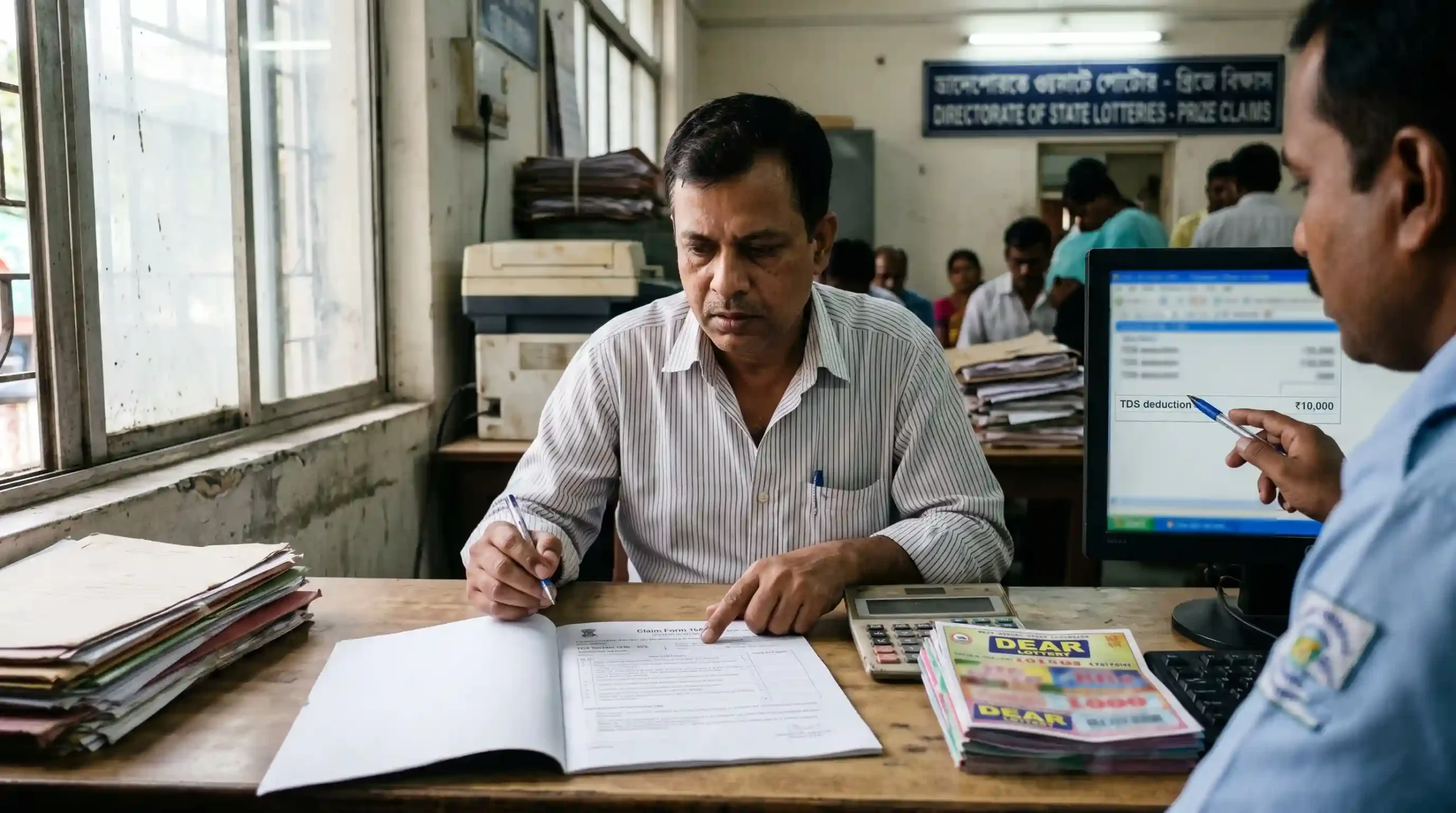
When you buy your bulk tickets from the distributor at a discount, the distributor is legally required to deduct a 2% Tax Deducted at Source (TDS) on that commission value before handing you the tickets. For a complete look at how this impacts your bottom line, read our dedicated guide to the new rules.
To see how all these parts fit together across the entire country, explore our .
Frequently Asked Questions
Calculating Ticket and Book Margins
1. How is lottery agent commission per ticket calculated?
It is the simple difference between the discounted wholesale price the agent pays to the distributor and the printed face value they charge the public.
2. What percentage of the ticket price is commission?
Generally, the commission percentage lottery agents keep is around 10% to 15% of the ticket’s face value, though this varies widely depending on the specific state scheme and distributor contract.
3. Does commission differ by ticket value?
Yes. A standard daily draw ticket offers a small nominal margin, while expensive Bumper draw tickets cost more to buy but provide a much higher absolute commission per ticket sold.
4. How much do agents make per book of tickets?
If an agent makes Re. 1 per ticket and a book contains 100 tickets, the lottery book commission is Rs. 100. Seller margins multiply strictly by the volume of books moved.
5. What margin do sub-agents keep per ticket?
Sub-agents keep the final cut. If a distributor buys a ticket from the state at Rs. 4.50 and sells it to a sub-agent at Rs. 5.10 for a Rs. 6 face-value ticket, the sub-agent keeps Re. 0.90.
TDS, Bonuses, and Monthly Earnings
6. Is commission paid before or after TDS?
Commission is realized upfront when you sell the ticket, but the distributor legally deducts the 2% TDS from your bulk purchase discount before you even start selling to the public. 7. How do bumper tickets affect commission?
Bumper tickets cost significantly more upfront and carry higher profit margins. Selling just one Bumper ticket can yield the same absolute profit as selling dozens of standard daily draw tickets.
8. How do unsold tickets reduce earnings?
Since paper tickets usually cannot be returned, agents absorb the full wholesale cost of any unsold inventory. Just a handful of unsold tickets can wipe out the profit from an entire book.
9. Is there a bonus on selling a winning ticket?
Yes, state lottery schemes usually award a direct seller bonus if an agent sells a top-tier winning ticket. The state pays this bonus separately from your daily sales margins.
10. How do I estimate monthly commission income?
Multiply your average daily ticket sales by your net profit per ticket. From that total, subtract your daily operating costs (rent, helpers) and deduct the cost of your average unsold tickets to find your true monthly estimate.