
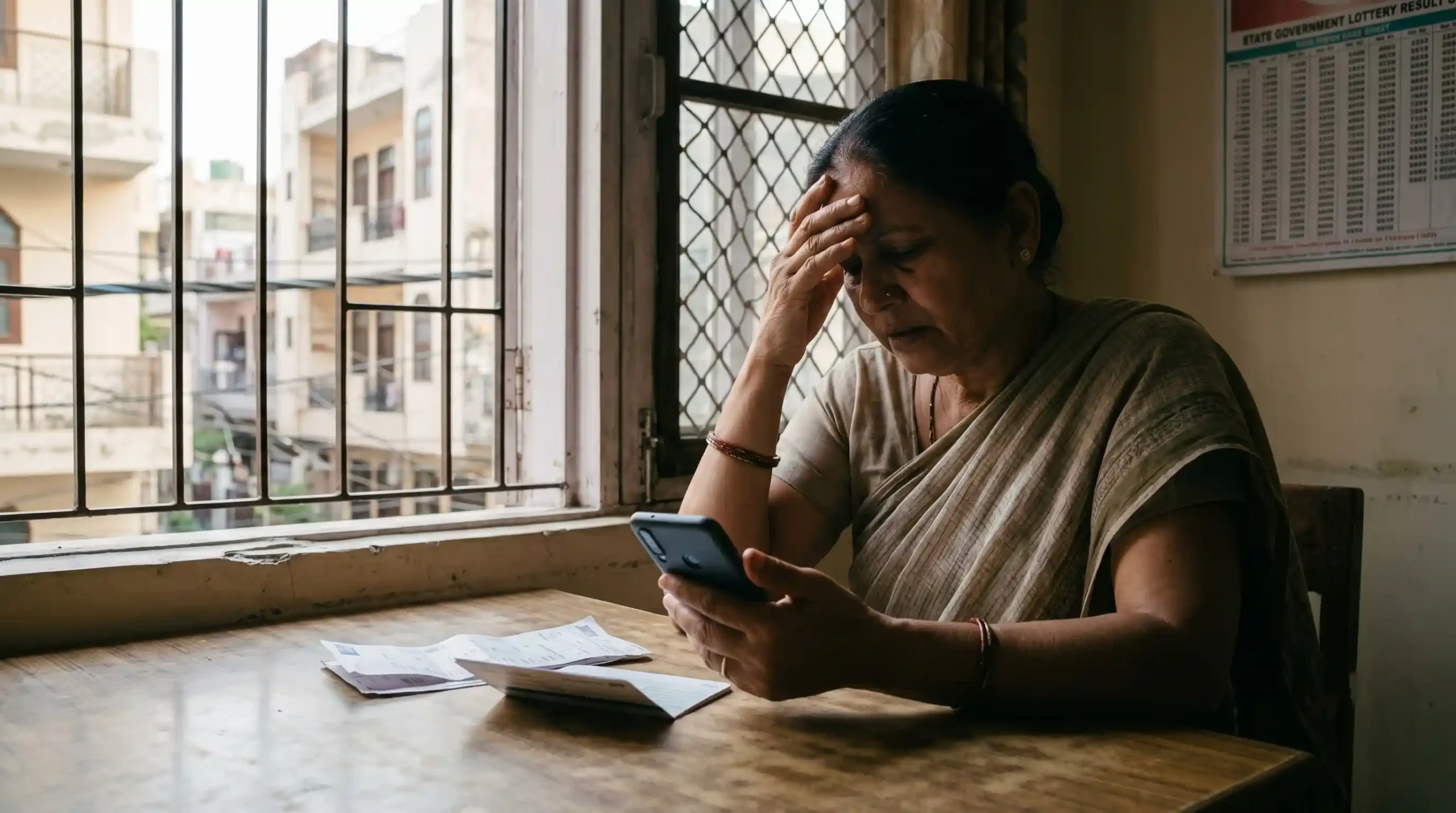
Already been targeted or scammed? Do this now.
- Hang up the phone immediately. First and foremost, do not talk to them anymore.
- Do not pay any “fees” or “taxes.” Specifically, genuine lotteries never ask for upfront payments.
- Never share OTPs, UPI PINs, or banking details. > 4. Dial 1930. If you have already sent money, call the National Cyber Crime Helpline instantly to freeze the transfer.
- Report the number. Finally, block the caller and file a report atcybercrime.gov.in.
If you are on the phone right now with someone claiming you have won a huge jackpot, hang up immediately. To put it simply, a dear lottery winning call scam is a planned trap designed to create panic, build extreme excitement, and ultimately empty your bank account.
In reality, official state lotteries simply do not work this way. Therefore, as a core part of our mission to promote Responsible Lottery Play, we are exposing exactly how this trick works. Furthermore, to understand the larger picture of digital fraud, refer to our complete guide covering the entire lottery scams in India playbook.
Key Takeaways
- Never Pay to Claim: First, a real prize never requires you to transfer a “processing fee” or “GST” upfront.
- No Outbound Calls: Second, the official state office will never call you to announce a win.
- Caller ID is Easily Faked: Also, scammers routinely fake official government numbers to build false trust.
- Act Quickly: Most importantly, if you shared your bank details or paid the caller, dial 1930 immediately to freeze your funds.
How a Dear Lottery Winning Call Scam Operates
Fraudsters are highly trained tricksters. Specifically, they follow a clear script designed to bypass your logical thinking. Here is exactly how a typical nagaland lottery scam call unfolds.
Initially, the caller will sound highly professional. Often, they claim to be a senior boss from the state lottery department or the Reserve Bank of India.
The Dear Lottery Fake Call and Extortion Cycle
Ultimately, the entire goal of a dear lottery fake call is to trick you into sending an advance fee.
Once you believe you have won, the scammer explains a fake rule. For example, they claim a multi-crore payout cannot be released until you pay a “mandatory clearance fee,” a “customs charge,” or “GST.” Consequently, they will aggressively push you to transfer this money via UPI or bank transfer right away.
How Lottery Tax Actually Works: > Real lottery winnings are subject to a flat 30% tax plus a 4% cess (effectively 31.2%) for prizes exceeding Rs. 10,000. Under Section 393(3) of the Income Tax Act (effective April 1, 2026), this tax is deducted at the source (TDS). Therefore, you receive the remaining balance. As a result, you NEVER pay the tax upfront out of your own bank account to claim a prize.
Recognizing a Fake Lottery Prize Call Quickly
Always watch for these clear warning signs that you are experiencing a fake lottery prize call:
- You Didn’t Play: Obviously, they insist your phone number was “randomly selected” in a draw you never entered.
- Forced Secrecy: Next, they demand strict secrecy. Specifically, they tell you not to inform your family so you do not “ruin” the payout.
- False Urgency: Finally, they create an artificial time limit, claiming you must claim the prize within just a few hours.
The SMS Transition: Additionally, the caller will often follow up by sending forged documents via WhatsApp. Therefore, learn to check these by reading our guide to identifying a fake lottery winning SMS.
How to Verify Dear Lottery Result Officially
You must always bypass the caller to find the truth. If you actually bought a physical ticket, you need to verify dear lottery result claims on your own.
- Go to the Official Source: First, type the official state government lottery URL directly into your browser. Crucially, do not click links provided by the caller.
- Check the Official Gazette: Second, winning ticket numbers are published in official state gazettes and verified local newspapers.
- Visit an Authorized Retailer: Alternatively, take your physical ticket to a licensed, established lottery shop to scan or check the official printouts.
Stopping a Nagaland Lottery Scam Call
Your Bank Cannot Verify a Win: Moreover, do not call your bank to ask if a lottery win is real. They do not have access to state lottery databases. Instead, your bank’s role is strictly to protect your account if you suspect fraud. Therefore, always contact the state authorities directly.
Frequently Asked Questions
Understanding Fake Lottery Calls
1. Is a Dear Lottery winning phone call real?
In short, no, a phone call claiming you won the Dear Lottery is always a scam. Because official state lotteries do not employ agents to track down winners, it is entirely your job to check your ticket and start the claim.
2. Why does the caller ask for a processing fee or tax?
Mainly, the caller asks for a fee because stealing that advance payment is the entire point of the trick. Therefore, they use the illusion of a massive jackpot to convince you that paying a small “tax” upfront is worth the risk.
3. Does Dear Lottery ever call winners directly?
Never. Even if you win the first prize, the state lottery directorate will not call your mobile phone. Instead, you must submit your physical winning ticket along with strict KYC documents to the official state office to claim your payout.
4. What numbers do these scam calls come from?
Scam calls can come from anywhere. For instance, they often use standard 10-digit mobile numbers or international VoIP numbers starting with +92 or +44. Additionally, they use WhatsApp audio calls to evade telecom tracking.
Dealing with Fraudulent Demands
5. What happens if I pay the ‘tax’ they demand?
If you pay the demanded tax, you will not receive a prize. Instead, the scammers will immediately invent a new “legal fee.” Consequently, they will continuously steal from you until you refuse to pay.
6. How do I verify a Dear Lottery result officially?
To verify a result officially, check your printed ticket number against the daily result PDFs published strictly on the official .gov.in state lottery website. Alternatively, consult an authorized, physical lottery retail shop in your state.
7. Should I share Aadhaar or bank details on a call?
Absolutely never. Specifically, scammers use your Aadhaar, PAN, and bank account numbers to commit identity theft or drain your accounts. Thus, legitimate authorities never collect sensitive KYC data over a phone call.
Reporting and Next Steps
8. How do I report a fraudulent lottery call?
If you receive a scam call but have not lost money, block the number. Furthermore, report it on the National Cyber Crime Reporting Portal at cybercrime.gov.in. This helps authorities trace the network and block the fraudster’s access.
9. Can scammers spoof a government or lottery number?
Yes. Frequently, fraudsters use Caller ID spoofing software. Because of this, your phone screen displays the name of a legitimate government office or the RBI, even though the call is coming from a scammer’s laptop.
10. What if I already paid the caller?
Above all, act instantly. First, dial 1930, the National Cyber Crime Helpline, immediately to report the financial fraud. Next, call your bank’s emergency line to block your accounts and dispute the transaction.