
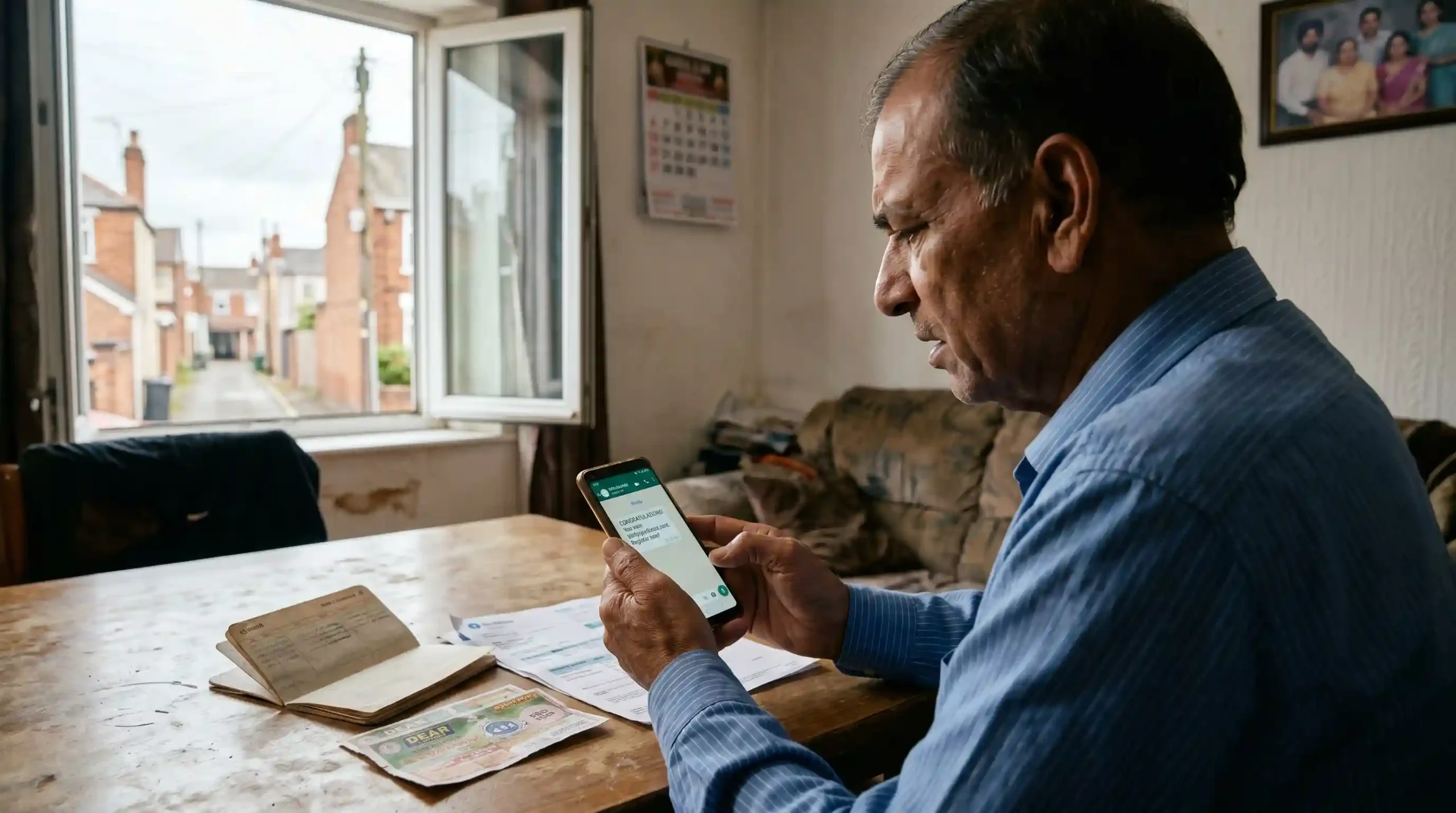
Already responded to a suspicious text message? Do this now:
- Do not send money or share OTPs. If they ask for an advance fee to give you your prize, it is a scam.
- Do not click any links. If you did, do not type any information on the page that opens.
- Report financial loss instantly. If you have already lost money, call the National Cyber Crime Helpline at 1930 immediately, and file a report atcybercrime.gov.in.
- Contact your bank. Tell them to freeze your account to stop any more money from being taken.
It usually starts with a sudden, unexpected text message. Your phone buzzes, and the screen shows a message claiming you have won a massive cash prize in a lucky draw. If you are reading this right now, chances are you are looking at a fake lottery winning sms and wondering if it is real.
Stop, take a breath, and do not tap anything.
Our complete guide to the playbook of lottery scams in India shows that a fake lottery winning sms is usually the very first trap scammers use. They use a massive prize as bait to steal your money or your bank details. Real lotteries simply do not work this way. Here is exactly how to spot a scam text before it costs you your savings.
Key Takeaways
- The most vital rule: Never click links, call the number, or reply to an unexpected text claiming you won a lottery.
- No upfront fees: Real lotteries take taxes out before paying you; they never ask winners to send money first.
- Silence is safety: Replying “STOP” to a spam text only proves to scammers that your phone number is active.
- Act fast if tricked: If you shared your details, call 1930 immediately to stop the fraud.
How to Spot a Fake Lottery Winning SMS
Scammers send out thousands of text messages every day, hoping just a few people will reply. While the exact words change, their tricks are always the same. Look for these five clear red flags in any message claiming you won a prize.
1. You Never Bought a Ticket for That Draw
The golden rule of lotteries is simple: you cannot win a game you did not play. Scammers often use the names of major brands, phone networks, or popular TV shows to make their texts look real. If you get a text about a draw you did not buy a ticket for, it is a fake.
2. The Text Demands an Advance Fee or ‘Tax’
A classic sign of an advance fee lottery scam is the demand for a “processing fee,” “registration charge,” or “GST clearance” before you can get your prize.
Real Lottery Taxes: Under Indian law, real lottery wins have a flat 30% tax plus a 4% Health and Education Cess, bringing the total cut to 31.2%. This Tax Deducted at Source (TDS) is taken out before the prize is paid to you, according to theIncome Tax Department of India. A real lottery will never ask you to pay taxes out of your own pocket using UPI or a bank transfer.
3. It Includes a Suspicious Link
A real state lottery will tell you to check the official government gazette or verified department website. A fake lottery winning sms will almost always include a shortened or strange-looking link. This is known as smishing. Clicking this link may put harmful viruses on your phone or take you to a fake website built to steal your passwords.
4. The Sender Wants You to Switch to WhatsApp
Official government lotteries do not handle real business using private WhatsApp numbers. If the text tells you to contact a “Lottery Manager” on a standard 10-digit mobile number, you are talking to a scammer’s call centre. This trick is very common with the fake KBC lottery WhatsApp message fraud.
Warning: Be highly suspicious of messages sent from normal 10-digit mobile numbers. Real business texts use official 6-character sender IDs (like AD-LOTTRY) required by theTelecom Regulatory Authority of India.
5. It Threatens You With a Deadline
Scammers want you to panic. They will say that your prize will be cancelled or given to someone else if you do not reply within 24 hours. This fake rush is meant to stop you from thinking clearly or checking their claims.
What to Do If You Receive a Scam SMS
If you spot these signs, your best defense is doing nothing at all.
- Do not reply: Not even to insult the scammer or text “STOP”. Replying proves your number belongs to a real person.
- Block the sender: Use your phone’s settings to block the contact.
- Report the message: You can report spam texts through your phone provider or the DND app. For your own safety, practice Responsible Lottery Play by ignoring unexpected offers.
If the scam goes further and you realize you have been tricked into sending money or sharing an OTP, drop everything. Follow the exact steps to report the scam in India to give yourself the best chance of getting your money back.
Frequently Asked Questions
How do I know if a lottery winning SMS is fake?
An SMS is fake if you didn’t enter the draw, if the message has strange links, if it comes from a standard 10-digit mobile number instead of a business ID, or if it demands an upfront fee to claim the money.
Do real lotteries notify winners by SMS?
No. Real, government-backed state lotteries in India print winning numbers in the official state gazette and on their official websites. They do not text winners directly, because physical tickets are not linked to your phone number.
What are common red flags in a scam lottery text?
Red flags include terrible spelling, promises of massive wealth in foreign money, fake deadlines (like “claim within 24 hours”), links to unknown websites, and instructions to keep your win a secret.
Why does the SMS include a link or phone number?
The link is meant to put harmful software on your phone or send you to a fake login page to steal your bank details. The phone number connects you to a professional thief trained to trick you into sending money.
Is it safe to reply STOP or call the number?
No. Replying “STOP,” insulting the scammer, or calling the number proves that your phone number is active. This will instantly cause you to get even more spam and scam texts from other numbers.
What happens if I click the link in the SMS?
Clicking the link may silently download viruses or tracking software onto your phone. It might also send you to a very realistic fake website that asks for your bank details, Aadhaar number, or UPI PIN to “verify” you.
How do scammers get my mobile number?
Scammers buy lists of active phone numbers from data thieves on the internet, steal them from hacked apps, or use software to guess and text thousands of random phone numbers all at once.
Should I report the sender to my telecom or 1930?
If you have not lost any money, report the number as spam to your phone provider (for example, by forwarding the text to 1909). If you have lost money or shared your bank details, call the cybercrime helpline at 1930 immediately.
Can I block and trace a scam SMS sender?
You should always block the sender using your smartphone’s settings. Tracing the sender is extremely hard for everyday people, as scammers use fake numbers and untraceable internet connections. Leave the tracing to the police.
What if I already shared an OTP or details?
Act right away. Call your bank’s emergency number to freeze your accounts and block your cards or UPI access. Then, call 1930 to report the fraud and file a formal police complaint at cybercrime.gov.in.