Lottery in India is a tradition that touches millions of lives every single day. From the paddy fields of Kerala, where the country’s first legal state lottery was born, to the bustling markets of Nagaland where Lottery Sambad has become a household name, the culture of playing lottery has become woven into the daily fabric of Indian life. Millions of people buy tickets every day, hoping that a small investment of six rupees might change their lives forever.
But how much do we really know about the lottery in India? Is it legal everywhere? Which states conduct official state lotteries? What does the law say about online lottery? How are winnings taxed under Indian income tax rules? And what should every player know before spending their hard-earned money on a ticket?
This complete guide answers all these questions in one place. Whether you are a curious reader, a regular lottery participant, or someone researching the system for the first time, this article will give you a clear, honest, and well-researched picture of how lottery in India operates, what laws govern it, and how you can make informed decisions about play.
A Brief History of Lottery in India
The concept of lottery in India is not new. References to games of chance can be found in ancient Indian literature, including the Mahabharata, where the game of dice plays a central role in the story. However, the modern state lottery system began in the second half of the 20th century.
Kerala became the first Indian state to introduce a government-run state lottery in 1967. The visionary behind this move was P. K. Kunju Sahib, the then Finance Minister of Kerala, who proposed the state lottery as an ethical alternative to private gambling and illegal betting that was rampant at the time. The Kerala State Lotteries Department became an enormous success and is today considered the gold standard of state lotteries in India.
Inspired by Kerala’s success, the Government of Nagaland established the Directorate of Nagaland State Lotteries in 1972, which today operates the popular Lottery Sambad draws. Over the next three decades, several other states followed suit, including West Bengal, Sikkim, Mizoram, Maharashtra, Madhya Pradesh, Goa, Punjab, Arunachal Pradesh, Assam, Meghalaya, and Manipur.
For detailed daily information about the Nagaland, West Bengal, and Sikkim state lotteries that together form the Lottery Sambad brand, see our Complete Guide to Lottery Sambad.
Is Lottery Legal in India?
This is the most common question people ask about the lottery in India, and the answer is both yes and no. The system operates under a unique legal framework where the central government sets the overall rules, but each state has the power to decide whether or not to allow lotteries within its own borders.
The primary law governing the lottery in India is the Lotteries (Regulation) Act, 1998, hosted on the official India Code portal maintained by the Ministry of Law and Justice. Under this Act, state governments are permitted to organise, conduct, and regulate lotteries within their territory, subject to certain conditions. The Act also gives state governments the right to ban the sale of lottery tickets from other states within their borders.
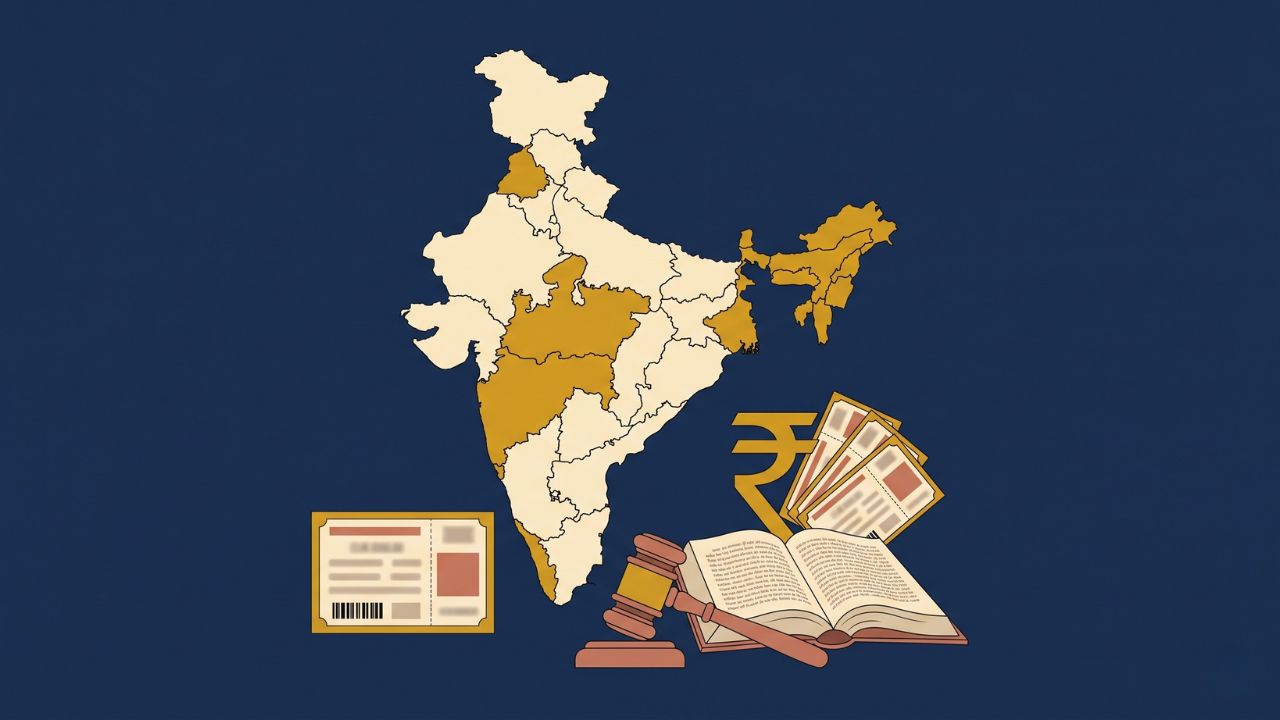
As of 2026, thirteen Indian states have legalised and actively conduct state lotteries. These are Kerala, Nagaland, West Bengal, Sikkim, Mizoram, Maharashtra, Madhya Pradesh, Goa, Punjab, Arunachal Pradesh, Assam, Meghalaya, and Manipur. The remaining states have either banned lotteries outright or do not operate any government lottery scheme.
The Lotteries (Regulation) Act, 1998: What It Covers
The Lotteries (Regulation) Act, 1998 is the backbone of lottery regulation in India. Passed by Parliament in July 1998, it replaced a patchwork of older state laws with a single national framework. The Act lays down specific conditions under which a state government can organise a lottery.
Key provisions include that the state government itself must conduct the draws, the proceeds from ticket sales must be credited to the public account of the state, the place of the draw must be located within the state concerned, and lottery schemes must be authorised by the state government in accordance with the prescribed rules.
In 2010, the Ministry of Home Affairs introduced the Lotteries (Regulation) Rules, 2010, which added further operational detail, including rules on ticket printing, prize distribution timelines, the appointment of distributors, and the maximum number of draws permitted. Under these rules, daily state lotteries like the Nagaland State Lottery (Lottery Sambad) are permitted with a specific schedule approved by the state government.
Online Lottery vs Offline Lottery in India
A major point of confusion for many Indians is whether online lottery is legal in the country. The short answer is that it is complicated, and the legality depends on which state you are in.
Offline paper lotteries, where you buy a physical ticket from an authorised retailer, are legal in the thirteen states mentioned earlier. These are fully regulated by the respective state governments and fall squarely within the Lotteries (Regulation) Act.
Online lottery, however, is a grey area. Sikkim has authorised online lottery sales through licensed operators. Some other states have also experimented with online formats. At the same time, many states have explicitly banned online lottery within their borders. Many websites that claim to sell “online lottery tickets” for Indian state lotteries are operating without proper authorisation and should be avoided.
If you are unsure about the legality in your state, check with your state’s finance department or legal services authority before buying any online lottery tickets.
Major State Lotteries in India
While thirteen states conduct lotteries, a few stand out because of their popularity, prize amounts, and scale of operations.
The Kerala State Lottery is the oldest and most respected state lottery system in the country. It conducts weekly draws with names like Karunya, Win-Win, Sthree Sakthi, Akshaya, Karunya Plus, Nirmal, and Pournami. Kerala also runs special bumper draws several times a year with top prizes reaching twenty-five crore rupees or more. Revenue from the Kerala State Lottery is famously used to fund the Karunya health insurance scheme for poor families. You can check official results and schedules at the Kerala State Lotteries Department.
The Nagaland State Lottery, popularly marketed as Lottery Sambad, conducts three daily draws at 1 PM, 6 PM, and 8 PM. These draws have creative names that change each day of the week, including Dear Love, Dear Hawk, Dear Flamingo, Dear Falcon, and many others. The first prize for Lottery Sambad is one crore rupees. Official information is available at the Directorate of Nagaland State Lotteries.
The West Bengal State Lottery and Sikkim State Lottery are also marketed under the Lottery Sambad brand and share similar draw schedules. These three together form the core of what most Indians refer to when they say “Lottery Sambad”.
For a dedicated resource covering all three of these state lotteries including draw schedules, prize structures, and how to verify results, see our Complete Guide to Lottery Sambad.
How State Lottery Draws Are Conducted
One of the most frequently asked questions about the lottery in India is how we can be sure that draws are fair. State lotteries in India follow a strict, transparent process to ensure integrity.
Tickets are printed by authorised security printers with unique serial numbers. The state lottery department keeps detailed records of every ticket printed, sold, and unsold. Draws are conducted at a designated location within the state, usually the headquarters of the state lottery department.
During the draw, lottery machines randomly select winning numbers in the presence of government officials, independent judges (often retired gazetted officers), and sometimes media representatives. The entire process is recorded and, in many cases, streamed live on YouTube. Results are then published in official newspapers, on government websites, and on the state lottery’s official portal, including www.lotterysambad.com for the three Lottery Sambad states.
This transparency is one reason why state lotteries in India are considered far more trustworthy than illegal betting or private gambling operations.
Prize Structure and How to Claim Your Winnings
The prize structure varies between state lotteries, but most follow a similar tiered system. Using Lottery Sambad as an example, the prize breakdown typically looks like this: the first prize is one crore rupees, the second prize is nine thousand rupees, the third prize is four hundred fifty rupees, the fourth prize is two hundred fifty rupees, and the fifth prize is one hundred twenty rupees. Consolation prizes of one thousand rupees are also awarded to several additional ticket numbers.
Claiming a prize requires the original undamaged winning ticket, a completed claim form, a government-issued photo identity document, and passport-sized photographs. Smaller prizes (up to ten thousand rupees) can usually be collected from authorised distributors, while larger prizes must be claimed directly from the state lottery directorate within thirty days of the draw.
For specific claim procedures, always refer to the official state lottery department’s website, such as the Directorate of Nagaland State Lotteries or the Kerala State Lotteries Department.
Tax on Lottery Winnings in India
Many first-time winners are surprised to learn how much of their prize money actually reaches their bank account. Under Section 194B of the Income Tax Act, lottery winnings in India are subject to a flat tax deducted at source at the rate of thirty percent. Additional surcharge and education cess are also applicable, which can push the effective tax rate to approximately 31.2 percent.
This means a first prize of one crore rupees results in a take-home amount of approximately 68.8 lakh rupees after tax deductions. There is no threshold exemption in the same sense as regular income, which means all qualifying lottery winnings above ten thousand rupees are taxed at this flat rate regardless of the winner’s other income.
For official tax guidelines and updates, visit the Income Tax Department of India website. Always consult a qualified chartered accountant before making any financial decisions based on lottery winnings.
The Social Impact of State Lotteries
State lotteries in India are not just games of chance, they are a significant source of revenue for state governments. The proceeds from ticket sales contribute to public welfare schemes, infrastructure development, healthcare, and education.
Kerala, for instance, funds its famous Karunya health insurance programme largely through lottery revenue. Nagaland uses a portion of its lottery income for state development projects. In this sense, buying a lottery ticket has a dual character, a personal hope for prize money and a contribution to the state exchequer.
However, the social impact of the lottery in India is not entirely positive. Lottery addiction is a growing concern, and the accessibility of daily draws can encourage compulsive play. The Centre for Addiction Medicine at NIMHANS, Bengaluru has documented that behavioural addictions, including gambling disorder, are recognised medical conditions requiring evidence-based treatment.
Recognising this, responsible organisations, researchers, and even the state lottery departments themselves now emphasise the importance of playing responsibly and treating lottery as entertainment rather than an investment. Our dedicated pillar on Responsible Lottery Play and Awareness covers this topic in depth, including warning signs of addiction, helpline numbers, and guidance for family members of compulsive players.
Common Lottery Scams in India to Watch Out For
Where there is money, there are scammers. Lottery-related fraud is unfortunately very common in India, and every year thousands of people lose money to these schemes. The National Cyber Crime Reporting Portal regularly receives complaints about lottery-related fraud, and the Reserve Bank of India has issued multiple advisories warning citizens about these scams.
The most common scam is the fake winner call or WhatsApp message, where the victim is told they have won a large prize in a KBC lottery, a Kaun Banega Crorepati draw, or a Nagaland State Lottery jackpot. The scammer then demands a processing fee, GST payment, or bank account details to release the so-called winnings. These are always fraudulent. No legitimate lottery ever requires the winner to pay anything upfront.
Other common scams include fake ticket sales online, phishing websites that impersonate official lottery portals, and social media accounts claiming to sell “lucky numbers” or guaranteed wins.
If you have been a victim of a lottery scam, report it immediately to the National Cyber Crime Reporting Portal or call the national cyber crime helpline at 1930. Our dedicated Responsible Lottery Play and Awareness pillar also covers common scams in detail.
Playing Lottery Responsibly: The Golden Rules
If you choose to play the lottery in India, it is important to do so responsibly. Here are the key principles every player should follow.
Treat lottery as entertainment, not investment. The odds of winning the first prize are extremely low, and no strategy or lucky number improves them. Set a strict monthly budget for lottery spending and never exceed it. Never borrow money to buy tickets, and never chase losses by buying more tickets after a losing streak. If lottery play is affecting your finances, relationships, or mental wellbeing, seek help immediately.
India has several helplines for gambling and lottery-related support, including the iCALL helpline at 9152987821 (Monday to Saturday, 10 AM to 8 PM) and the Vandrevala Foundation Helpline at 1860-266-2345 (24/7). Both are free, confidential, and staffed by trained counsellors.
For a comprehensive discussion of responsible play, warning signs of addiction, and where to find help, read our detailed pillar on Responsible Lottery Play and Awareness.
Lottery in India vs Lotteries Around the World
While the Indian lottery system has its own unique character, it is part of a much larger global tradition. Countries like the United States conduct massive multi-state lotteries like Powerball and Mega Millions with jackpots that occasionally cross one billion US dollars. Europe has EuroMillions and Spain’s famous El Gordo, which distributes the largest total prize pool of any lottery in the world. Countries from Japan to Australia have their own well-established state and national lottery systems.
Understanding how lottery in India compares with global systems gives useful context. The Indian system is unique in its state-level organisation, its daily draw format in states like Nagaland, and its integration with public welfare funding.
Frequently Asked Questions About Lottery in India
Is it legal to play Nagaland State Lottery if I live in a state where lottery is banned?
This is a legally grey area. The Supreme Court of India has held that states have the right to ban the sale of lottery tickets from other states within their borders. If lottery is banned in your state, buying or selling tickets from another state’s lottery there is typically not permitted. Consult the official India Code for the text of the Lotteries (Regulation) Act, 1998.
Can I buy lottery tickets online in India?
Only in states that have authorised online lottery sales. Websites claiming to sell online tickets for Nagaland or West Bengal lotteries should be approached with extreme caution, as many operate without proper authorisation.
What happens to unclaimed lottery prizes in India?
If a winner does not claim their prize within the stipulated period, typically thirty days from the draw date, the prize money is forfeited and becomes the property of the state government.
Are lottery results on websites like this one official?
No. Websites like LotterySambadResult.news publish lottery results for informational and reference purposes only. For official verification, always check the respective state lottery department website, such as www.lotterysambad.com or the Directorate of Nagaland State Lotteries.
How do I verify if a lottery is genuine?
A genuine state lottery is always organised by a state government, conducts draws at a designated location within the state, publishes results in official newspapers and government websites, and has a state-appointed Directorate overseeing operations. Any lottery that claims to be run by a private company, requires advance payment to claim a prize, or contacts winners via random WhatsApp messages is fraudulent. Report such scams to the National Cyber Crime Reporting Portal.
What is the tax rate on lottery winnings in India?
Lottery winnings in India are taxed at 30 percent under Section 194B of the Income Tax Act, plus applicable surcharge and cess, bringing the effective rate to approximately 31.2 percent. This tax is deducted at source by the state lottery department before the prize is paid to the winner. For the latest tax guidelines, refer to the Income Tax Department of India.
How many state lotteries are there in India in 2026?
Thirteen Indian states currently conduct legal state lotteries. These include Kerala, Nagaland, West Bengal, Sikkim, Mizoram, Maharashtra, Madhya Pradesh, Goa, Punjab, Arunachal Pradesh, Assam, Meghalaya, and Manipur.
Where can I get help if lottery play is becoming a problem?
Free and confidential help is available. Call iCALL at 9152987821 (Monday to Saturday, 10 AM to 8 PM), Vandrevala Foundation at 1860-266-2345 (24/7), or AASRA at 9820466726 (24/7). For complete guidance on responsible play and warning signs of addiction, read our Responsible Lottery Play and Awareness pillar.
Final Thoughts
The lottery in India is a complex, regulated, and culturally significant part of life. For some, it represents hope and a chance at a better future. For others, it is a source of state revenue that funds public welfare. And for a small but concerning number of people, it can become a harmful habit that requires professional support.
Whatever your relationship with the lottery, understanding how it works, what the law says, and how to play responsibly will serve you well. This guide is intended to be a starting point. For daily Lottery Sambad results across Nagaland, West Bengal, and Sikkim, visit our homepage. For deeper guidance on playing safely, read our Responsible Lottery Play and Awareness pillar. For a detailed overview of the Lottery Sambad brand and its three state lotteries, visit our Complete Guide to Lottery Sambad.
Remember, this website is purely informational. Lottery results and information shared on LotterySambadResult.news are for reference purposes only. For any legal, financial, or official matter related to lottery winnings, always consult the official state lottery department or a qualified professional.
Play responsibly, stay informed, and good luck.
This pillar article is part of our educational series on lottery in India. For daily results, visit our homepage. For questions or feedback, please reach out through our Contact Us page.
Disclaimer: The information in this article is for educational and informational purposes only. It should not be construed as legal, financial, or tax advice. Lottery laws and tax rates in India are subject to change, and readers are advised to verify current regulations with official government sources.