
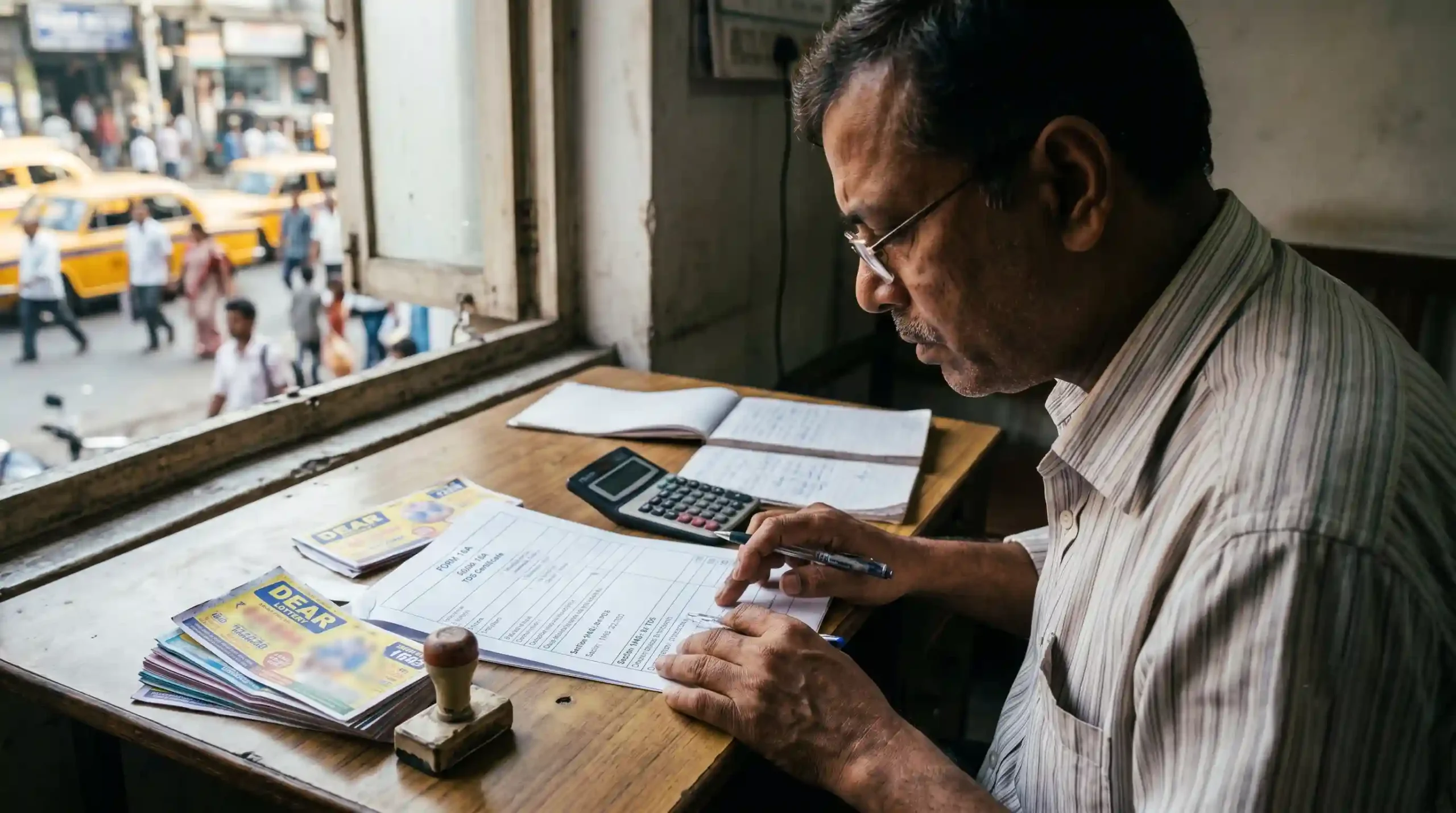
Key Takeaways:
- Volume is Required: To make a real profit, you must sell hundreds of tickets every day. The margin on a single ticket is very small.
- TDS Impact: The government takes a 2% advance tax cut directly from your bulk discount before you even make a sale. * Unsold Risk: Unsold tickets are a total loss. Leftover tickets can wipe out your entire daily profit.
- Scam Warning: Fake distributors promise huge profits online. Never pay an upfront fee to strangers on social media.
If you see crowds at a local ticket stand, you might wonder: is lottery agency profitable in india? The truth is, while it looks like fast cash, the paper ticket business runs on very tight margins. Before you invest your money into renting a stall, you need to understand how the system actually works.
To grasp the full picture of the , you must look at the real daily costs. This guide breaks down exactly what you earn, what you spend, and the hidden risks that eat into your daily cash flow.
The Reality of Lottery Seller Earnings
Lottery sellers do not get a fixed salary. You make money strictly through bulk discounts.
The state government sells tickets to large distributors at a wholesale price. Those distributors pass the tickets down to local street agents at a slightly higher wholesale price. You then sell the ticket to the customer at the printed face value.
Your true is simply the gap between what you paid the distributor and what the customer paid you. Usually, this is just a few paise or a single rupee per ticket. Because the margin is so thin, you only build a strong lottery agent income india if you sell a massive volume of tickets every single day.
What Costs Eat Into a Lottery Business Profit?
When asking is lottery agency profitable in india, you must subtract your daily costs from your gross sales. Three main expenses will reduce your take-home pay.
1. Daily Operating Costs
Running a physical stall costs money. You must pay rent for your shop space. You also have to pay electricity bills and possibly a daily wage to a helper. These fixed costs eat into your lottery agency margins before you even count your own profit.
2. The Danger of Unsold Tickets
This is the biggest financial risk in the business. In most states, you cannot return unsold paper tickets to the distributor after the draw happens.
If you buy a book of 100 tickets but only sell 85 of them, you must absorb the cost of the 15 leftover tickets yourself. The money you lose on those 15 tickets will easily erase the small profit you made on the 85 tickets you sold.
3. The 2% TDS Deduction
The Indian government treats your commission as business income. When you buy your tickets at a discount, the distributor must legally hold back 2% of your commission value as Tax Deducted at Source (TDS).
TDS Rules Change: Starting October 1, 2024, the TDS rate dropped to 2%. For the financial year starting April 1, 2025, the government only applies this deduction if your commission crosses Rs. 20,000 in a year. By April 2026, the tax department tracks this under Section 393(3) Table Sl.No.4. ## Avoiding Fake Dealership Offers
Because many people want to earn a lottery dealership profit, scammers set traps online. They run fake social media ads promising guaranteed high returns and huge seller margins.
Protect Your Money: Real state lottery departments and trusted main distributors never recruit new agents by asking for a quick Rs. 2,000 “registration fee” on WhatsApp. If you see this happen, do not send cash. Report the fake offer right away to the National Cyber Crime Reporting Portal at cybercrime.gov.in or call the 1930 helpline. To protect yourself further and set up your business the legal way, read our complete guide on .
Frequently Asked Questions
Earnings and Margins
1. Is a lottery agency profitable in India?
Yes, but only if you manage your business tightly. Profit relies completely on selling high volumes of tickets every day while keeping your shop costs low and avoiding unsold inventory.
2. How much do lottery agents actually earn?
Most agents earn a tiny profit on each ticket, often just a fraction of a rupee. To make a living wage, an agent must sell hundreds or thousands of tickets daily.
3. Is online lottery selling more profitable?
It is illegal. State lotteries in India run strictly on paper. The law bans selling state lottery tickets online, through mobile apps, or via WhatsApp groups. Do not try to boost profits this way. 4. How many tickets must I sell to profit?
You must first sell enough tickets to cover your shop rent, your electricity, and any helper wages. Any tickets you sell after covering those fixed daily costs create your actual net profit.
5. Is it better to be an agent or a distributor?
A main distributor makes more money overall but takes on massive financial risk and needs huge funding to buy millions of tickets. An agent takes less risk but accepts much smaller profit margins.
Risks and Operations
6. What costs eat into an agent’s commission?
The main costs are shop rent, worker pay, travel costs to pick up ticket books, and the direct financial loss from any tickets that go unsold before the daily draw.
7. How does 2% TDS affect net earnings?
The distributor takes the 2% TDS directly out of your upfront discount. This means you have slightly less working cash on hand daily. However, you can claim this money back when you file your yearly income tax return. 8. What are the main risks to profitability?
The two biggest risks are buying too much inventory that you cannot sell and falling for fake distributors who steal your upfront security deposit.
9. Do unsold tickets cause losses?
Yes. Leftover paper tickets are a total loss. Since you usually cannot return them to the state, the cost of the unsold tickets comes straight out of your pocket, ruining your daily profit.
10. Is lottery agency a good full-time business?
It can be a steady full-time business if you secure a busy shop location with high daily foot traffic. However, it requires long hours and very strict inventory tracking to succeed.
Next Steps:
Before you commit to this business, it is vital to zoom out and understand how the entire national framework operates. Check out our to see the exact state rules and draw schedules.