
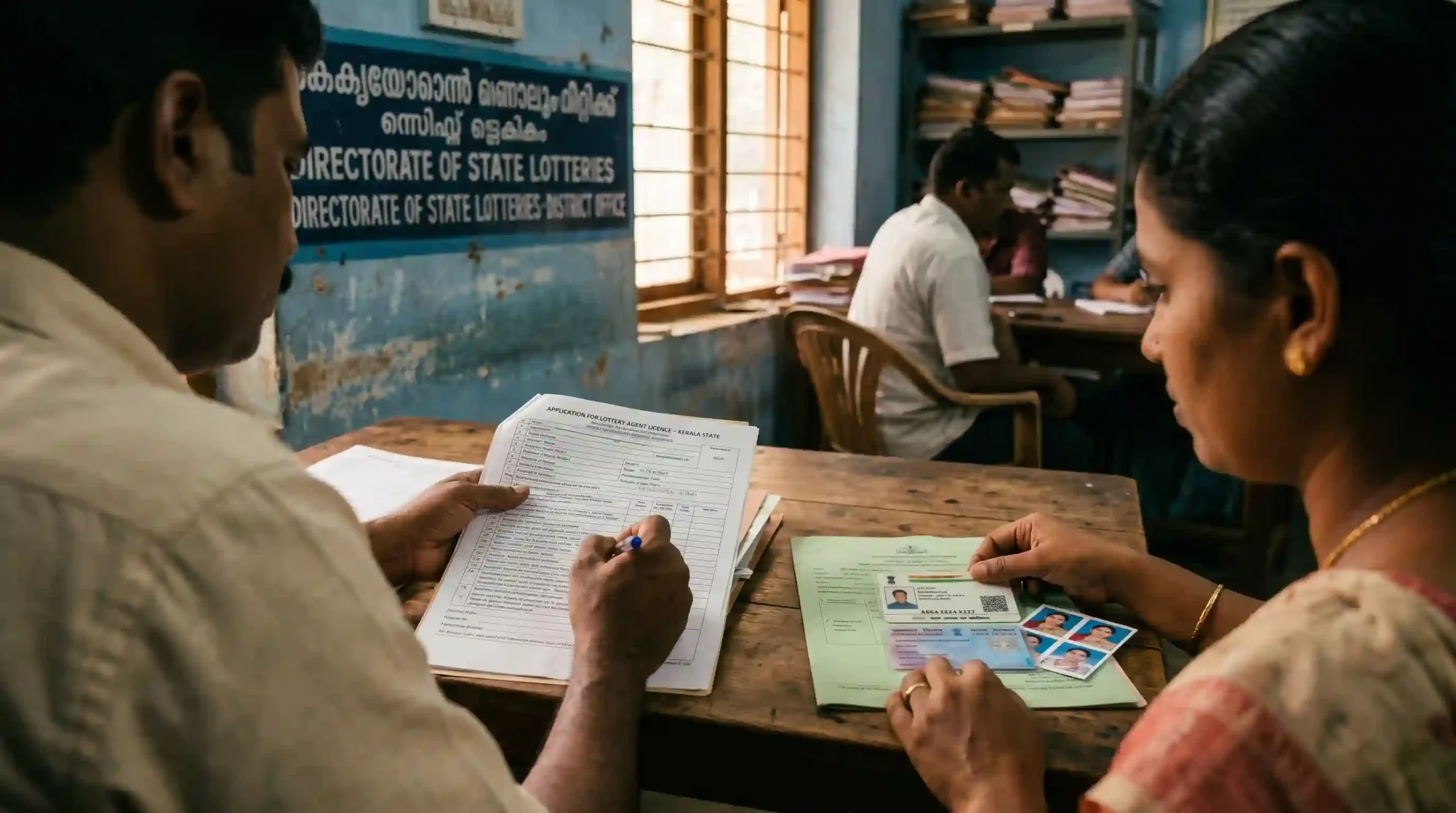
Starting a lottery business requires more than just renting a shop counter and buying tickets. Because state governments strictly regulate lotteries, operating without official permission can lead to heavy fines or criminal charges. Therefore, to protect yourself and build a legitimate business, understanding the exact lottery dealer licence process in india is your vital first step.
Before you calculate daily margins or worry about your overall lottery agent commission in india, you need legal authority to sell. Consequently, this guide breaks down how to apply, what official documents you need, and how to spot dangerous recruitment frauds targeting new sellers today.
Key Takeaways
- State-Controlled: There is no single national licence. You must apply directly through the specific state lottery department where you plan to work.
- Mandatory KYC: You will need standard business documents. Specifically, this includes your Aadhaar card, PAN card, and official address proof.
- Security Deposits: Expect to pay a refundable security deposit to the government. However, the exact amount varies heavily by state.
- Tax Ready: The state taxes your commission as business income. Therefore, having a valid PAN is strictly required before you start.
- Scam Warning: Always avoid online advertisements offering instant dealerships via UPI. These are almost always illegal scams.
Navigating the Lottery Dealer Licence Process in India
India does not issue a single permit that lets you sell tickets nationwide. Instead, each individual state government regulates its own lottery scheme. For this reason, a state lottery permit only gives you permission to sell that specific state’s tickets, strictly within that state’s borders.
Before beginning the paperwork, you should determine if the local market can support your business. Specifically, research if a lottery agency is profitable in India for your specific location and foot traffic. If the local math makes sense, you can confidently move forward with securing your legal permit.
Beware of Fake Dealerships: Recruitment fraud is a massive problem in the lottery industry. Scammers frequently build fake websites or send WhatsApp messages. Typically, they offer a guaranteed “distributorship” if you quickly transfer money via UPI. Real state lottery departments never demand instant UPI transfers over messaging apps. Always apply directly through the official .gov.in state portal. —
Step-by-Step: The Lottery Dealer Licence Process in India
While the specific lottery dealer licence process in india differs by region, the core steps remain highly consistent across legitimate state departments. Follow this standard path to secure your official permit safely.
Step 1: Verify State Eligibility
First, confirm that your target state actually runs a legal lottery scheme. You must check the official state lottery department’s guidelines regarding age, residency, and financial standing. Importantly, many states require you to be a permanent resident of the state where you apply.
Step 2: Gather Required KYC Documents
The government requires complete transparency regarding who sells their tickets. Therefore, you must prepare a comprehensive documentation packet. Generally, you need your Aadhaar card, a valid PAN card, passport-sized photographs, and formal proof of your shop’s address (like a rental agreement). Additionally, if you operate as a partnership, you will need your firm’s registration certificates.
Step 3: Pay the Deposit and Submit Forms
Next, obtain the official application form from the Directorate of State Lotteries. You must fill this out accurately and attach your KYC documents. At this stage, you must also pay a refundable security deposit via a formal bank draft or official state treasury challan. Remember, licence fees and deposits vary drastically by state.
Step 4: Verification and Approval
Finally, submit the complete packet to the district lottery office. The department will review your documents carefully. Furthermore, they may conduct a physical inspection of your proposed retail location. If everything clears the background check, the state will issue your official dealer licence.
GST and Tax Compliance After Licensing
Getting your licence is only the beginning of your compliance journey. Afterward, you must also prepare for the tax duties that come with your new business.
Many beginners confuse ticket taxes with seller taxes. While the lottery tickets themselves carry a 28% GST, your service of selling them works entirely differently. You must understand the specific rules for GST on lottery agent commission to know if you need to register for a GSTIN.
Furthermore, your commission earnings are taxed as business income at 2% under Section 393(3) Sl.No.4. Crucially, this is completely distinct from the flat 30% tax applied to winners. For a deeper dive, review our Complete Guide to Lottery Taxes.
Frequently Asked Questions (FAQ)
1. How do I get a lottery dealer licence in India?
To begin, apply directly to your state’s Directorate of State Lotteries. You must submit a formal application, provide personal and business KYC documents, and pay the required government security deposit to receive your official seller’s permit.
2. Which department issues a lottery agent licence?
The specific State Lottery Department issues these licences, not the central government. For example, the Directorate of Kerala State Lotteries or the Directorate of Nagaland State Lotteries handles applications for their respective jurisdictions.
3. What documents are needed for a lottery licence?
Generally, you need standard KYC documents. This includes your Aadhaar card, PAN card, passport-sized photographs, and proof of your shop’s business address. Additionally, you may need a bank mandate form or a police clearance certificate depending on the state.
4. Is there a security deposit or fee?
Yes. Every state requires a one-time, refundable security deposit to protect against defaults. In addition, there is usually a non-refundable application or registration fee. The exact amount varies wildly from state to state.
5. How long does the licence process take?
Typically, the timeline varies by state and application volume. After submitting your application and paying the deposit, document verification and local field inspections usually take anywhere from two to six weeks before the state issues the licence.
6. Can I sell lottery in any state with one licence?
No. A licence only permits you to sell the specific lottery within the issuing state’s borders. Selling tickets across state lines or selling another state’s lottery without their specific permission is strictly illegal.
7. Do I need GST registration as a lottery dealer?
It depends entirely on your annual turnover and specific agency rules. While the tickets themselves carry a 28% GST, your commission income may attract separate GST liabilities. This makes registration mandatory once you cross the turnover threshold.
8. Can an individual or only a firm get a licence?
Both individuals and registered firms (such as partnerships or private limited companies) can apply for a lottery dealership. However, the documentation requirements will differ. Firms must provide partnership deeds or certificates of incorporation.
9. How is a licence renewed or cancelled?
Licences are typically valid for one financial year and require annual renewal with a small fee. Warning: The department can suspend or cancel your licence if you fail to pay dues, sell illegal tickets, or violate state lottery rules.
10. Are there scams pretending to offer dealerships?
Yes, recruitment fraud is highly common. Scammers build fake websites or send WhatsApp messages offering guaranteed distributorships for a quick UPI payment. Real state lottery departments never demand immediate UPI transfers via social media apps.
Next Steps
Before handing over any money, always verify the application process on your state government’s official .gov.in website. If you encounter a website aggressively demanding a UPI payment for a dealership, stop communicating and report the portal immediately. Once you understand your local rules, you can read our main pillar guide on how agent commissions work.