Is Lottery Legal in Maharashtra? The Real Answer

Check Before You Buy

Before purchasing any lottery ticket in Maharashtra, ensure you follow these primary rules:

  • Confirm legality: The state strictly permits only government-run paper lotteries. Private lotteries are entirely illegal.
  • Authorised sellers only: Buy physical tickets exclusively from registered government agents and stockists.
  • Verify the source: Always cross-check draw results and rules directly with the official Directorate of Maharashtra State Lotteries.
  • Many residents wonder about the exact maharashtra lottery status when they see daily draws advertised. Does the state permit these games, or do buyers risk breaking the law? If you live in or visit the state, you need the facts before handing over your money. The answer features important nuances: the government strictly bans digital games but fully authorises traditional paper draws.

If you want to understand the wider national landscape, check out our master map of the to see how Maharashtra compares to its neighbours. On this page, we explore the specific rules governing the state’s draws, how you can safely play, and why digital tickets put your money at risk.

Key Takeaways

  • State-run paper lotteries only: The government legally permits lottery operations, provided the state Finance Department officially organises them.
  • Active regular draws: The state actively runs frequent traditional draws, completely contradicting rumours of a total ban.
  • Online lotteries remain illegal: The state explicitly bans all digital or online lotteries to protect consumers and state revenues.
  • Private games violate the law: The law explicitly prohibits any private company or individual from running a lottery or lucky draw.
  • Official verification matters: Players must verify all results directly through the official Directorate of Maharashtra State Lotteries website.

The Legal Status of Lottery in Maharashtra

To determine whether is lottery legal in maharashtra, you must look at the specific government frameworks. The central Lotteries (Regulation) Act 1998 serves as the primary legislation across India. This central law grants individual states the authority to decide whether to host or ban lotteries within their borders.

Maharashtra actively exercises this right. The state Finance Department formally operates the Directorate of Maharashtra State Lotteries to manage and promote official paper draws. Because the state government directly oversees the prize pools and maintains transparent draw procedures, citizens can legally purchase these specific tickets.

The Strict Ban on Private Operations

While the government runs a legal system, it enforces zero tolerance for private gambling. The lottery in maharashtra law makes all private lotteries, unregulated raffles, and independent lucky draws strictly illegal. Playing a private game leaves you entirely unprotected. If the organisers disappear with the prize money, you possess no legal standing to recover your funds.

If you are curious about laws in surrounding regions, you can read our specific guide to check the or see whether it .

Understanding the Maharashtra State Lottery

Many people assume the state rarely runs draws, but the reality tells a different story. The maharashtra state lottery system remains highly active and offers various prize tiers for residents.

Official Weekly and Monthly Draws

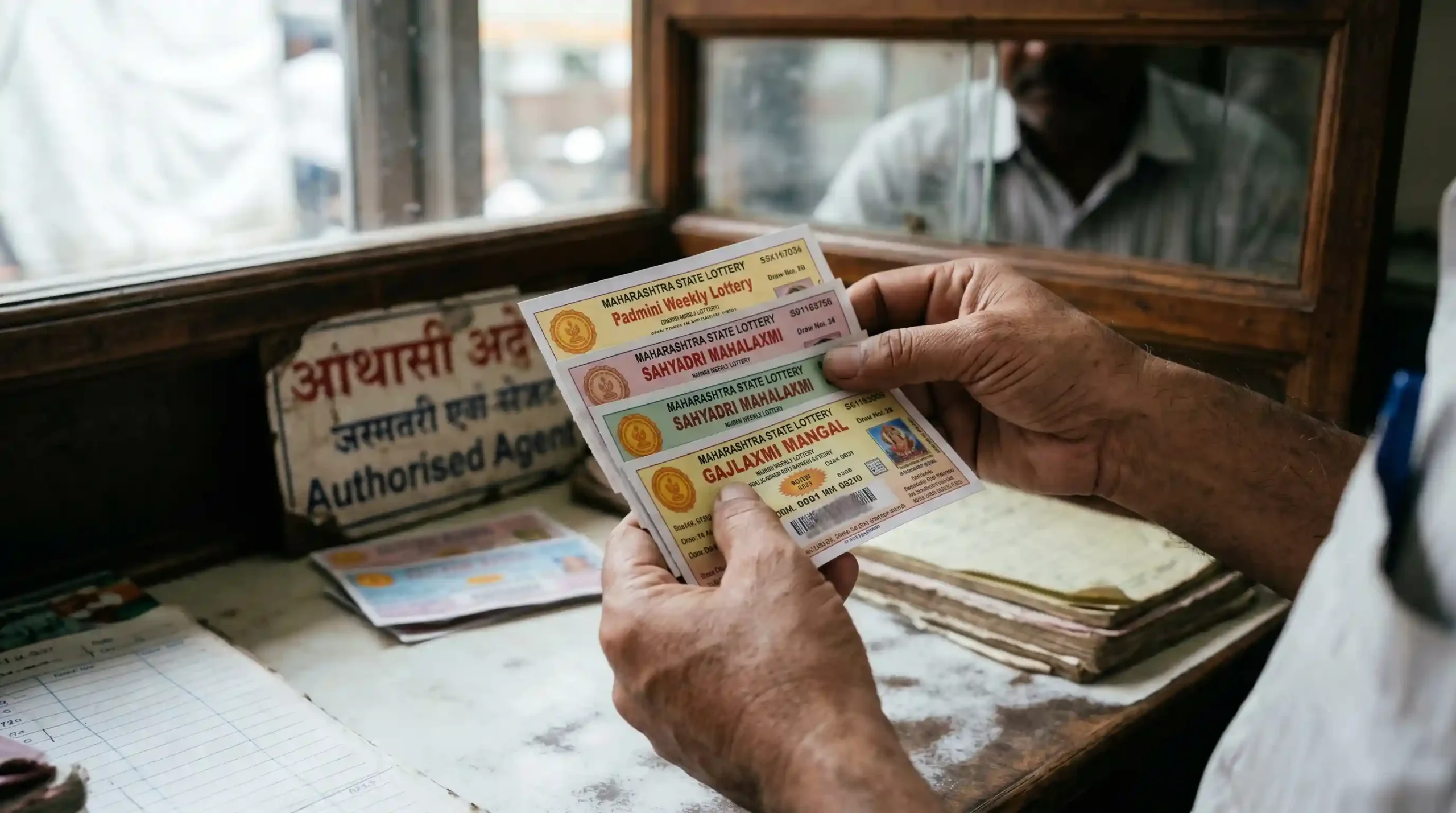
The government focuses on offering structured, regularly scheduled paper lotteries. The state hosts popular weekly draws, including the Padmini Weekly Lottery, Sahyadri Mahalaxmi, and Gajlaxmi Mangal lotteries. Additionally, the state promotes larger monthly draws and special festival bumper events.

The state strictly limits these games to physical paper tickets. The government guarantees the prize payouts, ensuring a reliable system for participants who purchase through official channels.

Buying Tickets: Rules and Restrictions

Following the exact purchasing rules protects you from counterfeit tickets and ensures your claim remains valid if you win a prize.

Where to Buy Legal Tickets

You must purchase official paper tickets from authorised retail counters and registered stockists operating within the state. These agents sell the physical slips directly to the public. You must hold the physical paper ticket to make a legal claim.

If you win a major prize, the state requires you to surrender the intact ticket alongside official identity proofs directly to the Directorate. The government also mandates that winners pay taxes. The state deducts a flat 30% tax (plus applicable cess) at the source on any lottery prize exceeding Rs. 10,000. Read our comprehensive for detailed filing instructions.

Is Online Lottery Legal in Maharashtra?

No, online lottery operations remain completely illegal in Maharashtra. When players ask is online lottery legal maharashtra, they often encounter confusing search results. The state took decisive action several years ago to ban all online lotteries, including digital draws from other states.

The government enacted this ban to protect its paper lottery revenue and prevent untraceable financial fraud. If you encounter a website or app claiming to sell digital Maharashtra lottery tickets, it operates unlawfully. Purchasing digital tickets voids your consumer protections instantly.

Frequently Asked Questions (FAQ)

Legality and State Laws

1. Is lottery legal in Maharashtra?

Yes, lottery operations remain legal in Maharashtra. The state government officially organises and regulates paper lotteries under the authority of the central Lotteries (Regulation) Act 1998. However, the state completely outlaws all private and online lotteries.

2. What does Maharashtra law say about lotteries?

The central Lotteries (Regulation) Act 1998 primarily governs the state’s operations. Locally, the Finance Department strictly regulates ticket printing, distribution, and prize payouts. The state strictly prohibits private syndicates from running independent draws.

3. Has Maharashtra banned or suspended lotteries?

Maharashtra never banned its official paper lottery. However, the state did ban all online lotteries, including digital lotteries hosted by other states, to protect local revenue and prevent digital fraud.

4. Why is Maharashtra’s lottery status confusing?

The confusion stems from the state’s aggressive crackdown on online platforms. When the government banned digital lotteries from other regions, many citizens mistakenly assumed the state had banned all lottery operations entirely.

5. Is online lottery legal in Maharashtra?

No, online lottery remains strictly illegal in Maharashtra. The state permits only physical, paper-based lotteries. Websites or apps claiming to sell digital tickets for state draws operate unlawfully and offer no consumer protection.

Playing and Verification

6. Does Maharashtra run its own state lottery?

Yes, the Directorate of Maharashtra State Lotteries actively runs the official government lottery. The state hosts frequent draws, including the weekly Padmini and Sahyadri lotteries, alongside special monthly bumper events.

7. Where can I buy a legal lottery ticket in Maharashtra?

To buy lottery maharashtra tickets legally, you must visit authorised retail agents or state-approved counters in person. Buyers must purchase physical paper slips. The law strictly prohibits purchasing tickets through unofficial online portals.

8. Can I buy other states’ lottery tickets in Maharashtra?

The state heavily restricts interstate sales. Maharashtra explicitly banned online lotteries from other states to protect its local market. You should stick to the official local paper draws to guarantee your legal safety.

9. Is it safe to play a lottery in Maharashtra?

Yes, playing remains completely safe if you buy official government paper tickets from authorised retail agents. However, purchasing tickets from private operators or unregulated online websites puts your money at significant risk.

10. How do I confirm the current status?

To verify legality, ensure your physical ticket bears the official state emblem. You must always check draw schedules and results directly on the official Directorate of Maharashtra State Lotteries website to avoid fraudulent claims.

Next Steps: If you hold a valid physical ticket, ensure you store it safely without folding or damaging the barcode. If you need to confirm the rules of a different region, head back to our main guide.
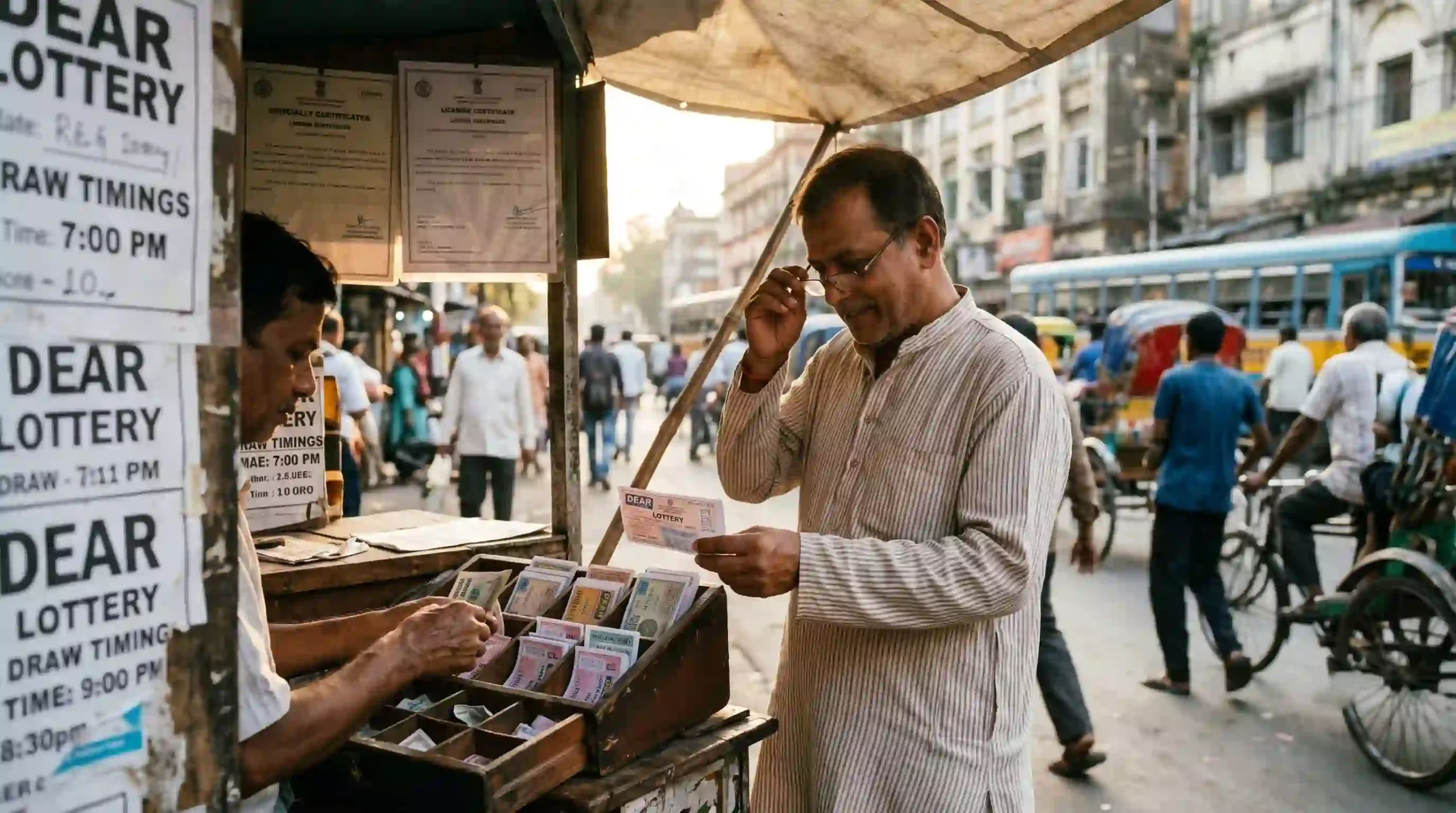
Is Lottery Legal in Punjab? Rules and Reality

Check Before You Buy

Before purchasing a ticket, understand the ground rules to ensure your money and potential winnings are safe:

  • Verify legality: Punjab strictly permits only state-organised government lotteries. Private lotteries are completely illegal.
  • Authorised sellers: Purchase physical tickets only from registered postal agents, local stockists, or directly from state-approved counters.
  • Confirm official draws: Always verify draw results directly through the official Punjab State Lotteries Directorate.
  • If you live in or visit the state, you might ask: is lottery legal in Punjab? The simple answer is yes, but it operates under strict government control. Buying a ticket is completely legal as long as you choose an officially sanctioned government draw. Purchasing from unauthorised private operators, however, offers zero legal protection.

If you want to understand the wider national landscape, check out our master map of the to see how Punjab compares to its neighbours. On this page, we explore the specific rules governing the Punjab state lottery, how bumper draws work, and how you can safely navigate the prize claim process.

Key Takeaways

  • Government draws only: Lottery operations remain legal in Punjab solely when a state government organises and guarantees them.
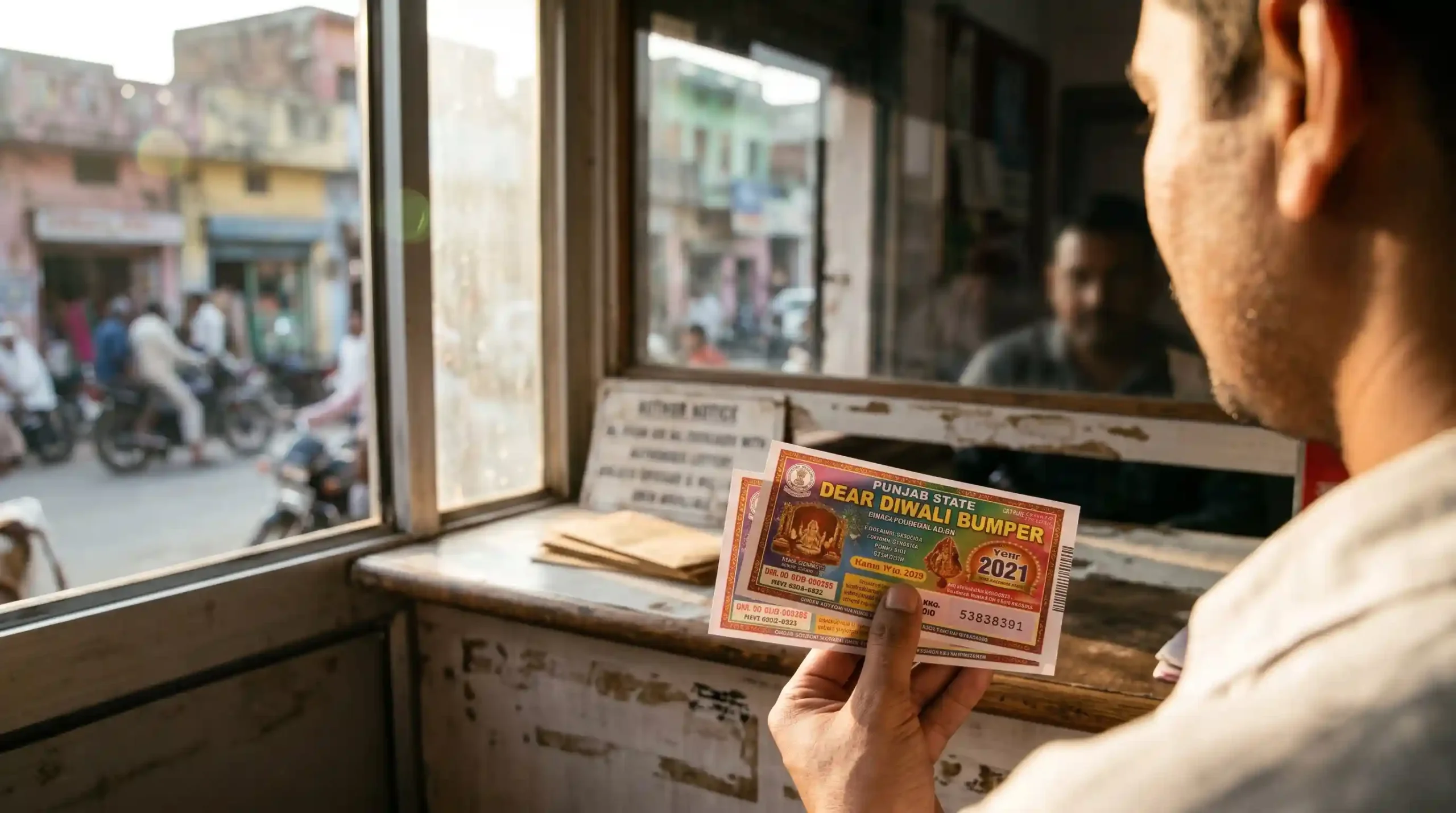
  • Famous bumper draws: Punjab boasts a national reputation for its massive festival lotteries, such as the Lohri, Baisakhi, and Diwali bumper draws.
  • Private lotteries are banned: The law explicitly prohibits any private company or individual from running a lottery or lucky draw in the state.
  • Tax rules apply: The government deducts a flat 30% tax (plus applicable cess) at the source on any lottery prize exceeding Rs. 10,000.
  • Interstate sales: You can legally buy Punjab bumper tickets from other states through authorised postal agents.

The Legal Status of Lottery in Punjab

Lottery operations in Punjab are fully legal, provided they follow the regulatory framework set by both the central and state governments.

The Directorate of Punjab State Lotteries, operating under the Department of Finance, actively manages and promotes all official draws. Because the state government directly oversees the prize pools and draw transparency, citizens can purchase tickets and claim winnings with full legal backing.

Which Law Governs Punjab’s Lottery?

The primary legislation governing lotteries across India is the Lotteries (Regulation) Act 1998 . This central law grants individual states the authority to decide whether to host or ban lotteries.

Punjab exercises this right to host lotteries and enforces the rules through the Punjab State Lotteries Rules. These regulations dictate everything from ticket printing standards to how authorised agents distribute tickets to the public.

Private Lotteries Are Strictly Illegal

While the government runs a legal lottery, the state has zero tolerance for private gambling disguised as lotteries. The Prize Competitions Act and state gambling laws make all private lotteries, local raffles, and unregulated lucky draws strictly illegal. Playing a private lottery leaves you entirely unprotected if the organisers disappear with the prize money.

Understanding the Punjab State Lottery

Unlike states that run multiple daily draws, Punjab focuses heavily on high-value, periodic lottery events. This strategy makes the Punjab state lottery unique and highly anticipated across the country.

The Famous Punjab Bumper Lotteries

The state is most famous for the Punjab bumper lottery. Rather than daily nominal prizes, the government issues special tickets corresponding to major cultural festivals. The most popular include:

  • The Punjab State Dear Diwali Bumper
  • The Punjab State Dear Lohri Makar Sankranti Bumper
  • The Punjab State Dear Baisakhi Bumper
  • The Rakhi Bumper

These tickets generally cost more than daily draw tickets (often Rs. 500 or more), but they offer massive, multi-crore first prizes guaranteed by the state government.

Punjab Lottery Rules: Buying and Playing Safely

Following the exact Punjab lottery rules protects you from counterfeit tickets and ensures your claim remains valid if you win.

How to Buy a Punjab Lottery Ticket Legally

You must purchase official paper tickets. You can buy these directly from retail counters and authorised stockists within Punjab.

Because of the massive popularity of the bumper draws, the state also authorises specific postal agents. These registered agents can legally sell physical tickets to buyers outside the state via registered post or courier.

The Truth About Punjab Lottery Online

When people search for Punjab lottery online, they often encounter confusion. The Punjab government does not run a digital-only online lottery where you generate virtual tickets.

However, authorised agents do operate legal websites where you can order a physical paper ticket. The agent reserves the physical ticket in your name and mails it to you. You must hold the physical paper ticket (or possess irrefutable proof from an authorised agent that they hold it for you) to make a legal claim. Always verify the agent’s government registration before you hand over any money online.

If you want to see how other states handle online versus paper rules, you can review the specific or see whether it .

The Punjab Lottery Claim Process and Taxes

Winning a massive bumper prize requires navigating a strict, highly secure Punjab lottery claim process.

For smaller prizes (usually up to Rs. 10,000), winners can claim the cash directly from the retail agent who sold them the ticket. For the major bumper prizes, the winner must submit the original, intact ticket along with an official claim form, identity proofs (Aadhaar/PAN), and bank details directly to the Directorate of Punjab State Lotteries.

Claiming a Punjab Prize From Another State

Because postal agents sell Punjab bumper tickets nationally, many winners live outside Punjab. The law permits out-of-state winners to claim their prizes. You must mail the winning ticket via registered or insured post alongside the required affidavits, or travel to the Punjab Directorate office to submit the claim in person.

Tax on Punjab Lottery Winnings

The state government does not hand over the full advertised prize amount. Before transferring the money, the government applies Tax Deducted at Source (TDS).

  • Any prize above Rs. 10,000 faces a flat 30% tax under the Income Tax Act.
  • Adding the mandatory 4% health and education cess brings the effective deduction to 31.2%.
  • Read our comprehensive for detailed filing instructions.

Frequently Asked Questions (FAQ)

State Laws and Bumper Draws

1. Is lottery legal in Punjab?

Yes, lottery operations are legal in Punjab. The state government officially organises and regulates its own draws under the authority of the central Lotteries (Regulation) Act 1998. However, the state completely outlaws all private lotteries.

2. Does Punjab run a government lottery?

Yes, the Directorate of Punjab State Lotteries, functioning under the state’s Department of Finance, actively runs the official government lottery. They guarantee the prize payouts and ensure transparent draw procedures.

3. What is the Punjab Lohri or bumper lottery?

The Punjab bumper lotteries are special, high-prize draws tied to major festivals like Lohri, Baisakhi, Rakhi, and Diwali. Instead of daily draws, the state focuses on these periodic events offering multi-crore guaranteed first prizes.

4. Which law governs Punjab’s lottery?

The central Lotteries (Regulation) Act 1998 serves as the primary governing law. The state operationalises these draws locally using the Punjab State Lotteries Rules, which dictate ticket printing, distribution, and prize claim protocols.

5. Is private lottery allowed in Punjab?

No, private lotteries are strictly illegal in Punjab. State gambling laws and the Prize Competitions Act prohibit private individuals, companies, or syndicates from running independent draws or unregulated raffles.

Buying Tickets and Claiming Winnings

6. How do I buy a Punjab lottery ticket legally?

You can legally buy physical paper tickets from authorised retail counters within the state. Additionally, state-approved postal agents can legally sell physical bumper tickets to buyers nationwide and deliver them via registered post.

7. Is online lottery legal in Punjab?

Punjab does not operate a digital-only virtual lottery. However, authorised agents legally use websites to accept orders for physical paper tickets. The agent must send the physical ticket to the buyer or hold the specific numbered paper ticket in trust.

8. Can I claim a Punjab prize from another state?

Yes, out-of-state buyers who legally purchased tickets through authorised postal agents can claim their winnings. Claimants must submit the original ticket and verified documents to the Punjab Directorate via insured post or in person.

9. What are the rules for Punjab lottery agents?

The state strictly regulates lottery agents. They must register with the government, sell tickets at the exact face value printed on the slip, and securely manage prize payouts for smaller winning amounts on behalf of the state.

10. How do I verify a Punjab lottery is official?

To verify legality, ensure the ticket bears the official Punjab government emblem and imprint. Always check draw results directly on the official Directorate of Punjab State Lotteries website or via official state gazette publications.

Next Steps: If you ordered a bumper ticket through the post, store the physical paper slip securely as soon as it arrives. You cannot claim a major prize without presenting the intact ticket. For a broader view of state laws, return to our master guide.

West Bengal Lottery Rules: What the Law Allows

Understanding the legality and the specific West Bengal lottery rules is crucial before you purchase a ticket. The state proudly hosts vibrant government-run draws, but strict statutes dictate exactly what the government permits, how winners claim prizes, and which formats the law entirely outlaws. Buying a ticket without knowing these regulations can result in holding an invalid slip with zero legal recourse.

If you are researching the broader national landscape, you can view our complete to see how West Bengal compares to the rest of the country. On this page, we focus strictly on the laws governing West Bengal, what the state allows, and how you can safely navigate the prize claim process.

Check Before You Buy Before purchasing any lottery ticket in West Bengal, ensure you follow these primary rules:

  • Confirm legality: West Bengal only permits state-organised paper lotteries. The law entirely outlaws private lotteries.
  • Authorised sellers only: Buy physical tickets exclusively from registered government agents and stockists.
  • Verify the source: Always cross-check draw results and rules with the official West Bengal Directorate of State Lotteries.

The Legal Status of Lottery in West Bengal

West Bengal legally permits lottery operations within a highly regulated framework. The central Lotteries (Regulation) Act 1998 serves as the foundational law. It empowers individual Indian states to decide whether to ban or organise lotteries within their borders.

West Bengal has opted to organise and promote its own state lotteries. The state’s Finance Department, specifically the Directorate of State Lotteries, manages these draws. Because the state exercises this right, citizens can legally buy, sell, and claim prizes for official government lottery tickets within its jurisdiction.

Consumers must distinguish between government and private operations. The Prize Competitions Act and state gambling laws completely outlaw private lotteries, lucky draws, and unregulated raffles.

Government-Run Draws and the ‘Dear Lottery’

When people discuss the lottery in West Bengal, they frequently refer to the ‘Dear Lottery’. The Dear Lottery serves as a brand name for paper lotteries operating legally under government authorisation.

West Bengal officially runs and sanctions these daily and weekly draws, offering varying prize tiers. The state government guarantees the prize payouts, ensuring transparent, regulated, and reliable draws.

If you explore rules in other regions, you might notice varying laws. For instance, you can read our guide to see if it , or check the specific statutes if you are wondering .

Buying Tickets: West Bengal Lottery Rules Explained

The West Bengal lottery rules strictly regulate ticket sales to protect consumers from fraud and ensure a fair draw process. Tickets must bear the official imprint and logo of the state government. A transparent network of authorised distributors, stockists, and retail agents sells them directly to the public.

The Ban on Online Lotteries

West Bengal permits only paper lotteries. The state refuses to authorise, run, or recognise online lotteries.

If you encounter a website or an app claiming to sell “West Bengal State Lottery” tickets online, it operates outside the state’s legal framework. Purchasing digital tickets voids your consumer protections. You will have no legal standing to claim a prize from the state government if scammers defraud you.

Can Other States Sell Tickets in WB?

Under the Lotteries (Regulation) Act 1998, a state that runs its own lotteries can permit the sale of tickets from other state governments, provided those lotteries comply with the central rules. However, the state completely bans private and foreign lotteries.

Claiming Your West Bengal Lottery Prize

Winning a lottery in West Bengal triggers a formal, legal claim process. The state requires strict documentation to prevent money laundering and ensure the rightful owner receives the funds.

The Prize Claim Process

For minor prizes (typically under Rs. 10,000), winners can usually claim their cash directly from the retail agent who sold the ticket.

For major prizes and super prizes, the rules mandate a formal submission to the Directorate of State Lotteries. Claimants must provide:

  • The original, intact winning ticket (signed on the back).
  • A self-attested photocopy of the ticket.
  • Four passport-sized photographs.
  • An affidavit of ownership sworn before a 1st Class Magistrate or Notary Public.
  • A completed official claim form detailing PAN, Aadhaar, and bank account details. The government expressly states it will reject torn, mutilated, or tampered tickets, and the claimant may face legal action.

Taxation on Winnings

Winners must understand their tax liabilities before claiming a prize. For an in-depth breakdown, refer to our comprehensive .

In West Bengal, the Income Tax Act applies Tax Deducted at Source (TDS) to any lottery winnings exceeding Rs. 10,000.

  • The flat tax rate stands at 30%.
  • Adding a 4% health and education cess brings the effective deduction rate to 31.2%.
  • The state government withholds this amount before transferring the prize money to your bank account via NEFT/RTGS.

Prohibited Acts Under West Bengal Lottery Rules

To maintain the integrity of the draws, West Bengal lottery rules strictly prohibit several acts:

  • Tampering: Altering numbers or barcodes on a ticket constitutes a criminal offence.
  • Private lotteries: Running an unauthorised draw breaks state and federal law.
  • Online sales: The state prohibits promoting paper lotteries through unauthorised online portals.

Always verify the official results directly through the West Bengal Directorate of State Lotteries website or official state gazette publications. Never rely solely on forwarded WhatsApp messages or unverified third-party websites to confirm your winnings.

Frequently Asked Questions (FAQ)

General Legality and Ticket Rules

1. Is lottery legal in West Bengal? Yes, West Bengal legally permits lottery operations. The state government organises and regulates official paper lotteries under the authority of the central Lotteries (Regulation) Act 1998. However, the state strictly bans all private and unregulated lotteries.

2. What lotteries does West Bengal run? West Bengal runs various daily and weekly paper lottery draws, alongside special bumper lotteries for festivals. The Directorate of State Lotteries officially manages these under the state’s Finance Department.

3. Is the Dear lottery a West Bengal lottery? Yes, the ‘Dear Lottery’ serves as a legally authorised brand name for paper lotteries operating in West Bengal. The state government sanctions these draws and guarantees the prize distributions.

4. What are the rules for buying tickets in WB? Buyers must purchase tickets as physical paper slips from government-authorised agents or stockists. Buyers should ensure the ticket remains intact and features the official state government imprint. The law does not permit purchasing tickets online.

5. Is online lottery legal in West Bengal? No, online lottery remains illegal in West Bengal. The state strictly permits only physical, paper-based lotteries. Websites or apps claiming to sell West Bengal state lottery tickets digitally operate unlawfully.

Prize Claims and Legal Restrictions

6. How do I claim a West Bengal lottery prize? Winners can claim prizes under Rs. 10,000 from local agents. For larger prizes, claimants must submit the original signed ticket, an official claim form, identity proofs (PAN/Aadhaar), bank details, and an affidavit to the Directorate of State Lotteries.

7. Which law governs WB lotteries? The central Lotteries (Regulation) Act 1998 primarily governs West Bengal lotteries. The state also follows the Lotteries (Regulation) Rules 2010 to oversee daily operations, ticket printing, and prize distributions.

8. Can other states’ tickets be sold in WB? Yes, under the 1998 Act, authorised distributors can sell paper tickets from other state governments that legally organise lotteries in West Bengal. However, the law strictly prohibits private and foreign lotteries.

9. What is prohibited under West Bengal lottery rules? West Bengal lottery rules strictly prohibit running private lotteries, selling tickets online, selling to minors, and tampering with physical tickets. Claimants attempting to cash a defaced or altered ticket face potential legal prosecution.

10. How do I verify a WB lottery result officially? To verify a result officially, check the daily draw publications directly on the West Bengal Directorate of State Lotteries website or view the official state gazette. You should avoid relying on unverified social media updates.

Next Steps: If you hold a winning ticket, ensure you store it safely without folding or damaging the barcode. If you need to confirm the rules of a different region, head back to our main guide.
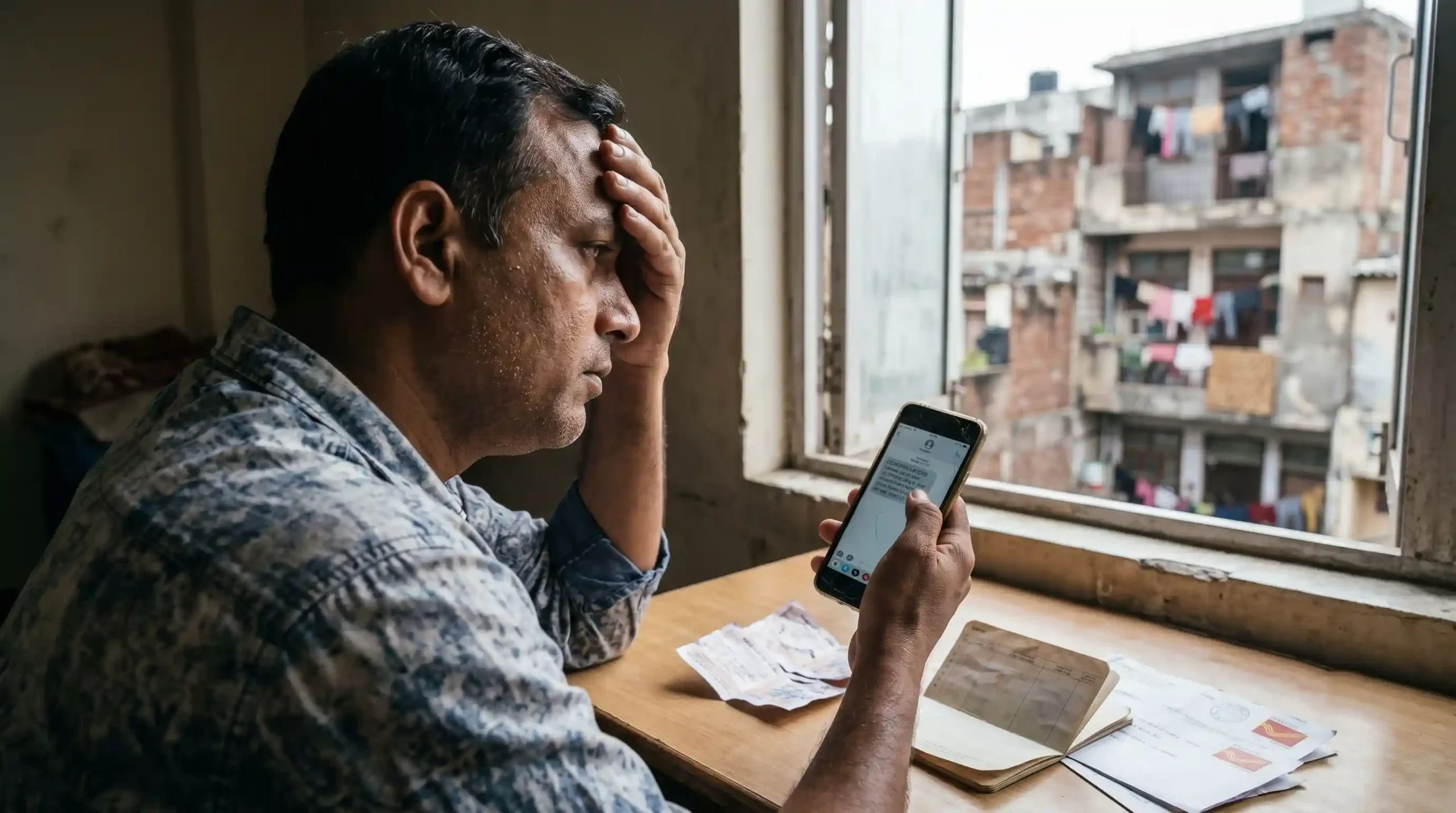
Goa Lottery Legal Status: What’s Allowed Now

Disclaimer: This guide is for informational purposes only and does not constitute legal or financial advice. Always verify current rules directly with the Directorate of Small Savings & Lotteries, Government of Goa.

If you live in or are visiting Goa, you might be wondering about the rules surrounding state draws and digital games. Understanding the goa lottery legal status is essential before you purchase a ticket. Unlike many other regions in India that have enacted total bans, Goa maintains a legally permitted, highly regulated lottery system.

The state government directly oversees these operations, ensuring that the games are fair and that revenues benefit the public treasury. Knowing what is allowed protects you from falling victim to illegal private operators and online scams. To see how Goa’s progressive rules compare with the rest of the country, you can review our master map of the lottery legal states in India.

Key Takeaways

  • Fully Legal: The state government legally permits and conducts official lotteries in Goa.
  • Online is Allowed: Goa is one of the few states that legally permits online lottery sales, provided they run through officially licensed platforms.
  • Government Monopoly: Every private, pan-India, or foreign lottery remains strictly illegal.
  • Regulated Casinos are Different: The laws governing Goa’s lotteries are entirely separate from the laws governing its famous casinos.

The Goa Lottery Act and Official Regulations

When investigating the goa lottery legal status, you must look at the central legislation that enables it. The state operates its draws strictly under the framework of the national Lotteries (Regulation) Act 1998.

The goa lottery act rules are enforced by the Directorate of Small Savings & Lotteries, Government of Goa. This department is responsible for printing tickets, appointing authorized selling agents, and conducting the draws transparently.

By keeping the operation entirely within the government’s control, Goa ensures that prize pools are guaranteed and that citizens are protected from underground betting syndicates. If you want to understand how other states utilize this exact same central law to enforce different rules, you can read our breakdown of the West Bengal lottery rules.

Is Online Lottery Legal Goa? (Great Goa Games)

One of the most frequently asked questions is: is online lottery legal goa?

Yes. Goa stands out because it has embraced digital modernization. While many states restrict sales entirely to physical paper tickets, Goa legally permits the sale of digital tickets via authorized online platforms.

The most prominent example of this is Great Goa Games, an officially licensed platform that allows players to purchase tickets and verify results digitally. However, this legality comes with a strict condition: you must play through the state’s authorized digital portals.

Goa Lottery Rules: Purchasing and Taxes

Under official goa lottery rules, you must be at least 18 years old to purchase a ticket. Whether you buy a paper ticket from an authorized retail vendor or a digital ticket via an approved portal, your winnings are protected by state law.

However, winning a legitimate government lottery means you must pay legitimate taxes. If you win a prize, the government will deduct tax at the source (TDS). Currently, lottery winnings face a flat 30% tax plus a 4% cess (totaling 31.2%) under Section 194B (which transitions to Section 393(3) effective April 1, 2026). The government deducts this amount automatically. If an agent calls you asking for “advance tax” to release your prize, they are a scammer. For a deeper understanding of how these financial rules work nationwide, consult our Complete Guide to Lottery in India.

Casinos vs. Lotteries: The Legal Difference in Goa

Goa is famous for its floating and land-based casinos, leading many to confuse the laws. Are casinos and lotteries regulated the same way?

No. Lotteries operate under the central Lotteries (Regulation) Act 1998. Casinos and sports betting, however, are governed by the Goa, Daman and Diu Public Gambling Act, 1976. This is a crucial distinction. The state directly runs the lottery, while private entities operate casinos under state licenses.

This duality makes Goa unique. For comparison, in neighboring states, both casinos and lotteries are heavily restricted. You can see this contrast clearly by reading our guide on whether lottery is legal in Maharashtra.

Frequently Asked Questions (FAQ)

Basic Legality and Purchasing

1. Is lottery legal in Goa? Yes. Goa legally permits and actively conducts official state-run lotteries. The Directorate of Small Savings & Lotteries manages these draws strictly under the guidelines of the Lotteries (Regulation) Act 1998.

2. How do I buy a Goa lottery ticket legally? You can legally purchase physical paper tickets from authorized retail agents located throughout the state. Alternatively, you can purchase tickets digitally through state-licensed online portals.

3. Can non-residents play the Goa lottery? Yes, Indian citizens visiting Goa can legally purchase tickets from authorized vendors. However, if you attempt to use an online app to play the Goa lottery while physically located in a state that bans lotteries, you break the law of your home state.

Online Lottery and Platforms

4. Does Goa allow online lottery? Yes. Goa is one of the few Indian states that explicitly authorize the sale of official state lottery tickets through licensed digital platforms, making the online process secure and legal.

5. What is Great Goa Games? Great Goa Games acts as an officially authorized digital platform for purchasing Goa state lottery tickets online. The state licenses it to ensure secure, transparent transactions for digital players.

6. Is foreign lottery legal in Goa? No. International and foreign lotteries remain strictly illegal in Goa and across India. Only the official state government lotteries possess legal authorization.

Rules, Regulations, and Verification

7. Which law governs Goa’s lottery? The central Lotteries (Regulation) Act 1998 provides the primary legal framework, alongside specific state notifications issued by the Government of Goa’s finance department.

8. Are casinos and lottery regulated the same in Goa? No. While the state permits both, they fall under different laws. The Lotteries (Regulation) Act 1998 governs lotteries, whereas the Goa, Daman and Diu Public Gambling Act, 1976 regulates casinos.

9. What lotteries are banned in Goa? The state bans all private lotteries, pan-India draws, unauthorized online betting apps, and foreign lotteries. Only the draws officially sanctioned by the Goa government are permitted.

10. How do I verify a Goa lottery is official? You should always check the draw results and the list of authorized selling agents directly on the official website of the Directorate of Small Savings & Lotteries, Goa (which uses a .gov.in domain).

What To Do Next

Now that you understand the goa lottery legal status, you can play safely by following official channels.

  • Play Officially: Only purchase tickets from authorized physical vendors or officially licensed platforms like Great Goa Games.
  • Check Your Taxes: Read our Complete Guide to Lottery in India to understand how the 31.2% TDS applies to your legal winnings.
  • Report Scammers: If an unauthorized website or a WhatsApp message offers you a “Goa Lottery Jackpot” and asks for advance fees, report it immediately to the 1930 national cyber helpline or at cybercrime.gov.in.

Is Lottery Legal in Tamil Nadu? Why It’s Banned

Disclaimer: This guide is for informational purposes only and does not constitute legal advice. Always confirm current status with the relevant state authority or a qualified legal professional.

If you live in Chennai, Coimbatore, or anywhere else in the state and see an online ad promising massive jackpots, you need the facts before you click. You might immediately ask: is lottery legal in tamil nadu?

The answer is a strict, unconditional no. Buying, selling, or distributing any form of lottery ticket within the state borders is completely illegal.

Because India allows individual states to decide their own gambling laws, the rules change drastically when you cross state lines. While some states run massive daily draws, Tamil Nadu enacted a total prohibition over two decades ago. To see how Tamil Nadu compares to the rest of the country, you can view our complete map of the lottery legal states in India.

This guide explains the history of the Tamil Nadu lottery ban, why you cannot buy tickets online, and the severe legal and financial risks of attempting to play from within the state.

Key Takeaways

  • Total Ban: Purchasing any lottery ticket while physically located in Tamil Nadu acts as a punishable offense.
  • No Online Loophole: The ban strictly applies to all digital and online lottery sales.
  • Out-of-State Tickets Banned: Bringing tickets from neighboring legal states (like Kerala) into Tamil Nadu breaks central law.
  • Zero Prize Protection: If you illegally buy a ticket and win, you possess absolutely no legal right to claim the prize money.

Is Lottery Legal in Tamil Nadu? The 2003 Ban Explained

To understand why officials banned lotteries in Tamil Nadu, you must look back at the socio-economic situation in the early 2000s.

Before 2003, the state lottery and various private “single-digit” lotteries proved highly popular. However, these daily draws led to severe gambling addiction among daily wage laborers and low-income families. The financial ruin caused by excessive ticket purchasing became a massive public welfare crisis.

In response, the Tamil Nadu state government completely banned the sale of all lotteries on January 8, 2003.

The state utilized the powers granted to it by the Lotteries (Regulation) Act 1998, which allows any state legislature to completely prohibit lotteries within its jurisdiction. Since that notification, the state has continuously renewed and strictly enforced the ban.

Can You Play the Tamil Nadu Lottery Online?

One of the most common traps for residents involves the myth of playing online.

Scammers and illegal betting syndicates frequently launch websites or WhatsApp groups claiming that while paper tickets remain banned, you can legally play “online lotteries” or “international draws.” This represents a complete lie.

If a state government bans physical lotteries, that ban automatically extends to all online variants. If you attempt to use an online proxy app to buy a ticket while sitting in Tamil Nadu, you break the law. Furthermore, these illegal apps almost certainly steal your banking information or simply refuse to pay out if you win.

The Border Issue: Kerala and Dear Lottery

Because Tamil Nadu shares borders with Kerala (which runs a massive legal lottery operation), smugglers often attempt to bring paper tickets across state lines into cities like Coimbatore or Kanyakumari.

If a vendor offers you a Kerala lottery ticket or a “Dear Lottery” ticket inside Tamil Nadu, they commit a crime. Buying that ticket makes you complicit in illegal gambling.

To understand how other states handle these complex rules—and to see why some states technically allow it but rarely run draws—read our breakdown on whether lottery is legal in Maharashtra.

Penalties and Legal Risks in Tamil Nadu

Participating in illegal lotteries in Tamil Nadu carries severe consequences. Law enforcement agencies actively crack down on underground lottery rings.

  • For Sellers: Distributing or selling tickets results in immediate arrest, non-bailable charges, heavy fines, and imprisonment under the IPC and state gaming acts.
  • For Buyers: Purchasing a ticket means participating in an illegal gambling act. Authorities can fine and prosecute you.
  • Financial Loss: Because the transaction acts as an illegal contract, the law will not help you if a seller cheats you out of a prize.

To fully understand how legitimate taxes work in states where playing actually operates legally, you should read our Complete Guide to Lottery in India.

Frequently Asked Questions (FAQ)

Basic Legality and History

1. Is lottery legal in Tamil Nadu? No. Buying, selling, or distributing any form of lottery ticket is completely illegal in Tamil Nadu. The state government enacted a total prohibition in 2003 to curb gambling addiction and protect public welfare.

2. When was lottery banned in Tamil Nadu? The lottery was officially banned in Tamil Nadu on January 8, 2003, via a government notification. The ban put an end to both the official state lottery and the sale of out-of-state paper tickets.

3. Why is lottery banned in Tamil Nadu? The government banned lotteries because daily and single-digit draws caused severe financial ruin and gambling addiction among low-income families and daily wage earners, leading to a public socio-economic crisis.

Interstate and Online Tickets

4. Can I buy Kerala lottery tickets in Tamil Nadu? No. It is strictly illegal to sell or purchase a Kerala lottery ticket within the borders of Tamil Nadu. Smuggling tickets across the state border violates the central Lotteries (Regulation) Act 1998.

5. Is online lottery legal in Tamil Nadu? No. The total ban on lotteries in Tamil Nadu extends to all online and digital platforms. Any website or app offering lottery tickets to residents of Tamil Nadu operates illegally.

6. Is Dear Lottery banned in Tamil Nadu? Yes. Dear Lottery (which operates legally in states like West Bengal and Nagaland) is strictly banned in Tamil Nadu. Anyone selling Dear Lottery tickets inside Tamil Nadu runs an illegal black-market operation.

Winnings, Penalties, and Reporting

7. What is the penalty for selling lottery in Tamil Nadu? Selling lottery tickets in Tamil Nadu represents a criminal offense. Offenders face immediate arrest, non-bailable charges, severe financial fines, and long-term imprisonment under state gaming laws and the Indian Penal Code.

8. Can Tamil Nadu residents claim lottery prizes from other states? If a Tamil Nadu resident traveled to a legal state, bought a ticket there, and won, they could theoretically claim it there. However, buying a ticket while physically inside Tamil Nadu renders any resulting prize completely void and illegal.

9. Are private lotteries allowed in Tamil Nadu? No. Private lotteries act as completely illegal enterprises everywhere in India, not just in Tamil Nadu. Only state governments possess the legal authority to run lotteries, and Tamil Nadu has chosen to ban them entirely.

10. How do I report illegal lottery sales in Tamil Nadu? You should report illegal physical ticket sales to your local state police station. If you encounter fraudulent online lottery websites or WhatsApp scams, report them immediately to the 1930 national cyber helpline or at cybercrime.gov.in.

What To Do Next

If you reside in Tamil Nadu, your best financial defense involves completely ignoring all lottery advertisements, whether they appear in your local neighborhood or on your smartphone.

  • Do Not Engage: Never click on links in SMS or WhatsApp messages claiming you have won a “lucky draw” or a “brand lottery.”
  • Educate Your Family: Ensure that vulnerable family members, especially the elderly, understand that playing the lottery online in Tamil Nadu breaks the law and almost certainly represents a scam.
  • Report Suspicious Activity: If an online lottery scammer actively targets you and asks for banking details, call 1930 or file an official report at the National Cyber Crime Reporting Portal.
  • Verify Regional Laws: If you travel and want to know where you can safely and legally play, refer back to our pillar guide on the lottery legal states in India.

What the Lotteries Act 1998 Lets Each State Decide

Disclaimer: This guide provides informational content only and does not serve as legal advice. Always confirm current laws with the relevant government authority or a qualified legal professional.

If you have ever wondered why purchasing a lottery ticket is perfectly legal in Kerala but a punishable crime just across the border in Karnataka, the answer lies in one central law. Everything comes down to the lotteries regulation act 1998.

Before lawmakers enacted this central legislation, the Indian lottery market suffered from a lack of regulation, leading to widespread financial distress and the rapid growth of private, black-market draws. Consequently, the 1998 Act brought order to the system by creating a strict framework that empowered individual state governments. To understand exactly how this law affects where you live and whether you can safely play, review our master map of the Lottery Legal States in India.

In this guide, we break down exactly what the lotteries act explained means for you, how it regulates ticket sales, and why it forms the legal backbone of all state draws in the country.

Key Takeaways Under the Lotteries Regulation Act 1998

  • State Power: First, the Act gives individual states the absolute authority to permit or ban lotteries within their borders.
  • Government Monopoly: Second, private lotteries act as illegal enterprises; the law mandates that only state governments can organize and run draws.
  • Cross-Border Control: Third, states possess the right to prohibit the sale of other states’ lottery tickets within their jurisdiction.
  • Strict Operations: Finally, the subsequent lotteries regulation rules 2010 enforce rigid standards on how authorities print tickets, sell them, and distribute prizes to prevent fraud.

How the Central Lottery Law India Empowers States

While local officials manage lotteries, the central lottery law india provides the structural rulebook. Under the Indian Constitution, lotteries function as a “State subject,” but the central government stepped in with the 1998 Act to ensure national guidelines prevented private exploitation.

Primarily, the core function of the Act focuses on delegation. It does not explicitly force any state to run a lottery, nor does it force a state to ban them. Instead, it grants state lottery authorisation powers directly to the state legislative assemblies.

Section 4 Lotteries Act: Strict Requirements

Crucially, if a state wants to legally run a lottery, it must strictly adhere to the section 4 lotteries act. Specifically, this section outlines the mandatory conditions a state government must meet. If a state fails these conditions, its lottery operates illegally.

  • State Imprint: First, the state government must print the tickets and include the official state logo to ensure authenticity.
  • Treasury Direct: Second, officials must deposit all proceeds from ticket sales directly into the public state treasury.
  • Direct Draws: Third, the state government itself must conduct the draws or supervise them directly.
  • Frequency Limits: Finally, Section 4 limits the number of bumper draws a state can hold per year (traditionally capped at six) to prevent predatory daily gambling practices.

Because of these strict requirements, you will find that while some jurisdictions theoretically have authorisation, they do not currently run active draws. For example, you can see how this nuance plays out by reading our breakdown on whether is lottery legal in Maharashtra.

Understanding the Lotteries Regulation Rules 2010

Twelve years after passing the initial Act, the central government recognized the need for tighter operational security and introduced the lotteries regulation rules 2010.

While the 1998 Act decided who could run a lottery, the 2010 Rules decided how operators must run them. Lawmakers designed these rules to protect consumers by enforcing transparency. Specifically, they mandate that:

  • Ticket Security: Authorities must print tickets in high-security, government-approved presses.
  • Clear Payouts: States must pre-announce their prize structures transparently.
  • Agent Restrictions: Distributors and selling agents cannot manipulate prize money or conduct their own parallel draws.

Taxation Under the Lotteries Regulation Act 1998

Importantly, the lotteries regulation act 1998 governs the legality of the draw, but it works in tandem with national tax laws. Whenever a state runs a legal draw, officials must legally deduct tax at the source (TDS) before handing over the prize money.

Currently, the Income Tax Department taxes winnings at a flat 30% plus a 4% cess (totaling 31.2%) under Section 194B (which transitions to Section 393(3) effective April 1, 2026). If you want to understand how the 1998 Act interacts with tax liabilities, we highly recommend reading our Complete Guide to Lottery in India.

Frequently Asked Questions (FAQ)

Defining the Act and State Powers

1. What is the Lotteries (Regulation) Act 1998? Essentially, the lotteries regulation act 1998 serves as the central legislation providing the legal framework for lotteries in India. It delegates the absolute power to permit, regulate, or ban lotteries to individual state governments, ending unregulated private lotteries.

2. What does the Act allow state governments to do? Specifically, it allows states to run their own official government lotteries, appoint licensed distributors, or enact total legislative bans on all lotteries within their borders to protect local public welfare.

3. What makes a lottery legal under the Act? Legally, a lottery remains valid only if the state government organizes, conducts, and controls it. Furthermore, tickets must bear the official state logo, and officials must deposit all generated revenues directly into the public treasury.

Interstate Rules and Digital Laws

4. Can a state sell its lottery in another state? Yes, but only if the receiving state also legally permits lotteries and explicitly allows cross-border sales. Crucially, under Section 5 of the Act, a state possesses the legal right to ban tickets from any other state.

5. Does the Act cover online lotteries? Yes, the Act applies to all forms of lotteries. Consequently, states that authorize lotteries must explicitly license online versions. Currently, only a few states permit online draws, while most legal states restrict sales strictly to physical paper tickets.

6. Has the 2025 Online Gaming Act changed it? No. The 2025 Online Gaming Act regulates digital skill games, betting, and offshore platforms, but state-run lotteries remain governed primarily by the 1998 Act. Therefore, new digital policies simply help states enforce their existing lottery bans online.

Enforcement and Legal Definitions

7. What are the Lotteries (Regulation) Rules 2010? Basically, these represent detailed operational rules issued by the central government. Specifically, they strictly govern ticket printing at secure presses, transparent draw procedures, prize distributions, and the minimum frequency of draws.

8. Who enforces the Act? Primarily, state police, state commercial tax boards, and state lottery departments handle enforcement. However, the central government can intervene if a state directly violates the core operational provisions.

9. Can the central government ban a state’s lottery? Generally, the central government does not outright ban a state’s lottery. However, they can intervene if a state operates draws in direct violation of Section 4 conditions—such as illegally outsourcing complete control to a private company.

10. How does the Act define a lottery? Legally, the Act defines a lottery as a scheme for the distribution of prizes by lot or chance to persons participating by purchasing tickets. Importantly, this definition separates lotteries from games of skill.

What To Do Next

In conclusion, understanding your rights under the lotteries regulation act 1998 remains the best way to protect yourself from fraud. Because the law strictly bans private operators, you should never trust a private company claiming to run a nationwide draw.

  • Check Your Local Laws: First, ensure your state permits lotteries before attempting to play. Review our Lottery Legal States in India map.
  • Look for the State Imprint: Second, if you purchase a ticket, verify it contains the official state government logo and printing press details as mandated by the 2010 Rules.
  • Report Violations: Finally, if a private entity runs an illegal lottery in your area, report it to the National Cyber Crime Reporting Portal or call the 1930 national helpline.

Why Private Lotteries Are Illegal in India

Disclaimer: This guide is for informational purposes only and does not serve as legal advice. Always confirm current laws with the relevant authority or a qualified professional.

If you receive a WhatsApp message, SMS, or phone call claiming you have won a massive prize from a private company or a “national brand draw,” scammers are likely targeting you. When comparing a private vs government lottery in india, the legal difference is absolute: state-run draws are the only legal lotteries in the country.

Understanding the government lottery meaning—a draw that a state government strictly organizes, conducts, and controls—acts as your first line of defense against financial fraud. Every single private or pan-India lottery breaks the law. This guide explains why these laws exist, how to spot a fake private lottery, and what to do if fraudsters target you. To see a complete picture of where state-run draws are permitted, start with our master map of the lottery legal states in India.

Key Takeaways

  • Private Lotteries are Banned: First, no private company, brand, or individual possesses the legal right to run a lottery in India.
  • State Control Only: Second, only state governments hold the constitutional authority to organize and run lotteries.
  • Zero Pan-India Lotteries: Third, a legal “national” or “Pan-India” lottery does not exist.
  • Advance Fee Fraud: Finally, if an agent asks you to pay a “processing fee” or “advance tax” to release your winnings, you are facing a guaranteed scam.

Private vs Government Lottery in India: The Core Difference

When evaluating a private vs government lottery in india, you must base the legal separation entirely on ownership and control.

A state’s finance or lottery department prints, regulates, and distributes a legal government lottery. The revenue goes directly to the state treasury to fund public welfare projects. On the other hand, independent companies or individuals run private lotteries solely for personal profit. Because the potential for financial exploitation remains so high, Indian law strictly bans private entities from operating lotteries.

Who Can Run Lottery in India?

The Lotteries (Regulation) Act of 1998 strictly limits the answer to who can run lottery india.

Only state governments possess the legal right to organize, conduct, or promote lotteries. Furthermore, a state can only run a lottery if its own legislative assembly permits it. A private company cannot simply apply for a “lottery license” and begin selling tickets. While state governments do hire private companies as “distributors” or “selling agents,” the actual lottery remains entirely the property of the government.

For a deeper dive into how this federal law empowers the states, read our guide on exactly what the Lotteries Act 1998 lets each state decide.

The Myth of the “Pan India Lottery Legal” Status

A common tactic scammers use involves claiming their draw operates as a “Pan-India” or “National” lottery that the central government approved.

Is a pan india lottery legal? Absolutely not. A national lottery simply does not exist in India. Because lotteries act as a state subject, a ticket printed by one state (like Kerala) can only sell in another state if that second state explicitly permits it. Many states strictly enforce cross-border bans. If you are curious about which regions forbid all lotteries, review our breakdown of the states where lottery is banned in India.

Penalties: Private Lottery Illegal India

Because lawmakers rigidly enforce the private lottery illegal india status, organizers face severe penalties. Ultimately, understanding the rules of a private vs government lottery in india protects you from participating in these criminal acts.

Under the Indian Penal Code (IPC) and the Lotteries Regulation Act, running a fake private lottery constitutes cheating, forgery, and illegal gambling. Authorities can seize assets, freeze bank accounts, and sentence operators to years in prison.

It is also vital to understand how the law treats these offenses in a broader context. To see how lawmakers separate lotteries from other forms of betting, explore our cornerstone guide on the lottery vs gambling India legal difference.

‘Lucky Draws’ vs Lotteries

Many private companies run promotional “lucky draws” or contests (for example, “Buy a car, enter to win a TV”). Are these the same as lotteries?

Legally, no. A legitimate promotional contest does not require you to pay an entry fee specifically to win a cash prize. The moment a company asks you to buy a ticket strictly for the chance of winning a cash jackpot, the promotion crosses the legal line into an illegal private lottery.

Frequently Asked Questions (FAQ)

Understanding Legal Differences

1. What is the difference between private and government lottery? A state government organizes, regulates, and guarantees a government lottery, using profits to fund state welfare. In contrast, an independent entity organizes a private lottery for personal profit. In India, all private lotteries are completely illegal.

2. Are private lotteries legal anywhere in India? No. Private lotteries are completely illegal across the entire country. The Lotteries (Regulation) Act 1998 specifically limits the power to organize lotteries exclusively to state governments.

3. Who is allowed to run a lottery in India? Only the specific state governments that have legally permitted lotteries within their borders may run them. The law strictly forbids private individuals, brands, and corporations from organizing lotteries.

National Draws and Verification

4. Is a pan-India or online private lottery legal? No. A legal “Pan-India” or national lottery does not exist. Furthermore, any online private lottery targeting Indian citizens acts as an illegal operation, usually run by overseas syndicates or domestic scammers.

5. How do I tell a government lottery from a fake one? An authorized state vendor sells a real government lottery ticket, which features official state seals. Furthermore, officials publish the results on the state’s official gov.in website. Conversely, a fake private lottery usually contacts you directly via SMS or WhatsApp asking for advance fees.

6. How do I verify a lottery is government-run? To verify a lottery, check the official State Lottery Directorate’s website (which will end in .gov.in). Do not trust links sent via WhatsApp. Verify the authorized distributor list directly through the state’s official channels.

Laws, Penalties, and Corporate Draws

7. Why are private lotteries banned? Lawmakers ban private lotteries to protect citizens from widespread financial fraud, unregulated gambling addiction, and black-market economies. State control ensures accountability, transparency, and the redirection of profits to public welfare.

8. Can a company run a lottery with a licence? No. A private company cannot obtain a license to run its own lottery. While a state government can license a private company to act as a distributor or marketing agent for the state’s tickets, the lottery remains government-owned.

9. What are the penalties for running a private lottery? Organizing a private lottery acts as a criminal offense under the Lotteries (Regulation) Act and the Indian Penal Code. Penalties include severe fines, asset confiscation, and lengthy prison sentences for cheating and illegal gambling.

10. Are ‘lucky draws’ and contests the same as lottery? No. A legal “lucky draw” operates as a promotional contest tied to a product purchase without a separate entry fee. If you must pay money simply for a chance to win a cash prize, the draw acts as an illegal private lottery.

What To Do Next

If you are researching a private vs government lottery in india because someone contacted you claiming you won a prize, you must protect yourself immediately.

  • Cease Contact: Do not reply to the message, and do not call the number provided.
  • Do Not Pay: Never transfer “tax money” or “processing fees” to claim a prize.
  • Report It: Help shut down the scammers. Report the phone numbers and bank details they provided to the authorities by calling 1930 or by filing a complaint at the official cybercrime.gov.in portal.
  • Learn the Rules: To understand where and how you can legally participate in state-run draws, return to our master guide on the lottery legal states in India.

States Where Lottery Is Banned in India (and Why)

Disclaimer: This guide is for informational purposes only and does not serve as legal advice. Always confirm current state laws with the official state lottery department or a qualified legal professional.

Finding out where you can legally buy a ticket is simple. However, understanding the states where lottery is banned in india is equally critical. Specifically, state governments in India hold the absolute power to decide if they allow lotteries within their borders. Therefore, if you live in a state that bans lotteries, you break the law when you buy a ticket—whether you purchase it in print or online.

Furthermore, you risk not only losing your money to unverified sellers, but you also face legal consequences. Consequently, the law gives you absolutely no recourse if a fraudster cheats you. In this guide, we cover the complete banned list, explain exactly why states enforce these bans, and show how the law affects your ability to play. Additionally, to see the full national picture, you can refer to our master map of the lottery legal states in India.

Key Takeaways

  • Purchasing is a Crime: First, buying a lottery ticket while residing in a banned state is illegal, regardless of where the ticket originated.
  • No Online Loophole: Second, the government strictly prohibits online lotteries in states that ban physical lotteries.
  • State Control: Third, the Lotteries Regulation Act 1998 allows states to block the sale of other states’ lottery tickets within their borders.
  • Zero Payouts: Finally, if you win using a ticket purchased illegally in a banned state, you cannot legally claim the prize money.

Complete List of States Where Lottery is Banned in India

While about 13 states currently permit lotteries, the vast majority of Indian states and Union Territories ban them completely.

Specifically, the states where lottery is banned in india include major regions such as Tamil Nadu, Karnataka, and Gujarat. Additionally, other states like Bihar, Uttar Pradesh, Rajasthan, Andhra Pradesh, and Telangana also prohibit the sale and distribution of lottery tickets.

Therefore, if you physically reside in any of these states, you cannot legally participate in any government or private lottery draw.

Why Lottery Banned in India: The Core Reasons

When researching why these bans exist, you will find the reasons almost always tie back to public welfare and socio-economic protection. Historically, state governments enact bans for the following reasons:

  1. Financial Hardship: First, daily draws frequently led to low-income earners spending disproportionate amounts of their daily wages on tickets, which caused severe debt.
  2. Gambling Addiction: Second, officials categorized lotteries alongside gambling, prompting states to ban them to curb addiction.
  3. Law and Order: Third, the rise of illegal, unregulated single-digit lotteries created massive black markets that state police forces struggled to control.

The Karnataka and Tamil Nadu Bans

Notably, two of the most prominent bans occurred in southern India.

For instance, the Karnataka state government brought a complete lottery ban into full effect in 2007. Specifically, they banned all forms of lotteries, including online and out-of-state lotteries, to protect rural and low-income families from financial ruin.

Similarly, if you are asking about Tamil Nadu, the state enforces a strict ban. Indeed, Tamil Nadu completely banned all lotteries in 2003 under intense public pressure regarding gambling addiction and financial distress among daily wage workers. To learn more, read our dedicated breakdown: is lottery legal in Tamil Nadu.

Are Gambling Banned States India and Lottery States the Same?

Generally, lawmakers regulate lotteries and gambling differently, but the rules often overlap. For example, the Public Gambling Act of 1867 prohibits running a gambling house, but individual state laws take precedence.

In many cases, states that ban gambling also ban lotteries. However, the legal definition of “gambling” versus “lottery” can differ. Specifically, the Lotteries Regulation Act 1998 governs lotteries, whereas state gaming acts cover casinos and betting. To understand this nuance, read our Complete Guide to Lottery in India.

Penalties in States Where Lottery is Banned in India

Crucially, if you buy a ticket in a banned jurisdiction, you participate in an illegal transaction. Consequently, you face multiple risks:

  1. No Legal Recourse: First, if the seller refuses to pay your winnings, you cannot go to the police or a consumer court. The law views your original purchase as a criminal offense.
  2. Confiscation: Second, authorities will confiscate any winnings you attempt to claim while residing in a banned state.
  3. Fines and Prosecution: Third, selling or distributing tickets in a banned state carries severe penalties, including jail time and heavy fines. Furthermore, buying them makes you liable under state gaming acts.

Frequently Asked Questions (FAQ)

Explaining the State Bans

1. Which states have banned lottery in India? Primarily, the states where lottery is banned in india include Tamil Nadu, Karnataka, Gujarat, Bihar, Uttar Pradesh, Rajasthan, Andhra Pradesh, and Telangana. In contrast, only about 13 states legally permit state-run lotteries.

2. Why did Tamil Nadu and Karnataka ban lotteries? Historically, both Tamil Nadu (in 2003) and Karnataka (in 2007) banned lotteries to protect low-income citizens from gambling addiction. Specifically, daily paper and single-digit lotteries fueled severe financial ruin for many families.

3. What reasons do states give for banning lottery? Mainly, states cite the protection of public welfare. Specifically, they point to rising debt among the working class, increases in domestic disputes, and the spread of unregulated black-market gambling networks.

Cross-Border and Online Rules

4. Is it illegal to buy a lottery ticket in a banned state? Yes, absolutely. If your state government bans lotteries, you violate state law when you purchase any ticket—whether printed locally or brought in from another state.

5. Can I play an online lottery from a banned state? No, you cannot. If your state bans physical lotteries, it also bans online lotteries. Furthermore, the Lotteries Regulation Act 1998 allows states to block out-of-state and online sales within their borders.

Winnings and Legal Penalties

6. What happens if I win in a state where it’s banned? Unfortunately, you cannot legally claim the prize. Because purchasing the ticket was an illegal act, the ticket is invalid in the eyes of the law. Consequently, you have no legal right to the winnings.

7. Can I be penalised for buying a banned-state ticket? Yes. While law enforcement typically targets sellers and distributors with jail time and massive fines, buyers also participate in illegal gambling. Therefore, buyers can face fines or prosecution under local laws.

8. Is gambling banned in the same states as lottery? Often, yes, but they operate under different laws. While the Lotteries Regulation Act 1998 governs lotteries, state-specific gaming acts restrict gambling. For instance, states like Gujarat strictly ban both activities.

Government Law and Future Changes

9. Are bans permanent or can they be lifted? Technically, the constitution does not lock these bans permanently, but they remain highly stable. While state legislatures possess the power to reverse a ban by passing new laws, they rarely do so due to political and social concerns.

10. Which is the latest state to ban lottery? While major bans like Tamil Nadu (2003) and Karnataka (2007) remain the most well-known, other states continually update their digital gaming acts. Specifically, they do this to enforce bans against modern online lotteries. Always verify your current local laws.

What to Do Next

In conclusion, if you live in one of the states where lottery is banned in india, your safest action is total avoidance.

  • Do not pay advance fees: First, if someone contacts you claiming you won a lottery in a banned state, do not pay them. It is guaranteed to be a scam.
  • Verify your state’s status: Second, if you are traveling or moving, review our state-by-state map on the pillar page to see where you can safely play.
  • Report online fraudsters: Finally, if an app or WhatsApp group aggressively sells tickets in a banned state like Karnataka or Tamil Nadu, report them immediately. You can call the 1930 national cyber helpline or file a report online at cybercrime.gov.in.

Lottery Legal States in India: State-by-State Map

Disclaimer: This guide is for information only and does not act as legal advice. Always ask the official state lottery department or a legal expert for the current rules.

Buying a lottery ticket in India isn’t as simple as walking into a shop. First, while the central government sets the main rules, individual state governments hold the power to permit or ban lotteries. Therefore, if you are researching the lottery legal states in india, you need the facts before you hand over your money.

Furthermore, you face real risks. Specifically, you break the law if you buy a ticket in a state that bans lotteries. Consequently, the law gives you absolutely no protection if a scammer cheats you. In this guide, we break down the ~13 legal states, the regions with absolute bans, and the laws you must understand before you play. Additionally, for real-time updates on online bans and the newest digital policies, you can also read our guide on states running legal lottery.

Key Takeaways

  • Know Your State: Currently, roughly 13 lottery legal states in india exist. Conversely, the remaining states completely ban the practice.
  • No Legal Help in Banned States: Importantly, you commit a crime and leave yourself open to fraud if you buy a ticket while living in a banned state.
  • Government Only: Moreover, the law makes every private or pan-India lottery strictly illegal. Indeed, Indian law permits only state-run draws.
  • Cross-Border Rules: Finally, the Lotteries Regulation Act 1998 lets states block the sale of other states’ lottery tickets inside their borders.

The 13 Lottery Legal States in India

Currently, roughly 13 states approve lotteries. However, “approved” does not always mean active. For example, some states run massive daily operations. On the other hand, others only hold seasonal bumper draws or have confusing, inactive statuses.

Below, you will find the current state-by-state map and table of the lottery legal states in india.

StateLegal StatusRuns Own Lottery?Online Permitted?Official Source
KeralaLegalYesNo (Paper Only)Kerala State Lotteries Dept.
West BengalLegalYesNo (Paper Only)Directorate of State Lotteries, WB
NagalandLegalYesYes (Licensed)Directorate of State Lotteries, Nagaland
SikkimLegalYesYes (Licensed)Sikkim State Lotteries Dept.
PunjabLegalYes (Bumper)No (Paper Only)Directorate of Punjab State Lotteries
GoaLegalYesYes (Licensed)Directorate of Lotteries, Goa
MizoramLegalYesNoDirectorate of Institutional Finance
MeghalayaLegalYesNoMeghalaya State Lottery Dept.
AssamLegalYesNoBodoland Territorial Council
Arunachal PradeshLegalYesNoArunachal Pradesh State Lottery
ManipurLegalYesNoManipur State Lotteries
MaharashtraAMBIGUOUS*RarelyNoMaharashtra State Lottery Dept.
Madhya PradeshAMBIGUOUS*RarelyNoMP Commercial Tax Dept.

*Note: Maharashtra and Madhya Pradesh have unclear rules. Specifically, while the Act allows them, these states rarely run draws. Therefore, always verify the current status before you buy.

Deep Dives into Legal States

If you live in a legal state, the specific rules for claiming prizes and buying tickets online will vary. Consequently, we break down the exact rules for the most popular participating states:

States Where Lottery is Banned in India

On the contrary, state laws restrict lotteries if a state does not appear on the permitted list. For instance, Tamil Nadu, Karnataka, and Gujarat completely ban lotteries. In these locations, the government strictly bans all forms of lotteries—whether physical, online, or from another state.

Therefore, to understand why these bans exist and the penalties you face, read our dedicated guide on the states where lottery is banned in india. Alternatively, if you live in Tamil Nadu, you can read about the specific 2003 ban here: is lottery legal in tamil nadu.

The Law: Lotteries Regulation Act 1998

Basically, the Lotteries Regulation Act 1998 establishes the framework for the lottery legal states in india. Ultimately, this central law sets the fundamental rules of the game:

  1. State Power: First, it gives state governments the absolute power to decide if they will permit or ban lotteries within their borders.
  2. Cross-Border Sales: Second, it lets a state ban the sale of tickets from other states within its borders.
  3. Government Control: Third, it ensures that only state governments can organize, conduct, or promote a lottery.

Private vs Government Lottery in India

Crucially, you defend yourself against scams best when you understand the difference between a private vs government lottery in india.

Under Indian law, only state-run draws are legal. As a result, every private or pan-India lottery breaks the law entirely. Therefore, a company, brand, or individual commits fraud if they offer you a ticket or tell you that your mobile number has won a “lucky draw.”

Frequently Asked Questions (FAQ)

Basic State Legality Rules

1. How many states is lottery legal in India?

In short, the lottery legal states in india number about 13. Specifically, this list includes states like Kerala, West Bengal, Nagaland, Sikkim, Goa, and Punjab. Meanwhile, the remaining states and union territories ban lotteries entirely.

2. Which states have legal government lotteries?

Currently, states with active, legal government lotteries include Kerala, West Bengal, Sikkim, Nagaland, Punjab, Goa, Mizoram, Meghalaya, Assam, Arunachal Pradesh, and Manipur. However, Maharashtra and Madhya Pradesh permit them under the law but rarely hold active draws.

3. Why is lottery banned in some Indian states?

Historically, many states, such as Tamil Nadu, Karnataka, and Gujarat, banned lotteries to protect citizens from financial ruin and gambling problems. Indeed, state governments possess the legal right to ban lotteries within their borders to uphold public welfare.

Cross-Border and Online Legality

4. Can I buy a lottery ticket from another state?

Yes, if you live in a state that permits lotteries, you can sometimes purchase tickets from other legal states, provided your state allows cross-border sales. Conversely, you break the law entirely if you buy any ticket while living in a banned state.

5. Is online lottery legal in India?

Actually, only a few specific states explicitly authorize online lotteries, such as Goa, Sikkim, and Nagaland. Consequently, states that ban physical lotteries also ban online lotteries entirely.

6. Are private or pan-India lotteries legal?

No, absolutely not. As a matter of fact, every private or pan-India lottery breaks the law. Indian law permits only state-run draws. Therefore, any private company claiming to run a nationwide lottery operates a scam.

General Law and Safety Checks

7. What law governs lottery legality in India?

Primarily, the Lotteries (Regulation) Act 1998, along with the Lotteries (Regulation) Rules 2010, governs the rules. Essentially, this central legislation gives individual states the authority to organize, conduct, or ban lotteries.

8. Can a state change its lottery status?

Yes, absolutely. Because the 1998 Act empowers state governments, a state legislature can pass a law or issue an order to legalize or ban lotteries, just as Tamil Nadu did in 2003.

9. Is it illegal to buy a ticket in a banned state?

Yes, it is. Specifically, you break the law if you buy a lottery ticket while physically located in a banned state. As a result, you cannot legally claim a prize, you risk legal penalties, and you have no help against fraud.

10. How do I check if a lottery is legal where I live?

Above all, you should verify the current status directly with your official State Lottery Department or your state’s Commercial Tax Department. Furthermore, never rely on the word of a ticket seller or an online proxy app.

What to Do Next

In conclusion, understanding the map serves as only the first step. If you live in one of the lottery legal states in india and plan to purchase a ticket, make sure you understand the money rules.

  • Verify your seller: First, ensure the state government officially licenses your vendor.
  • Know the tax laws: Second, read our Complete Guide to Lottery in India to understand tax deductions and financial planning.
  • Report Fraud: Finally, report the issue immediately to the National Cyber Crime Reporting Portal at cybercrime.gov.in or call the 1930 national helpline if a private lottery scam or an illegal cross-border operator approaches you.

Why Relying on Nagaland Lottery Status is Now Risky

Corporate compliance officers face major regulatory exposure today. Many assume a regional state charter shields them from central asset freezes. As the May 1, 2026 enforcement rules take effect, everyone must evaluate the nagaland lottery legal status 2026. Relying on outdated assumptions creates severe vulnerabilities for your payment systems. To see how this shift destroys legacy protections, read our master breakdown detailing .

Key Takeaways

  • Federal Override: The PROG Act 2025 claims total authority over all state gambling laws through Section 18.
  • Digital Blockade: Central rules heavily restrict cross-state digital play and online ticketing applications.
  • Supreme Court Gray Zone: The highest court has not yet ruled on this intense federal overreach challenge.
  • Immediate Penalties: Violating active guidelines triggers sudden asset freezes and strict financial audits.

Analyzing the Nagaland Lottery Legal Status 2026 Under Federal Rules

The PROG Act 2025 fundamentally disrupted the legal foundation of state-backed draws. Managing structural risk requires immediate operational shifts. You cannot assume a local state license grants automatic federal clearance anymore.

If you judge compliance using pre-2026 metrics, your entire network faces severe exposure. Our prior analysis on highlighted early friction. However, the active 2026 environment demands a complete strategic pivot.

Has the PROG Act 2025 Banned the Nagaland Lottery?

To understand the nagaland lottery legal status 2026, operators must review how the center blocks distribution channels. The PROG Act 2025 asserts overriding authority over all state laws via Section 18.

The law does not explicitly stop physical paper ticket printing inside the state. Instead, it aggressively cuts off digital distribution paths. Central agencies treat any online ticket platform tied to Nagaland as an illegal online money game.

The Core Difference Between Nagaland’s Laws and the PROG Act Framework

Nagaland’s local laws historically regulated gaming through state-issued licenses. The state permitted approved distributors to market these games openly.

The PROG Act 2025 fundamentally clashes with this regional system. It aggressively monitors the digital money movement linked to random draws. The federal rule focuses on the technical medium of play rather than the state origin of the ticket.

Constitutional Friction and the Section 18 State Override

Understanding the risks surrounding the nagaland lottery legal status 2026 requires deep insight into current court battles. Central and state departments continue to clash over tax revenue and legal definitions.

Does Nagaland Have the Constitutional Right to Run Lotteries?

The Indian Constitution places “betting and gambling” strictly on the State subject list. Critics argue that Nagaland holds the absolute right to run its own lottery systems.

However, the central government uses Section 18 to bypass this local right. By focusing on digital communication networks and interstate banking rails, the center asserts supreme control.

How the Supreme Court Challenge Affects Nagaland Lotteries

Because of this severe constitutional friction, the matter sits before the highest judicial offices. However, the Supreme Court has not yet issued a final ruling on the PROG Act.

Until a final verdict arrives, operators remain caught in a dangerous gray zone. Distributing Nagaland tickets digitally crosses a strict federal line. It forces companies to weigh central directives against state-level promises.

Digital vs. Physical: Evaluating Nagaland Sambad Legality and Risks

The physical-to-digital migration path that previously grew Nagaland’s revenue is now its primary liability. The 2026 guidelines heavily monitor all online transaction loops.

Can I Legally Buy Nagaland Lottery Tickets Online?

Buying these tickets online carries extreme risk under active rules. Third-party applications frequently operate without explicit federal clearance. They function as unauthorized platforms under active surveillance.

  • Gateway Blocks: Digital payment networks actively block transactions tied to Nagaland online sales.
  • App Removals: Federal agencies execute immediate storefront removals for unverified apps.
  • Wallet Seizures: Players face severe federal penalties, including locked digital accounts.

Why Physical State Lotteries Are Still Running Natively While Digital Platforms Fail

The survival of a state lottery depends entirely on its reliance on physical paper. In practice, as of 2026, Kerala’s lotteries still run because they use strict, localized physical sales.

By avoiding digital distribution networks, physical lotteries do not trigger the automatic filters monitored by the PROG Act. Nagaland’s digital syndicates do not enjoy this physical safe harbor.

Strict Penalties and Compliance Metrics for Legal Lottery Tickets Nagaland

To avoid massive financial losses, compliance teams must implement immediate verification protocols. They must halt all unverified digital aggregation across their networks.

Is Nagaland Exempt from the Online Gaming Act 2025?

No, Nagaland does not possess a blanket exemption from the strict digital mandates. The central government evaluates platforms independently of their state licensing. Proving an exemption requires demonstrating the platform is not an online money game.

How to Safely Check Nagaland Lottery Results Today Without Risking Non-Compliance

If you track the nagaland sambad legality, you must ensure your methods remain strictly compliant. You can safely check Nagaland lottery results today by visiting verified, free-to-access offline portals or official state sheets.

+-----------------------------------+-----------------------------------+
| Secure Result Verification Method | Banned Digital Verification Paths |
+-----------------------------------+-----------------------------------+
| Official state paper sheets       | Unverified mobile software apps   |
| Free-to-access offline web portals| Connected third-party wallet nodes|
| Absolute compliance preservation  | High risk of federal asset freeze |
+-----------------------------------+-----------------------------------+

Avoid linking your financial data or digital wallets to any app that promises instant payouts. Operating strictly as a viewer of results protects you from severe federal compliance audits.

Frequently Asked Questions (FAQ)

What is the exact nagaland lottery legal status 2026?

Under active PROG Act rules, Nagaland’s digital lottery platforms face heavy federal restrictions. While the state claims constitutional rights, central authorities block cross-state digital sales. The final legal outcome depends entirely on a pending Supreme Court challenge.

Has the PROG Act 2025 banned the Nagaland lottery?

The PROG Act 2025 claims absolute authority over all state gambling laws. It does not ban physical printing inside Nagaland. However, central agencies treat any digital or online ticket distribution channel as an illegal online money game.

How does the Supreme Court challenge affect Nagaland lotteries?

The Supreme Court has not yet issued a ruling on the federal overreach challenge. This creates a dangerous gray zone. Until a final verdict arrives, federal enforcement groups actively block digital distribution channels connected to Nagaland.

Does Nagaland have the constitutional right to run lotteries?

The Indian Constitution classifies betting and gambling as a strict State subject. Nagaland relies on this rule to operate its draws. The state heavily protests the central government’s aggressive federal override via Section 18.

Why are state lotteries like Kerala still running?

Kerala’s lotteries continue to run because they rely strictly on physical paper distribution loops. Traditional paper draws do not use the online transaction systems or electronic banking rails targeted by active federal tracking filters.

Can I legally buy Nagaland lottery tickets online?

No, buying Nagaland lottery tickets online carries extreme risk. The new PROG Act targets all online money games. Purchasing these tickets through unverified mobile apps exposes users to immediate wallet freezes and federal fines.

Is Nagaland exempt from the Online Gaming Act 2025?

Nagaland does not hold a blanket exemption. Because Section 18 claims total supremacy over state laws, federal authorities evaluate digital Nagaland platforms as online money games. These platforms must comply fully with strict central rules.

What is the core difference between Nagaland’s laws and the PROG Act?

Nagaland’s laws historically authorized gaming through state-issued licenses. Conversely, the PROG Act ignores state approvals. It focuses strictly on the technological medium, criminalizing digital money movement linked to any randomized draw.

What strict penalties exist for playing unauthorized state lotteries?

Penalties under the active 2026 rules are incredibly severe. Federal enforcement groups possess the authority to execute immediate account freezes. They routinely confiscate digital wallets and levy major fines against non-compliant users.

How do I safely check Nagaland lottery results today without risking non-compliance?

You can safely check results by using official state-published paper sheets or purely informational offline platforms. You must never link your financial accounts or use mobile apps that handle electronic deposits or ticket transactions.

Conclusion & CTA

Assuming cross-border digital protection based solely on state authorization is a catastrophic risk management failure under the active 2026 framework. The nagaland lottery legal status 2026 is deeply compromised by Section 18 federal overrides that actively target and freeze digital distribution channels. Protect your corporate capital and personal assets immediately by completely decoupling from unverified digital applications and restricting interaction to purely offline state corridors.