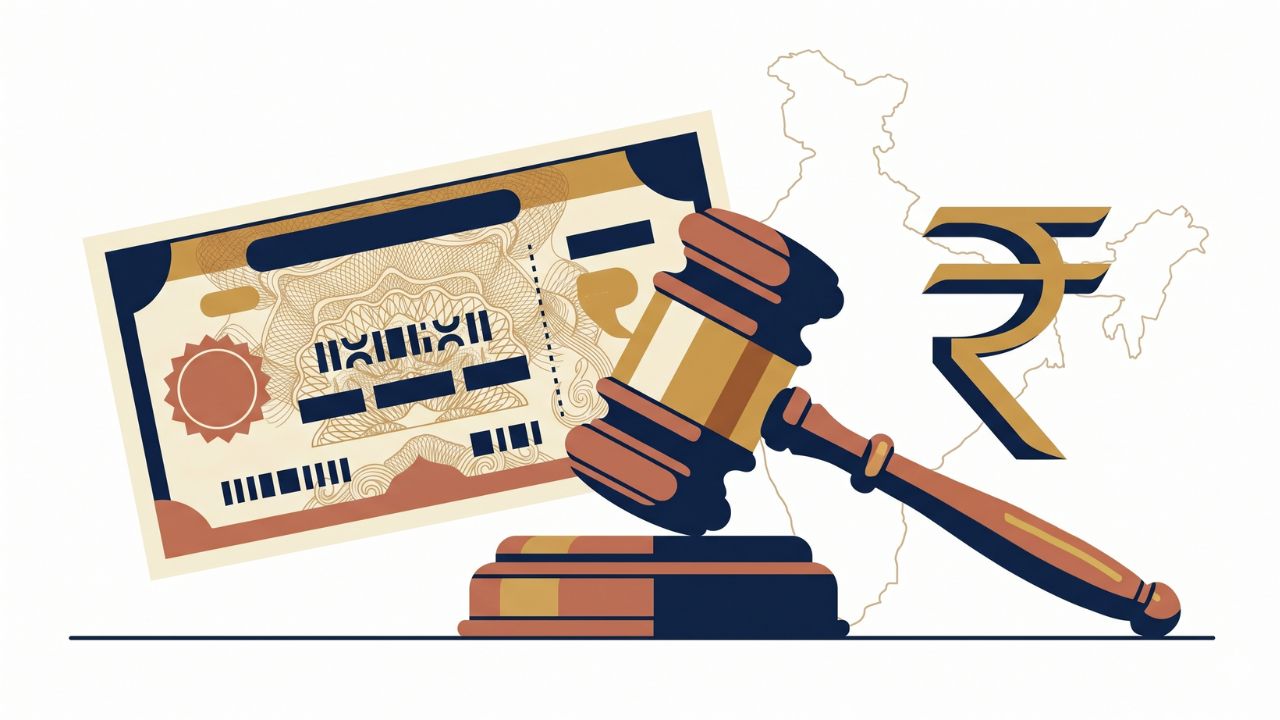
In September 1967, a small ticket went on sale in Kerala for fifty paise. Most people dismissed it. Nobody imagined it would become the blueprint that explains how Kerala lottery 1967 became India’s first state lottery — and why every other state eventually copied the idea. This article breaks down the economic crisis that triggered the programme, the minister who drove it forward, the legal structure that kept it alive, and the welfare impact that made it genuinely different. You will also find a clear timeline of how the Kerala State Lotteries department evolved from a single weekly draw to seven daily draws running today.
The Problem That Created the Kerala Lottery in 1967
Kerala in the mid-1960s faced a specific economic crisis. The state had one of the highest literacy rates in India, but it also had one of the highest unemployment rates. Educated young people could not find enough jobs. The government needed revenue — fast — but taxation alone could not close the gap. Furthermore, begging had become organised. Unlicensed private lotteries and illegal number games were pulling cash out of poor households and sending it to unregulated operators.
Finance Minister P. K. Kunju Sahib saw a way to solve both problems at once. Instead of banning private lotteries and losing the tax base entirely, the state would take over. Government control would eliminate fraud, generate welfare revenue, and create a structured form of entertainment that directed money back to public programmes. It was a pragmatic welfare argument, not a moral one.
Why Kerala’s Unemployment Crisis Made the Lottery Inevitable
Kerala’s labour surplus was unusual. Educated workers without formal sector jobs formed a vocal constituency. The government faced pressure to create visible welfare schemes. Consequently, the lottery was framed from day one as a welfare instrument — not a gaming product. That framing was deliberate. It gave political cover to legislators who might otherwise have opposed state gambling. Similarly, it allowed the revenue to be ring-fenced for social programmes, including what would later evolve into the Karunya medical aid scheme.
How Kerala Lottery 1967 Started: The First Draw
The first Kerala State Lottery draw took place on 1 November 1967. Ticket price: fifty paise. First prize: fifty thousand rupees. The draw was simple — no television broadcast, no elaborate ceremony. However, the administrative structure behind it was already sophisticated. P. K. Kunju Sahib ensured the Directorate of State Lotteries sat within the Finance Ministry. That placement mattered. It meant lottery revenue flowed directly into state finances, not into a separate autonomous body that could be raided or mismanaged.
- Draw date: 1 November 1967 (Kerala Foundation Day)
- Ticket price at launch: ₹0.50 (fifty paise)
- First prize: ₹50,000
- Governing body: Directorate of State Lotteries, Kerala Finance Ministry
The lottery sold out quickly. Demand exceeded supply in the first weeks. Therefore, the government expanded production almost immediately. Within two years, multiple weekly draws replaced the single weekly draw. This was the foundation of the seven-day draw cycle that the Kerala State Lottery Guide covers in detail today.
The Legal Framework Behind India’s First State Lottery
Kerala did not just run a lottery; it built a legal architecture around it. The state used its powers under the Constitution of India to legislate a government monopoly on lottery sales within Kerala. Private operators had no legal pathway to compete. Moreover, the Directorate published results in official gazettes, making outcomes verifiable and public. This transparency was revolutionary in 1967. No private lottery operator in India had ever offered that level of accountability.
How the 1998 Lotteries Regulation Act Codified the Kerala Model
The national government formalised the framework much later. The Lotteries (Regulation) Act 1998 gave states the right to run lotteries but imposed uniform conditions: government control only, minimum prize standards, no more than one draw per week per lottery name, and strict agent licensing. Kerala had already been following most of these principles voluntarily for thirty years. Therefore, the 1998 Act essentially codified what Kerala had pioneered. Other states that wanted to launch lotteries after 1998 had to build their programmes from scratch — Kerala was already running a mature, audited system.
Which States Copied the Kerala Lottery Model First?
The Kerala lottery history shows how fast the idea spread. By the mid-1970s, Maharashtra, Punjab, and West Bengal had launched state lottery programmes. By the 1980s, Nagaland followed — and the Nagaland State Lottery eventually became what most people in eastern India recognise today as Lottery Sambad. However, these states adapted the Kerala template rather than copying it exactly. Some allowed private operators to manage draws under government licence. Kerala never did. Kerala kept its lottery fully state-run — a distinction it maintains to this day.
The Kerala 90-day claim window versus Nagaland’s 30-day window is a direct example of how differently two states interpreted the same basic model. Kerala kept its consumer-friendly 90-day rule. Nagaland chose 30 days. That divergence traces directly back to policy choices made in the 1970s and 1980s.
The States That Followed the 1967 Welfare Blueprint
- Maharashtra — launched state lottery in the early 1970s
- Punjab — mid-1970s programme modelled on revenue-share with welfare funds
- West Bengal — introduced lottery as urban employment-adjacent revenue
- Nagaland — later model, became the base for today’s Lottery Sambad draws
- Sikkim, Mizoram, Arunachal Pradesh — north-east states used lottery revenue for infrastructure
How the Kerala Lottery Evolved Since 1967
The evolution since 1967 lottery India launch has been steady rather than dramatic. Each decade added capacity rather than changing the core structure. Here is the broad arc of change.
1967–1980: From One Draw to Seven Weekly Draws
The first decade added new lottery names — each assigned to a specific day of the week. By 1980, Kerala had a draw for every working day. Ticket prices rose gradually in line with inflation. Prize money increased proportionally. Furthermore, the Directorate began printing results in daily newspapers, widening reach beyond Thiruvananthapuram into districts across the state.
1980–2000: Bumper Draws and Festival Lotteries
The Bumper lottery concept emerged in this period. Festival draws tied to Onam, Vishu, Pooja, and Christmas offered much higher prizes than weekly draws. Ticket prices for Bumpers were also higher — typically ten to twenty times the regular price. This model funded large welfare disbursements ahead of festival seasons. It also created a secondary market of agents who stocked up specifically for Bumper sale windows.
2000–Present: Digital Results, Anti-Fraud Measures, and the Online Ban
The post-2000 period brought digital result publication. The official Kerala lotteries website began hosting results. Simultaneously, fraudulent websites appeared claiming to sell Kerala tickets online. Kerala responded by reaffirming that it sells no tickets through any online channel. The physical paper ticket sold by a licensed agent remains the only valid instrument. This position is consistent with the 1967 welfare model: keep the programme state-controlled, agent-distributed, and auditable at every step.
Why Kerala Opposed Private and Online Lotteries
The Kerala lottery history makes the opposition to private and online lotteries easy to understand. The entire 1967 model was built on replacing private operators — not co-existing with them. P. K. Kunju Sahib’s original argument was that private lotteries exploit buyers while state lotteries serve them. Allowing private or online operators back in would undermine the welfare rationale entirely.
Moreover, an online lottery creates enforcement challenges. How do you audit a draw run by a server in another jurisdiction? How do you protect buyers from result manipulation? Kerala’s answer has consistently been: you cannot, reliably. Therefore, the paper ticket and the Gorky Bhavan draw process remain non-negotiable pillars of the programme. The transparency built in 1967 is still the programme’s greatest asset.
The Welfare Impact: Where the Revenue Goes
The social outcomes of the first state lottery India launched are measurable. Kerala lottery revenue contributes to:
- The Karunya Benevolent Fund — subsidised medical treatment for low-income households
- Vendor and agent livelihoods — an estimated 100,000+ licensed sellers statewide
- General state revenue — used across infrastructure, education, and health programmes
- Prize disbursements — money recirculated directly back to ticket buyers
The agent network is particularly important. Lottery sellers in Kerala are predominantly from low-income backgrounds. Consequently, the distribution chain itself functions as a micro-employment programme — exactly the kind of job creation P. K. Kunju Sahib had in mind in 1967.
Kerala Lottery 1967 vs Lottery Sambad: Key Differences
Readers familiar with Lottery Sambad — the popular Nagaland draw — often ask how it relates to the Kerala lottery history. The connection is indirect but real. Nagaland modelled its programme partly on Kerala’s draw structure. However, the two systems have diverged significantly. Lottery Sambad runs three draws daily at 1 PM, 6 PM, and 8 PM. Kerala’s draws run once daily, one draw per lottery name, at 3 PM. Furthermore, Nagaland has historically used private operators under government licence. Kerala never has. The welfare-first principle remains the clearest point of difference.
Frequently Asked Questions: Kerala Lottery 1967 and India’s First State Lottery
When did the Kerala State Lottery start ?
The Kerala State Lottery launched on 1 November 1967 — Kerala’s Foundation Day. Finance Minister P. K. Kunju Sahib introduced it as a welfare revenue measure to address unemployment and replace illegal private lotteries.
How Kerala lottery 1967 became India’s first state lottery — was Kerala really the first ?
Yes. Kerala was the first Indian state to run a government-controlled lottery under state legislative authority. No other state had a comparable programme before November 1967. Maharashtra, Punjab, and West Bengal followed in subsequent years.
Who launched the Kerala State Lottery in 1967 ?
Finance Minister P. K. Kunju Sahib is credited with designing and launching the programme. He framed it as a welfare initiative, not a gaming product, which gave it lasting political and legal legitimacy.
How has the Kerala lottery evolved since 1967?
The programme grew from one weekly draw in 1967 to seven named daily draws by the 1980s. Bumper festival draws were added in the following decade. Digital result publication began post-2000. The core structure — state-run, agent-distributed, audited at Gorky Bhavan — has not changed.
Why did Kerala oppose private and online lotteries?
The 1967 model was explicitly built to replace private operators. Allowing private or online lotteries back in would contradict the welfare rationale. Kerala also cites draw-integrity concerns: a government draw at Gorky Bhavan is publicly auditable; an online draw hosted by a private server is not.
Conclusion: What 1967 Still Tells Us About Kerala’s Lottery Today
The Kerala lottery 1967 origin story is really a public finance story. P. K. Kunju Sahib did not invent the lottery; he invented a version of the lottery that could survive political scrutiny, fund real welfare programmes, and outcompete fraud. That design proved durable. It is why, more than fifty years later, the system still runs daily draws at Gorky Bhavan, still pays agents across all fourteen districts, and still directs revenue to the Karunya Benevolent Fund.
Understanding how Kerala lottery 1967 became India’s first state lottery also helps you understand why the rules are what they are today — the 90-day claim window, the physical ticket requirement, the ban on online sales. Every rule traces back to the original welfare argument. Nothing about this programme is accidental.
Important: lotterysambadresult.news is a purely informational platform. We publish educational content about lottery history, laws, and prize structures. We do not sell tickets, predict results, or encourage excessive participation. Always play within your means and within the legal framework of your state.