Lottery Seller Income Tax Filing: Claim Your TDS

Key Takeaways:

  • File to Claim: Proper lottery seller income tax filing is the only legal way to get back the 2% TDS taken from your agency earnings.
  • Business Income: The government treats lottery commission as business income, not “other income.”
  • ITR-3 Requirement: Because you earn commission, you generally cannot use the simple presumptive tax form (ITR-4). You must file ITR-3. * Checking Records: Always match your distributor’s bills with your Form 26AS/AIS before you send in your return.

Every time you sell a batch of tickets, the distributor takes Tax Deducted at Source (TDS) out of your profit. Over a full year, this 2% cut grows into a large amount. Mastering your lottery seller income tax filing is the only way to recover this money, because it acts as an advance tax payment sitting with the government.

To get it back, or to use it to pay your total tax bill, you must understand how the law handles . Filing an Income Tax Return (ITR) correctly stops warning letters from the tax office and helps you keep your hard-earned money.

This guide walks you through the exact steps for an accurate itr for commission income, which forms to use, and how to report your money safely.

Is Commission Business Income or Other Income?

Many new agents mix up their seller profits with lottery winnings. The Income Tax Act treats them very differently.

If you win a lottery, the government taxes the prize at a flat 30% under Section 194B (shifting to Section 393(3) Sl.No.1). You can read more about that in our general guide.

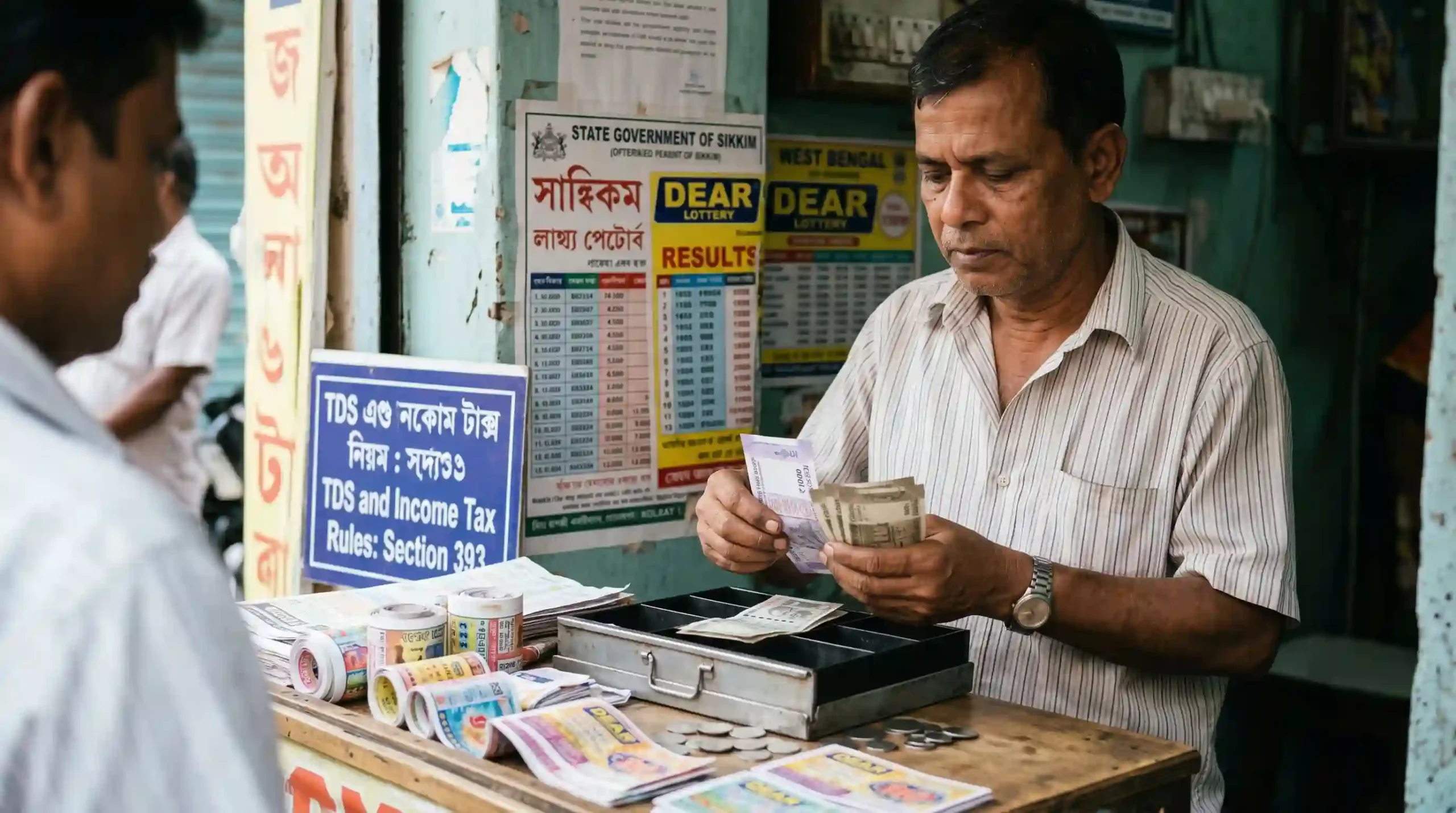
However, if you are an agent, the law sees your commission strictly as Profits and Gains of Business or Profession (PGBP). It is your daily work. The distributor takes a 2% TDS under Section 194G (shifting to Section 393(3) Sl.No.4 by April 2026). Because it falls under the lottery business income tax rules, you can subtract real business costs (like shop rent, printing, or helper pay) from your total commission before you calculate your final tax bill.

Step-by-Step: The Lottery Seller Income Tax Filing Process

Doing your lottery seller income tax filing requires the right paperwork to ensure you get your 194G tds refund without causing a tax audit.

Step 1: Check Your TDS in Form 26AS and AIS

Before you file, log into the official Income Tax e-filing portal. Download your Annual Information Statement (AIS) and Form 26AS.

These pages list every rupee of TDS your distributor paid under your PAN. If the distributor kept the TDS but failed to pay it to the government, it will not show up here, and you cannot claim it. Fix any missing numbers directly with your distributor first.

Step 2: Pick the Correct ITR Form

Choosing the right form is very important. Because selling lotteries earns you commission, special rules apply to you.

No Presumptive Taxation: Under Section 44AD(6) of the Income Tax Act, anyone who earns money from “commission or brokerage” cannot use the simple presumptive tax setup. Therefore, a presumptive tax agent filing with ITR-4 is usually wrong for lottery sellers. You must use ITR-3. #### Step 3: Find Your Net Income and Expenses

Since you file under normal business rules (ITR-3), you must figure out your actual net profit.

Take your total gross commission for the year and subtract your business costs. Allowed costs usually include:

  • Rent for your lottery stand or shop.
  • Electricity and internet bills for the work.
  • Pay given to helpers.
  • Travel costs tied directly to picking up tickets.

Step 4: Report the Income and Send It In

Type your net business income into the PGBP section of the ITR-3 form. The website will automatically figure out your total tax bill based on your tax bracket.

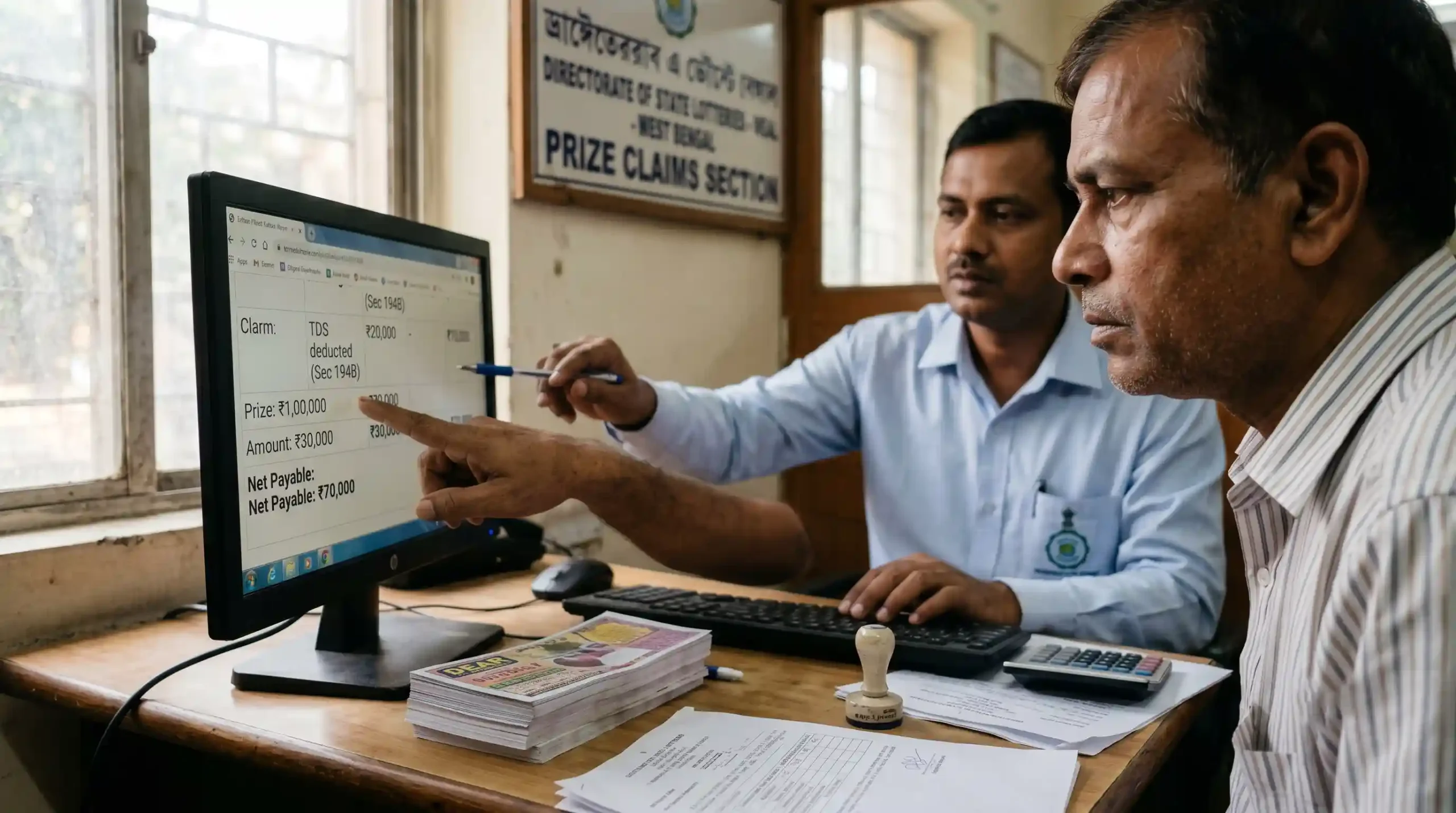
Next, go to the “Taxes Paid” section. Here, the system will apply the 2% TDS your distributor already took out against your tax bill. If the TDS amount is higher than your actual tax bill, the portal will ask for a refund for the extra money.

Checking Your GST Rules

While filing your income tax, do not forget your other tax duties. The two tax systems often check against each other.

If your commission income crosses the required limit, or if special tax rules apply to your exact distributor contract, you must also follow GST rules. Read our clear guide on to make sure your records line up perfectly.

Filing Action: If you do not know how to build a profit and loss statement for your ITR-3, do not guess. Hire a registered Chartered Accountant (CA). Paying a CA is an allowed business cost, and they will make sure your 2% TDS refund comes through smoothly.

Frequently Asked Questions

Tax Forms and Income Types

1. How do lottery agents file income tax? Agents file their taxes by figuring out their total gross commission, taking away allowed business costs, and sending an ITR form (usually ITR-3) on the Income Tax e-filing portal. This lets them claim credit for the TDS their distributor took out.

2. Is commission business income or other income? The Income Tax Department groups lottery agent commission under “Profits and Gains of Business or Profession” (PGBP). They do not treat it as “Income from Other Sources.” 3. Which ITR form should a lottery seller use? A lottery seller should almost always use ITR-3. Since the money comes from commission and brokerage, the law blocks them from using the simpler presumptive tax form (ITR-4).

4. How do I claim 194G/393 TDS credit? You claim the credit by filing your ITR. The TDS taken by the distributor will show up in your Form 26AS. When you file your return, the portal uses this TDS amount to pay your total tax bill. If you paid too much, it triggers a refund.

5. Can I deduct expenses against commission income? Yes. Because it is business income, you can deduct real costs you paid to run your lottery agency, such as shop rent, electricity bills, internet, and worker pay.

Expense Rules and Getting Your Refund

6. Do I need to maintain books of accounts? Yes. Since you claim business costs and cannot use the simpler tax setup, the law requires you to keep basic record books (like a cash book and cost receipts) under Section 44AA if your income passes certain limits. 7. Is presumptive taxation available for agents? No. Section 44AD firmly blocks taxpayers who earn money from commission or brokerage. Because of this rule, lottery agents cannot use the presumptive tax setup. 8. What if my TDS is more than my tax liability? If the 2% TDS taken out all year adds up to more than the final tax you owe, the Income Tax Department will send a refund for the extra money straight to your linked bank account after you file your ITR.

9. How do I report commission in the ITR? You report your total commission, minus your allowed business costs, in the section called “Profits and Gains of Business or Profession” (PGBP) inside the ITR-3 form.

10. What happens if I don’t file as an agent? If you do not file, you lose your right to claim a refund on the TDS taken from you. Also, if your total income is higher than the basic tax-free limit, the tax office can send a warning letter and charge you fines.

Next Steps: Before you finish your lottery seller income tax filing for the year, ensure you know exactly how the 2% cut works at the source. Read our plain breakdown of the new rules to check that your distributor is taking the right amounts.
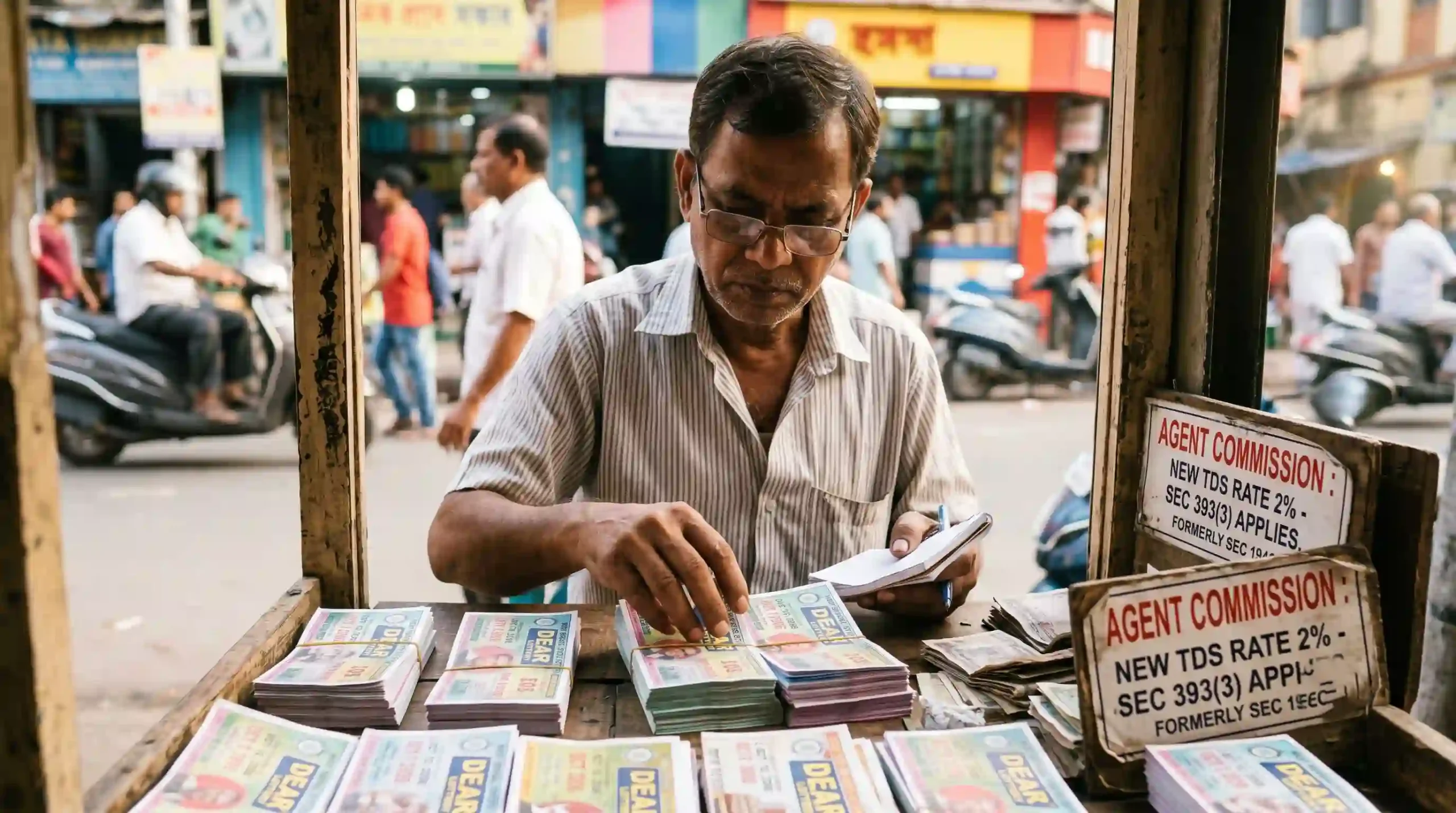
Nagaland Lottery Distributor Commission Explained

Key Takeaways:

  • Tiered Margins: The nagaland lottery distributor commission is the difference between the discounted bulk rate the state sets and the face value of the ticket.
  • Strict TDS Rules: The government deducts a 2% TDS under Section 393 (formerly 194G) on all distributor and sub-agent commission. * Unsold Risk: Distributors must carefully manage inventory, because unsold tickets directly eat into the overall lottery distributor margin.
  • Official Verification: Always verify official distributorships directly through the Directorate of Nagaland State Lotteries to avoid recruitment fraud. The lure of selling Dear Lottery tickets draws many people, but you must understand the actual nagaland lottery distributor commission before you invest money. State authorities heavily control the profit margins in the paper lottery business.

Whether you want to understand the broader or focus strictly on Nagaland’s high-volume daily draws, the real math determines your success. This guide explains how distributors and agents earn, the taxes the government deducts, and the business risks you face.

How the Dear Lottery Commission Structure Works

The Nagaland State Lottery (widely known as the Dear Lottery) uses a high-volume, low-margin model. The state does not pay a flat “salary” or post-sale percentage. Instead, the state builds the dear lottery commission directly into the pricing structure.

The Directorate of Nagaland State Lotteries sells bulk tickets to official, licensed super-distributors at a discounted rate below the ticket’s printed face value (like Rs. 6). The difference between this bulk price and the face value creates the total gross profit.

Distributor vs. Sub-Agent Margins

Sellers must then split this gross profit down the supply chain.

A primary dear lottery distributor buys in massive volumes. They keep a small fraction of the discount as their own profit and pass the tickets down to sub-agents and local retail sellers at a slightly higher wholesale price.

The local nagaland lottery agent (the person selling directly to the public) keeps the final piece of the discount when they sell the ticket at full face value. Therefore, the sub-agent commission is the difference between what they paid the distributor and the Rs. 6 retail price.

Verify Margins Officially: Specific discount rates change based on the lottery scheme (like Dear Morning vs. Bumper draws). Always refer to the official tender documents from the Directorate of Nagaland State Lotteries for the exact mandated rates. ## What TDS Applies to Distributor Commission?

Taxes heavily impact your take-home pay. If you want to know whether an , you must account for Tax Deducted at Source (TDS).

Under current Indian tax law, the government taxes lottery commission as business income. When a distributor passes margins down to a sub-agent, the law requires the distributor to deduct TDS.

The 2% TDS Rule: Effective October 1, 2024, the TDS rate on lottery agent commission dropped from 5% to 2%. Starting April 1, 2025, the threshold for this deduction is Rs. 20,000 annually. By April 1, 2026, this rule shifts from Section 194G to the new Section 393(3) Table Sl.No.4. For a deep dive into how to claim this credit back when you file your returns, read our full guide on the new rules.

Navigating Unsold Tickets and Payouts

Unsold inventory poses the biggest threat to a dear lottery distributor. In most state lottery schemes, distributors cannot return tickets to the state if they fail to sell them before the draw.

If a distributor buys 100,000 tickets but only sells 90,000 to sub-agents, the distributor bears the entire cost of the 10,000 unsold tickets. This loss can instantly wipe out the thin lottery distributor margin earned on the sold tickets. Efficient inventory distribution is the core skill of a profitable lottery business.

How to Verify an Official Nagaland Distributor

Because the Dear Lottery is so popular, the market is full of fake “dealership” offers. Scammers often demand upfront “registration fees” for guaranteed distributorships that simply do not exist.

To protect yourself, never pay an individual for a dealership via WhatsApp or Telegram. The state licenses, documents, and registers all official distributors.

Protect Your Investment: Always verify a distributor’s credentials directly with the Directorate of Nagaland State Lotteries. If you suspect a fake dealership offer, do not send money. Report the fraud immediately to the National Cyber Crime Reporting Portal at cybercrime.gov.in or call the 1930 helpline. For broader context on how state lotteries operate nationwide, review our .

Frequently Asked Questions

Commission & Margin Rules

1. How much commission do Nagaland lottery distributors earn? Distributor earnings depend entirely on sales volume. They earn a small fraction of a rupee per ticket, which is the difference between the state’s bulk discount rate and the wholesale rate they offer to sub-agents.

2. How does the Dear lottery commission structure work? It is a tiered discount model. The state sells to top distributors at a base rate. Distributors sell to agents at a slightly higher rate. Agents sell to the public at face value (like Rs. 6). The price steps dictate the commission.

3. What is the difference between a distributor and an agent? A distributor holds a primary contract with the state to buy tickets in massive bulk. An agent (or sub-agent) buys smaller batches from the distributor to sell directly to the consumer public.

4. What dictates sub-agent margins? The wholesale price set by the distributor dictates sub-agent margins, bounded by the rules of the state’s lottery scheme. It is the gap between their purchase price and the final ticket face value.

5. How do unsold tickets affect distributor income? Unsold tickets cause a direct financial loss. Since distributors usually cannot return paper tickets to the state post-draw, the distributor absorbs the full cost of any inventory they fail to distribute, severely impacting net profit.

Licensing & Tax Rules

6. What TDS applies to distributor commission? The government deducts a 2% TDS on commission income exceeding Rs. 20,000 annually. This falls under Section 393(3) Table Sl.No.4 (formerly Section 194G). 7. Is a distributor licence different from an agent licence? Yes. A primary distributor licence involves heavy security deposits, strict KYC checks, and direct agreements with the Directorate of Nagaland State Lotteries. Local municipal authorities or the distributors themselves often manage agent licences.

8. How do distributors collect their commissions? The state does not “pay” commissions as an after-the-fact bonus. Distributors realize their profit upfront at the point of sale, because they keep the price difference between what they paid the state and what they charge the sub-agents.

9. Can I become a Dear lottery distributor? Becoming a primary Dear lottery distributor requires significant funding, a strong business setup, and an open state tender. Most new entrants start by becoming local sub-agents under an established regional distributor.

10. How do I verify an official Nagaland distributor? You can verify an official distributor by requesting their state-issued license and cross-referencing it with the Directorate of Nagaland State Lotteries. Never trust a distributor who only communicates via unverified social media channels. —

Next Steps: If you plan to enter the lottery business, ensure you understand the legal and tax requirements. Read our step-by-step guide on the correct to keep your business compliant and successfully claim back your 2% TDS.

GST on Lottery Agent Commission: What Applies

Receiving a tax notice is a terrifying experience for any small business owner. For sellers navigating the complex rules around gst on lottery agent commission, confusion is their biggest financial risk.

Many retailers wrongly assume that because the government taxes the tickets themselves, their personal earnings are completely immune from the Goods and Services Tax. Unfortunately, this misunderstanding leads to heavy penalties.

Managing your overall lottery agent commission in india requires knowing the exact legal difference between the tax on the product and the tax on your service. This guide breaks down exactly when GST applies to your commission, what rate to charge, and how to stay perfectly compliant.

Key Takeaways

  • Two Separate Taxes: The government levies a 28% GST on the face value of the ticket. However, your commission is a separate “agency service” that attracts its own 18% GST.
  • Turnover Limits: You must register for GST if your annual service income crosses the ₹20 Lakh threshold (₹10 Lakh in special category states).
  • Forward Charge: While top distributors pay ticket GST under the Reverse Charge Mechanism (RCM), regular agents charge GST on their commission under normal forward charge.
  • Income Tax is Different: GST has nothing to do with your 2% Income Tax TDS deducted under the new Section 393 rules.
  • Input Tax Credit: Registered agents can safely claim Input Tax Credit (ITC) on their business expenses to lower their final GST bill.

Understanding Commission GST vs. Ticket GST

The most common trap for new sellers is mixing up the product with the service. To stay out of legal trouble, you must separate these two concepts in your accounting.

First, the lottery ticket itself is classified as “goods.” The GST Council levies a flat 28% GST on the face value of these goods. You can read more about how this impacts buyers in our Complete Guide to Lottery Taxes.

Second, the act of selling the ticket for a distributor is classified as an “agency service.” The commission you earn is the payment for this service. Because it is a service, gst on commission income generally falls under an 18% rate. ### Does an Agent Need GST Registration?

You do not automatically need to pay GST the day you open your shop. The law provides a safety net for small operators.

You only need lottery agent gst registration if your aggregate annual turnover exceeds the legal threshold. For service providers in most states, this limit is ₹20 Lakhs per year. If you operate in certain special category states, the limit is strictly ₹10 Lakhs. If your total commission stays below this limit, you are exempt from charging GST on your services.

Reverse Charge vs. Forward Charge

Another massive point of confusion involves the reverse charge lottery rules. The Reverse Charge Mechanism (RCM) shifts the responsibility of paying GST from the seller to the buyer.

When a State Government supplies lottery tickets to a primary distributor, the distributor pays the 28% GST under RCM. The state does not pay it.

However, this RCM rule applies to the tickets, not the commission. When a sub-agent provides a selling service to a distributor, normal forward charge rules apply.

  • The Process: If you are a registered agent, you must issue a tax invoice to your distributor.
  • The Math: You add 18% GST to your commission amount, collect it from the distributor, and pay it directly to the government.

Input Tax Credit (ITC): Once registered, you are not just paying taxes; you gain benefits. You can claim ITC on the GST you paid for business expenses like shop rent, advertising, and computers. This directly reduces the cash you owe the government. —

Do Not Confuse GST with Income Tax (TDS)

While you manage your GST compliance, you must also handle your direct taxes. The GST department and the Income Tax department track your earnings separately.

Your commission is treated as standard business income. Therefore, your distributor will deduct TDS on lottery agent commission before paying you. You must claim this back during your lottery seller income tax filing.

Crucial TDS Updates: The government recently eased the income tax burden on agents. The Finance Act 2024 slashed the commission TDS rate from 5% to just 2% (effective Oct 1, 2024). Furthermore, the tax-free threshold rose from ₹15,000 to ₹20,000 (effective Apr 1, 2025). Finally, the old Section 194G rule will be renumbered to Section 393(3) Table Sl. No. 4, effective April 1, 2026. Do not confuse this with Sl. No. 1, which applies a flat 30% tax strictly to winnings. —

Frequently Asked Questions (FAQ)

1. Is GST charged on lottery agent commission?

Yes, the commission you earn for selling tickets is classified as an “agency service” or “support service.” If you cross the mandatory annual turnover threshold, this service attracts its own GST, entirely separate from the ticket’s tax.

2. What is the GST rate on lottery commission?

The standard GST rate for agency and business support services is 18%. This is applied directly to your gross commission earnings, not the overall face value of the lottery tickets you sell.

3. How is commission GST different from the 28% on tickets?

The 28% GST is levied directly on the face value of the lottery ticket itself (the product). Commission GST (usually 18%) is levied strictly on the service you provide to the distributor by acting as their sales agent.

4. Does an agent need GST registration?

An agent only needs mandatory GST registration if their aggregate annual turnover exceeds the legal threshold limit for services. Until you cross this specific financial threshold, you do not need to register or charge GST.

5. Is reverse charge applicable on lottery commission?

Generally, no. While the main supply of lottery tickets from the State to the distributor falls under the Reverse Charge Mechanism (RCM), the commission service provided by a sub-agent to a distributor falls under the normal forward charge mechanism.

6. Who pays the GST, the agent or the distributor?

Under the forward charge mechanism, the registered agent providing the service must add the 18% GST to their commission invoice, collect this amount from the distributor, and subsequently remit it to the government.

7. Can agents claim input tax credit?

Yes. If you are a registered GST taxpayer, you can claim Input Tax Credit (ITC) on the goods and services you purchase to run your agency, such as shop rent, computers, or advertising, lowering your final tax liability.

8. What is the turnover limit for GST registration?

For service providers, the standard GST registration threshold is an annual turnover of ₹20 Lakhs. However, in certain special category states (mainly in the North East), this threshold is legally reduced to ₹10 Lakhs.

9. How is GST shown on a commission invoice?

A registered agent must issue a formal tax invoice to the distributor. The invoice must clearly list the base commission amount, and then separately add the 9% CGST and 9% SGST (or 18% IGST) to calculate the total payable.

10. What happens if an agent doesn’t register for GST?

Failing to register when your turnover exceeds the limit is a legal violation. The GST department can impose heavy monetary penalties, charge 18% interest on the unpaid tax, and deny any Input Tax Credit you could have claimed.

Next Steps for Sellers

Staying compliant is the only way to protect your business. Calculate your annual service turnover carefully. If you are approaching the ₹20 Lakh threshold, consult a Chartered Accountant immediately to set up your GSTIN. To understand how your net margins work after all these taxes, return to our main guide on lottery agent commission.

How to Get a Lottery Dealer Licence in India

Starting a lottery business requires more than just renting a shop counter and buying tickets. Because state governments strictly regulate lotteries, operating without official permission can lead to heavy fines or criminal charges. Therefore, to protect yourself and build a legitimate business, understanding the exact lottery dealer licence process in india is your vital first step.

Before you calculate daily margins or worry about your overall lottery agent commission in india, you need legal authority to sell. Consequently, this guide breaks down how to apply, what official documents you need, and how to spot dangerous recruitment frauds targeting new sellers today.

Key Takeaways

  • State-Controlled: There is no single national licence. You must apply directly through the specific state lottery department where you plan to work.
  • Mandatory KYC: You will need standard business documents. Specifically, this includes your Aadhaar card, PAN card, and official address proof.
  • Security Deposits: Expect to pay a refundable security deposit to the government. However, the exact amount varies heavily by state.
  • Tax Ready: The state taxes your commission as business income. Therefore, having a valid PAN is strictly required before you start.
  • Scam Warning: Always avoid online advertisements offering instant dealerships via UPI. These are almost always illegal scams.

Navigating the Lottery Dealer Licence Process in India

India does not issue a single permit that lets you sell tickets nationwide. Instead, each individual state government regulates its own lottery scheme. For this reason, a state lottery permit only gives you permission to sell that specific state’s tickets, strictly within that state’s borders.

Before beginning the paperwork, you should determine if the local market can support your business. Specifically, research if a lottery agency is profitable in India for your specific location and foot traffic. If the local math makes sense, you can confidently move forward with securing your legal permit.

Beware of Fake Dealerships: Recruitment fraud is a massive problem in the lottery industry. Scammers frequently build fake websites or send WhatsApp messages. Typically, they offer a guaranteed “distributorship” if you quickly transfer money via UPI. Real state lottery departments never demand instant UPI transfers over messaging apps. Always apply directly through the official .gov.in state portal. —

Step-by-Step: The Lottery Dealer Licence Process in India

While the specific lottery dealer licence process in india differs by region, the core steps remain highly consistent across legitimate state departments. Follow this standard path to secure your official permit safely.

Step 1: Verify State Eligibility

First, confirm that your target state actually runs a legal lottery scheme. You must check the official state lottery department’s guidelines regarding age, residency, and financial standing. Importantly, many states require you to be a permanent resident of the state where you apply.

Step 2: Gather Required KYC Documents

The government requires complete transparency regarding who sells their tickets. Therefore, you must prepare a comprehensive documentation packet. Generally, you need your Aadhaar card, a valid PAN card, passport-sized photographs, and formal proof of your shop’s address (like a rental agreement). Additionally, if you operate as a partnership, you will need your firm’s registration certificates.

Step 3: Pay the Deposit and Submit Forms

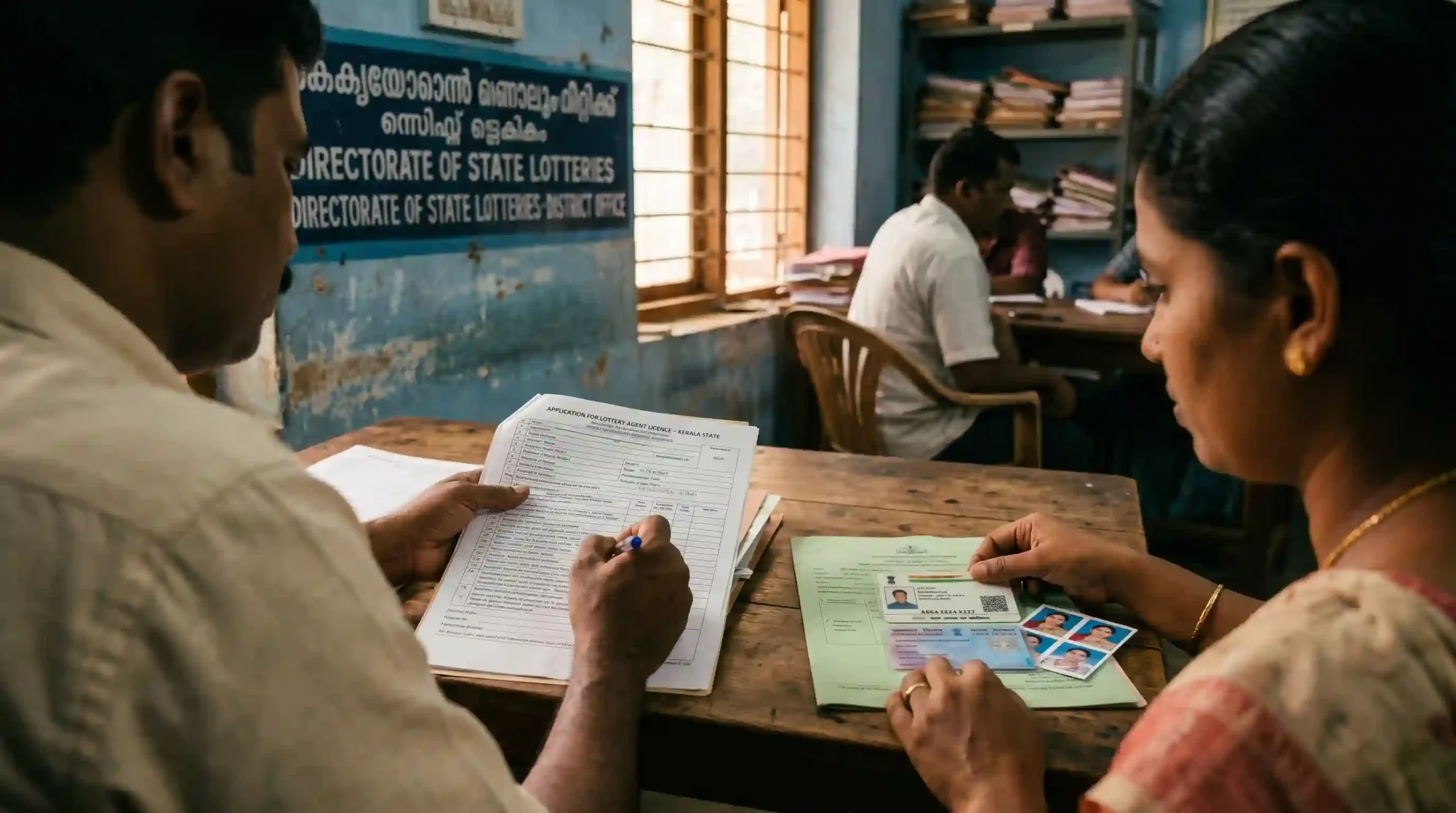
Next, obtain the official application form from the Directorate of State Lotteries. You must fill this out accurately and attach your KYC documents. At this stage, you must also pay a refundable security deposit via a formal bank draft or official state treasury challan. Remember, licence fees and deposits vary drastically by state.

Step 4: Verification and Approval

Finally, submit the complete packet to the district lottery office. The department will review your documents carefully. Furthermore, they may conduct a physical inspection of your proposed retail location. If everything clears the background check, the state will issue your official dealer licence.

GST and Tax Compliance After Licensing

Getting your licence is only the beginning of your compliance journey. Afterward, you must also prepare for the tax duties that come with your new business.

Many beginners confuse ticket taxes with seller taxes. While the lottery tickets themselves carry a 28% GST, your service of selling them works entirely differently. You must understand the specific rules for GST on lottery agent commission to know if you need to register for a GSTIN.

Furthermore, your commission earnings are taxed as business income at 2% under Section 393(3) Sl.No.4. Crucially, this is completely distinct from the flat 30% tax applied to winners. For a deeper dive, review our Complete Guide to Lottery Taxes.

Frequently Asked Questions (FAQ)

1. How do I get a lottery dealer licence in India?

To begin, apply directly to your state’s Directorate of State Lotteries. You must submit a formal application, provide personal and business KYC documents, and pay the required government security deposit to receive your official seller’s permit.

2. Which department issues a lottery agent licence?

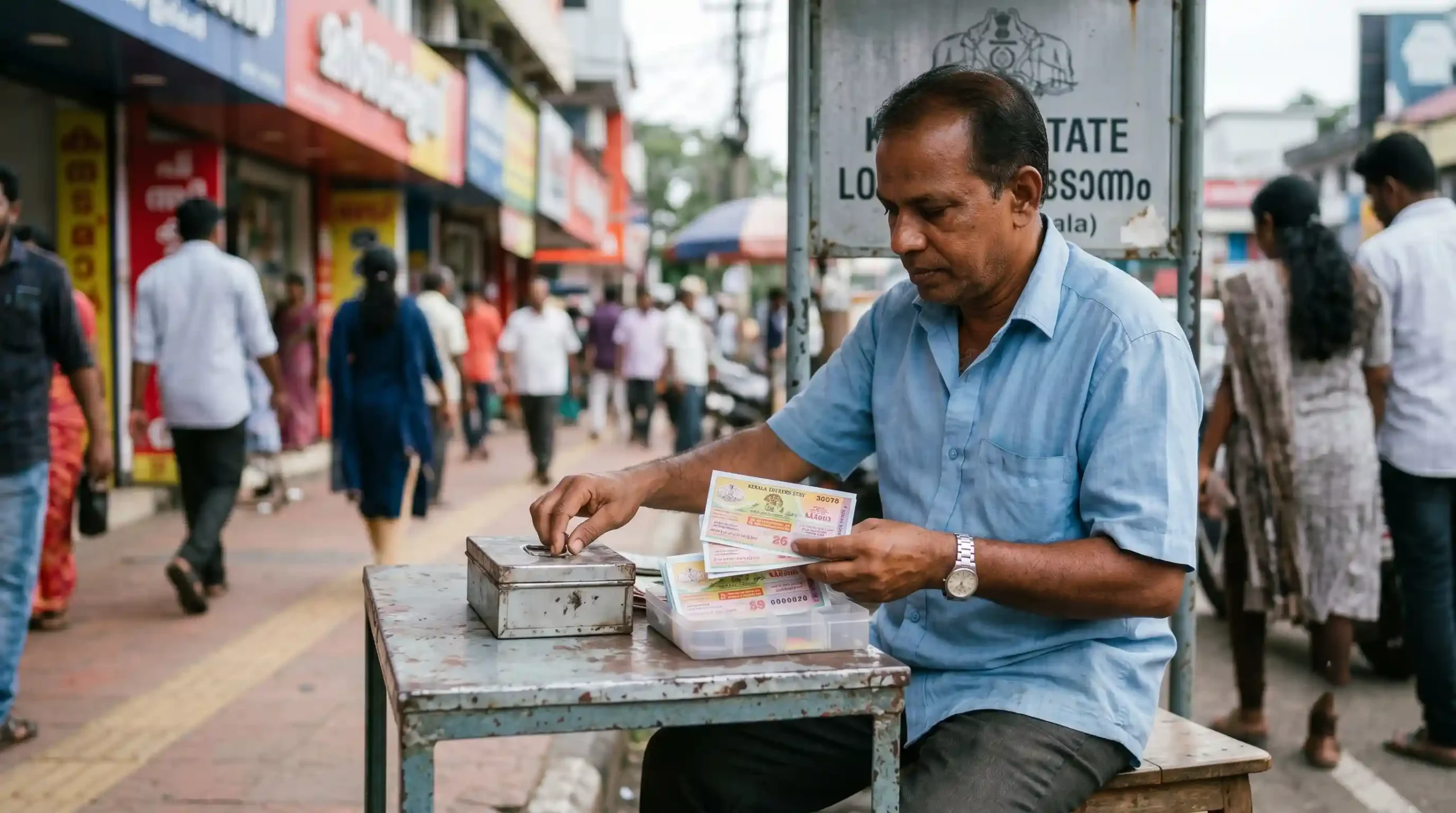
The specific State Lottery Department issues these licences, not the central government. For example, the Directorate of Kerala State Lotteries or the Directorate of Nagaland State Lotteries handles applications for their respective jurisdictions.

3. What documents are needed for a lottery licence?

Generally, you need standard KYC documents. This includes your Aadhaar card, PAN card, passport-sized photographs, and proof of your shop’s business address. Additionally, you may need a bank mandate form or a police clearance certificate depending on the state.

4. Is there a security deposit or fee?

Yes. Every state requires a one-time, refundable security deposit to protect against defaults. In addition, there is usually a non-refundable application or registration fee. The exact amount varies wildly from state to state.

5. How long does the licence process take?

Typically, the timeline varies by state and application volume. After submitting your application and paying the deposit, document verification and local field inspections usually take anywhere from two to six weeks before the state issues the licence.

6. Can I sell lottery in any state with one licence?

No. A licence only permits you to sell the specific lottery within the issuing state’s borders. Selling tickets across state lines or selling another state’s lottery without their specific permission is strictly illegal.

7. Do I need GST registration as a lottery dealer?

It depends entirely on your annual turnover and specific agency rules. While the tickets themselves carry a 28% GST, your commission income may attract separate GST liabilities. This makes registration mandatory once you cross the turnover threshold.

8. Can an individual or only a firm get a licence?

Both individuals and registered firms (such as partnerships or private limited companies) can apply for a lottery dealership. However, the documentation requirements will differ. Firms must provide partnership deeds or certificates of incorporation.

9. How is a licence renewed or cancelled?

Licences are typically valid for one financial year and require annual renewal with a small fee. Warning: The department can suspend or cancel your licence if you fail to pay dues, sell illegal tickets, or violate state lottery rules.

10. Are there scams pretending to offer dealerships?

Yes, recruitment fraud is highly common. Scammers build fake websites or send WhatsApp messages offering guaranteed distributorships for a quick UPI payment. Real state lottery departments never demand immediate UPI transfers via social media apps.

Next Steps

Before handing over any money, always verify the application process on your state government’s official .gov.in website. If you encounter a website aggressively demanding a UPI payment for a dealership, stop communicating and report the portal immediately. Once you understand your local rules, you can read our main pillar guide on how agent commissions work.

Lottery Agent TDS Is Now 2%: The Section 393 Rule

Selling lottery tickets is a high-volume game where every single rupee matters. Therefore, seeing a chunk of your hard-earned cash disappear to taxes can feel frustrating. However, understanding exactly how the government calculates the tds on lottery agent commission helps you keep more money in your pocket right from the start.

Recently, the government made massive changes to how agents are taxed. Specifically, they slashed the deduction rate and introduced a new system under Section 393. Consequently, navigating your daily payouts and yearly filings requires updated knowledge. This guide explains the new rates, the higher tax-free limits, and the exact steps to claim your money back.

Key Takeaways

  • Huge Rate Cut: The tds on lottery agent commission dropped from 5% to a much lower 2% in late 2024.
  • Higher Limits: You can now earn up to ₹20,000 per year before anyone deducts TDS.
  • New Section Code: The old Section 194G rule moves to Section 393(3) starting April 2026.
  • Business Income: Your commission counts as regular business income. Crucially, this is not the same as the flat 30% tax on prize winnings.
  • Claim Your Refund: You can claim your deducted TDS back when you file your yearly tax return.

The Big Change: TDS on Lottery Agent Commission Drops to 2%

For years, lottery sellers lost a significant portion of their daily payouts to upfront tax deductions. Fortunately, the government recently provided major relief to small business owners.

First, the Finance Act 2024 officially reduced the tds on lottery agent commission. Specifically, the rate fell from 5% down to just 2%. Importantly, this lower rate became effective on October 1, 2024.

As a result, agents now keep more working capital on hand every week. Moreover, you do not have to wait until the end of the financial year to access this money.

The New 20000 TDS Threshold

In addition to the rate cut, the government also raised the tax-free limit. Previously, distributors had to deduct tax if you earned over ₹15,000 in a year.

However, starting on April 1, 2025, the new ₹20,000 TDS threshold took effect. Essentially, this means you can earn up to ₹20,000 in commission before your distributor deducts a single rupee of tax. Ultimately, this change protects very small retailers and part-time sub-agents from unnecessary paperwork.

The Shift: 194G to Section 393

Tax codes often confuse sellers. For a long time, agents knew their tax deductions simply as “194G.” However, the tax department is reorganizing its rulebook.

Specifically, the government is moving the old 194G rule to Section 393. Starting on April 1, 2026, the law officially renumbers this rule to Section 393(3) Table Sl. No. 4. Therefore, when you receive your TDS certificates (Form 16A) in the future, you will see this new section code. Despite the name change, the core rules and the 2% rate remain exactly the same.

Crucial Rule: Always give your PAN card to your distributor. If you do not provide a valid PAN, the government forces the distributor to deduct a massive 20% penalty TDS instead of the standard 2%. —

Commission TDS vs. Winnings Tax

Many new agents confuse the taxes they pay on their commission with the taxes winners pay on prizes. You must understand the difference to avoid filing errors.

On one hand, the government taxes lottery winnings under Section 393(3) Table Sl. No. 1. Consequently, winners face a flat 30% tax rate, plus extra cess charges. You can read more about this in our complete guide to lottery tax.

On the other hand, the government taxes agent commission under Section 393(3) Table Sl. No. 4. Importantly, they treat this money as standard business income. Because of this, you only face the 2% tds on lottery agent commission upfront. Later, you pay your final tax based on your personal income tax slab.

A Note on GST Compliance

While you manage your TDS, do not forget about GST. Remember, TDS is an income tax. Conversely, your agency services might also attract GST. This depends heavily on reverse charge rules. Therefore, we strongly recommend reading our full guide on GST on lottery agent commission to stay fully compliant.

How to Claim Your TDS on Lottery Agent Commission in Your ITR

Eventually, you want to get your deducted money back. Since the government treats commission as business income, you can use the deducted TDS to offset your final tax bill. If your final tax bill is zero, the government will refund the TDS directly to your bank account.

To claim this money, you must file a yearly Income Tax Return. Generally, agents use form ITR-3 or ITR-4. First, you declare your total commission as business profit. Next, you match the deducted amounts with your Form 26AS or Annual Information Statement (AIS). Finally, you submit the return. Learn the exact steps in our detailed lottery seller income tax filing guide.

Frequently Asked Questions (FAQ)

TDS Rates & Rules

1. What is the exact TDS on lottery agent commission today?

Currently, the TDS on lottery agent commission is 2%. Specifically, the government reduced this rate from the older 5% rate to help small sellers keep more of their daily cash.

2. When did 194G TDS drop from 5% to 2%?

Officially, the rate cut took effect on October 1, 2024. Furthermore, the Finance Act 2024 introduced this change to ease the tax burden on the lottery distribution network.

3. Is lottery commission TDS now under Section 393?

Yes, the government is moving the rule. Starting on April 1, 2026, the old Section 194G becomes Section 393(3) Table Sl. No. 4. However, the 2% deduction rate remains the same.

8. Is surcharge or cess added to the 2% rate?

Generally, no. For individual resident agents and standard domestic firms, the distributor deducts a flat 2% basic rate. Therefore, they do not add extra health and education cess to this specific commission TDS.

Thresholds & Deductions

4. What is the TDS threshold for agent commission?

Currently, the tax-free limit is ₹20,000 per financial year. Importantly, this new threshold took effect on April 1, 2025, rising from the previous ₹15,000 limit.

5. Is TDS deducted if commission is below 20,000?

No. If your total commission from a single distributor stays under the ₹20,000 limit for the entire financial year, they will not deduct any TDS. Instead, you receive your full payout.

6. What TDS applies if I have no PAN?

Warning: If you fail to give your PAN to the distributor, they must deduct tax at a penalty rate of 20%. Consequently, you lose a massive portion of your earnings. Always provide your PAN.

9. Who deducts the TDS, the distributor or the state?

Typically, the entity paying you directly handles the deduction. For instance, the state deducts TDS when paying a top distributor. Next, the distributor deducts TDS when paying their local sub-agents.

Filing & Refunds

7. How do I claim 194G/393 TDS in my ITR?

First, you must file your Income Tax Return using ITR-3 or ITR-4. Then, you declare the commission as business income. Finally, you claim the deducted TDS shown in your Form 26AS against your total tax liability.

10. How is commission TDS different from 194B on winnings?

Crucially, they are completely different. The government taxes winnings at a flat 30% under Section 393(3) Sl. No. 1. Conversely, they tax agent commission as regular business income at just 2% under Sl. No. 4.

Lottery Agent Commission in India: How It Works

Running a lottery agency in India relies on high sales and tight margins. While many sellers focus only on daily sales, true profit depends on three main things. Specifically, you must manage your lottery agent commission in india, handle unsold tickets, and follow strict tax rules.

Furthermore, the financial rules for agents changed a lot recently. The government introduced a new lottery commission tds 2% rate. In addition, you face new filing rules under Section 393. Because of this, managing your lottery seller income takes careful planning.

Whether you are a new sub-agent or a top distributor, you need to know how the state splits and taxes earnings. Therefore, this hub gives you a full guide to the business side of selling tickets. It pairs perfectly with our complete guide to lottery taxes for winners.

Key Takeaways

  • Commission Setup: You earn a percentage of the ticket price. Importantly, this rate changes based on your state and your role.
  • Business Income: The state taxes your commission as regular business income. Unlike winnings, this differs from the flat 30% tax on prize money.
  • Lower TDS Rate: Recently, the TDS on commission dropped to 2% in late 2024. Additionally, the tax-free limit increased to ₹20,000 in April 2025.
  • GST Rules: Your commission might attract GST under agency services. However, this is entirely separate from the 28% GST on ticket sales.
  • Scam Warning: Only state governments issue official licences. Consequently, you should always ignore online messages offering quick dealerships.

How Much Do Agents Actually Earn?

Your main income comes from your lottery ticket commission. Surprisingly, India does not have one national rate. Instead, the rate changes based on the state scheme, ticket price, and draw type.

Generally, state governments set a total profit margin for the whole seller network. After that, the network splits this money among all the different sellers.

To understand your real profit, you must break down the math. Although gross income looks great at first glance, you need to look closely at the lottery agent commission per ticket. Ultimately, this shows the actual cash you keep after paying bills and covering unsold tickets.

The Distributor and Sub-Agent Chain

A single ticket passes through many hands before a buyer gets it. Consequently, sellers split the commission at each step:

  1. Stockists/Distributors: They buy in bulk from the state and take the first cut.
  2. Agencies: These mid-level sellers buy from distributors.
  3. Sub-Agents/Retailers: These workers sell tickets directly to the public.

For example, the Nagaland lottery distributor commission sets a clear split. It divides the money between the top buyer and the street vendor. As a result, everyone gets a fair share of the profits.

The Tax Reality: TDS and Income Filing

Crucial Rule: Do not confuse agent commission with lottery winnings. As a rule, winners pay a flat 30% tax. Conversely, the state taxes agent commission as regular business income based on your personal tax slab.

Recently, the government updated the rules for state lottery agent earnings. Fortunately, these changes help small sellers:

  • TDS Rate Cut: First, the Finance Act 2024 cut the TDS on commission from 5% to 2%. This started on October 1, 2024. * Higher Limit: Second, the tax-free limit increased from ₹15,000 to ₹20,000 on April 1, 2025. You must earn more than this before distributors deduct TDS.
  • Section Change: Finally, the old law used Section 194G. However, on April 1, 2026, the law moves this TDS to Section 393(3) Table Sl. No. 4.

If you earn over the limit, your distributor deducts the 2% TDS before paying you. Luckily, you can get this money back or lower your tax bill. To do this, you must learn the rules for TDS on lottery agent commission. Additionally, you must finish your lottery seller income tax filing correctly every year.

What About GST?

On another note, GST causes a lot of confusion in the lottery business. Buyers pay a flat 28% GST on lottery tickets. Conversely, the service of selling tickets works differently. In fact, your agency services might attract their own GST charges. This depends on reverse charge rules or standard registration. Therefore, read our guide on GST on lottery agent commission to stay safe.

Licensing and Business Profitability

Since tax laws keep changing and unsold tickets eat into daily profits, many new sellers ask: is a lottery agency profitable in India? Essentially, the answer depends on your location, foot traffic, and stock management.

If the math works for you, you need legal permission next. You cannot just buy and sell tickets. Instead, you must apply through official offices to get your lottery dealer licence. Importantly, the steps to become a lottery agent in India change greatly by state.

For instance, the specific rules for Kerala demand strict KYC checks. Moreover, they require security deposits and local residency. Clearly, these rules differ a lot from Northeast schemes.

Beware of Fake Dealerships: Real state lottery departments do not send random WhatsApp messages. Furthermore, officials will never offer a distributorship for a quick UPI payment. Sadly, scammers build fake websites to look like official departments. Their main goal is to steal your deposit. Therefore, always check dealership applications directly on the official state lottery website. —

Frequently Asked Questions (FAQ)

Commission & Profit Structure

1. How much commission does a lottery agent earn in India?

Typically, earnings change by state and agent tier. The total commission pool ranges from a few percent to 20% of the ticket price. Afterward, the main distributor, agency, and retailer split this total margin.

2. Is lottery agent commission the same in every state?

No. Every state government designs its own lottery schemes. For example, Kerala, Nagaland, and Punjab all set their own specific commission structures. In addition, they decide margin splits and winning ticket bonuses.

6. How do distributors and sub-agents split commission?

First, the state sets a maximum margin. Next, the main distributor takes a cut for managing bulk buying. They pass the rest to local agencies. Finally, agencies take a cut and pass the final percentage to street-level sellers.

7. Is selling lottery tickets a profitable business?

Indeed, it can be profitable, but margins stay very thin. Primarily, profit relies on high daily sales. Because the cost of unsold tickets falls on the seller, agents must manage their stock carefully. Otherwise, this quickly eats into profits.

9. What is commission per ticket on a lottery?

Simply put, commission per ticket is the exact cash you keep from one sale. For example, imagine you get a 10% margin on a ₹40 ticket. Thus, your gross commission per ticket equals ₹4 before you pay costs and taxes.

Tax & GST Compliance

3. How is lottery commission taxed?

As a rule, lottery winners pay a flat 30% tax. Conversely, the government treats your commission as business income. Therefore, you add it to your total yearly income. Then, you pay tax based on your regular income tax slab when you file.

4. What is the TDS rate on lottery agent commission?

Currently, the TDS rate on agent commission is 2%. Specifically, the Finance Act 2024 cut this rate from 5%. As a result, distributors deduct this tax if your commission goes over the ₹20,000 limit in one financial year.

5. Do agents pay GST on their commission?

Yes, agency commission can attract GST. However, this tax stays completely separate from the 28% GST on lottery tickets. Ultimately, your exact tax charge depends on reverse charge rules and your yearly sales.

10. How do agents file income tax on commission?

Generally, agents must file an Income Tax Return. Usually, you use ITR-3 or ITR-4. You declare your earnings as business profit. By doing this, you let yourself claim a refund for the 2% TDS that distributors already deducted.

Licensing & Setup

8. How do I become a licensed lottery agent?

To start, you must apply directly through a specific state’s lottery department. Specifically, you need to submit KYC documents, business address proof, and PAN details. Additionally, you usually pay a refundable security deposit to the government.

Next Steps

To succeed as a lottery agent, you must track your daily margins and file your taxes on time. If you suspect someone is offering a fake dealership, stop talking to them immediately. Next, report the site to the National Cyber Crime portal. Finally, to learn more about your duties, read our complete guide to lottery taxes.

Is Lottery Legal in Maharashtra? The Real Answer

Check Before You Buy

Before purchasing any lottery ticket in Maharashtra, ensure you follow these primary rules:

  • Confirm legality: The state strictly permits only government-run paper lotteries. Private lotteries are entirely illegal.
  • Authorised sellers only: Buy physical tickets exclusively from registered government agents and stockists.
  • Verify the source: Always cross-check draw results and rules directly with the official Directorate of Maharashtra State Lotteries.
  • Many residents wonder about the exact maharashtra lottery status when they see daily draws advertised. Does the state permit these games, or do buyers risk breaking the law? If you live in or visit the state, you need the facts before handing over your money. The answer features important nuances: the government strictly bans digital games but fully authorises traditional paper draws.

If you want to understand the wider national landscape, check out our master map of the to see how Maharashtra compares to its neighbours. On this page, we explore the specific rules governing the state’s draws, how you can safely play, and why digital tickets put your money at risk.

Key Takeaways

  • State-run paper lotteries only: The government legally permits lottery operations, provided the state Finance Department officially organises them.
  • Active regular draws: The state actively runs frequent traditional draws, completely contradicting rumours of a total ban.
  • Online lotteries remain illegal: The state explicitly bans all digital or online lotteries to protect consumers and state revenues.
  • Private games violate the law: The law explicitly prohibits any private company or individual from running a lottery or lucky draw.
  • Official verification matters: Players must verify all results directly through the official Directorate of Maharashtra State Lotteries website.

The Legal Status of Lottery in Maharashtra

To determine whether is lottery legal in maharashtra, you must look at the specific government frameworks. The central Lotteries (Regulation) Act 1998 serves as the primary legislation across India. This central law grants individual states the authority to decide whether to host or ban lotteries within their borders.

Maharashtra actively exercises this right. The state Finance Department formally operates the Directorate of Maharashtra State Lotteries to manage and promote official paper draws. Because the state government directly oversees the prize pools and maintains transparent draw procedures, citizens can legally purchase these specific tickets.

The Strict Ban on Private Operations

While the government runs a legal system, it enforces zero tolerance for private gambling. The lottery in maharashtra law makes all private lotteries, unregulated raffles, and independent lucky draws strictly illegal. Playing a private game leaves you entirely unprotected. If the organisers disappear with the prize money, you possess no legal standing to recover your funds.

If you are curious about laws in surrounding regions, you can read our specific guide to check the or see whether it .

Understanding the Maharashtra State Lottery

Many people assume the state rarely runs draws, but the reality tells a different story. The maharashtra state lottery system remains highly active and offers various prize tiers for residents.

Official Weekly and Monthly Draws

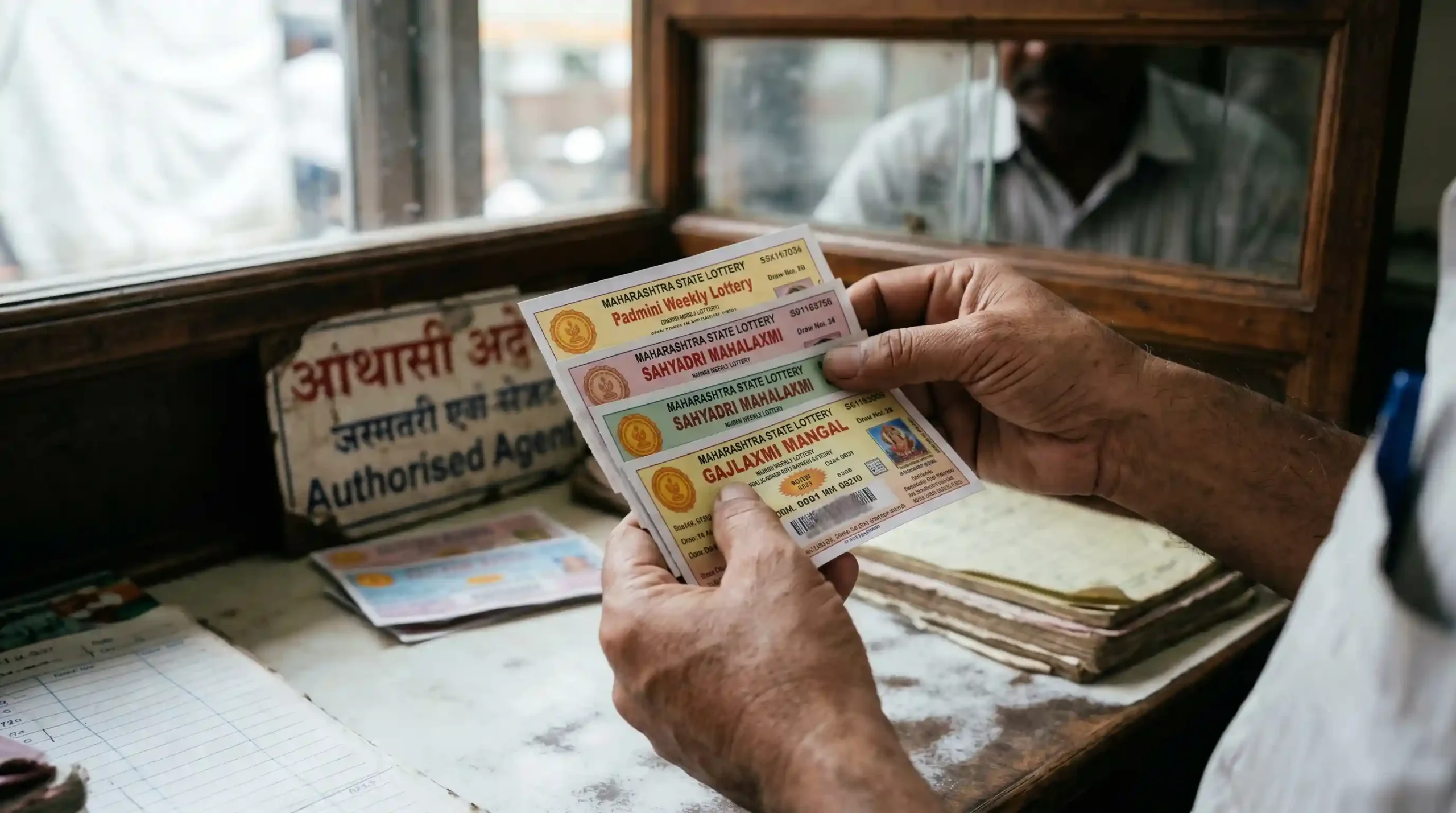
The government focuses on offering structured, regularly scheduled paper lotteries. The state hosts popular weekly draws, including the Padmini Weekly Lottery, Sahyadri Mahalaxmi, and Gajlaxmi Mangal lotteries. Additionally, the state promotes larger monthly draws and special festival bumper events.

The state strictly limits these games to physical paper tickets. The government guarantees the prize payouts, ensuring a reliable system for participants who purchase through official channels.

Buying Tickets: Rules and Restrictions

Following the exact purchasing rules protects you from counterfeit tickets and ensures your claim remains valid if you win a prize.

Where to Buy Legal Tickets

You must purchase official paper tickets from authorised retail counters and registered stockists operating within the state. These agents sell the physical slips directly to the public. You must hold the physical paper ticket to make a legal claim.

If you win a major prize, the state requires you to surrender the intact ticket alongside official identity proofs directly to the Directorate. The government also mandates that winners pay taxes. The state deducts a flat 30% tax (plus applicable cess) at the source on any lottery prize exceeding Rs. 10,000. Read our comprehensive for detailed filing instructions.

Is Online Lottery Legal in Maharashtra?

No, online lottery operations remain completely illegal in Maharashtra. When players ask is online lottery legal maharashtra, they often encounter confusing search results. The state took decisive action several years ago to ban all online lotteries, including digital draws from other states.

The government enacted this ban to protect its paper lottery revenue and prevent untraceable financial fraud. If you encounter a website or app claiming to sell digital Maharashtra lottery tickets, it operates unlawfully. Purchasing digital tickets voids your consumer protections instantly.

Frequently Asked Questions (FAQ)

Legality and State Laws

1. Is lottery legal in Maharashtra?

Yes, lottery operations remain legal in Maharashtra. The state government officially organises and regulates paper lotteries under the authority of the central Lotteries (Regulation) Act 1998. However, the state completely outlaws all private and online lotteries.

2. What does Maharashtra law say about lotteries?

The central Lotteries (Regulation) Act 1998 primarily governs the state’s operations. Locally, the Finance Department strictly regulates ticket printing, distribution, and prize payouts. The state strictly prohibits private syndicates from running independent draws.

3. Has Maharashtra banned or suspended lotteries?

Maharashtra never banned its official paper lottery. However, the state did ban all online lotteries, including digital lotteries hosted by other states, to protect local revenue and prevent digital fraud.

4. Why is Maharashtra’s lottery status confusing?

The confusion stems from the state’s aggressive crackdown on online platforms. When the government banned digital lotteries from other regions, many citizens mistakenly assumed the state had banned all lottery operations entirely.

5. Is online lottery legal in Maharashtra?

No, online lottery remains strictly illegal in Maharashtra. The state permits only physical, paper-based lotteries. Websites or apps claiming to sell digital tickets for state draws operate unlawfully and offer no consumer protection.

Playing and Verification

6. Does Maharashtra run its own state lottery?

Yes, the Directorate of Maharashtra State Lotteries actively runs the official government lottery. The state hosts frequent draws, including the weekly Padmini and Sahyadri lotteries, alongside special monthly bumper events.

7. Where can I buy a legal lottery ticket in Maharashtra?

To buy lottery maharashtra tickets legally, you must visit authorised retail agents or state-approved counters in person. Buyers must purchase physical paper slips. The law strictly prohibits purchasing tickets through unofficial online portals.

8. Can I buy other states’ lottery tickets in Maharashtra?

The state heavily restricts interstate sales. Maharashtra explicitly banned online lotteries from other states to protect its local market. You should stick to the official local paper draws to guarantee your legal safety.

9. Is it safe to play a lottery in Maharashtra?

Yes, playing remains completely safe if you buy official government paper tickets from authorised retail agents. However, purchasing tickets from private operators or unregulated online websites puts your money at significant risk.

10. How do I confirm the current status?

To verify legality, ensure your physical ticket bears the official state emblem. You must always check draw schedules and results directly on the official Directorate of Maharashtra State Lotteries website to avoid fraudulent claims.

Next Steps: If you hold a valid physical ticket, ensure you store it safely without folding or damaging the barcode. If you need to confirm the rules of a different region, head back to our main guide.

Is Lottery Legal in Punjab? Rules and Reality

Check Before You Buy

Before purchasing a ticket, understand the ground rules to ensure your money and potential winnings are safe:

  • Verify legality: Punjab strictly permits only state-organised government lotteries. Private lotteries are completely illegal.
  • Authorised sellers: Purchase physical tickets only from registered postal agents, local stockists, or directly from state-approved counters.
  • Confirm official draws: Always verify draw results directly through the official Punjab State Lotteries Directorate.
  • If you live in or visit the state, you might ask: is lottery legal in Punjab? The simple answer is yes, but it operates under strict government control. Buying a ticket is completely legal as long as you choose an officially sanctioned government draw. Purchasing from unauthorised private operators, however, offers zero legal protection.

If you want to understand the wider national landscape, check out our master map of the to see how Punjab compares to its neighbours. On this page, we explore the specific rules governing the Punjab state lottery, how bumper draws work, and how you can safely navigate the prize claim process.

Key Takeaways

  • Government draws only: Lottery operations remain legal in Punjab solely when a state government organises and guarantees them.
  • Famous bumper draws: Punjab boasts a national reputation for its massive festival lotteries, such as the Lohri, Baisakhi, and Diwali bumper draws.
  • Private lotteries are banned: The law explicitly prohibits any private company or individual from running a lottery or lucky draw in the state.
  • Tax rules apply: The government deducts a flat 30% tax (plus applicable cess) at the source on any lottery prize exceeding Rs. 10,000.
  • Interstate sales: You can legally buy Punjab bumper tickets from other states through authorised postal agents.

The Legal Status of Lottery in Punjab

Lottery operations in Punjab are fully legal, provided they follow the regulatory framework set by both the central and state governments.

The Directorate of Punjab State Lotteries, operating under the Department of Finance, actively manages and promotes all official draws. Because the state government directly oversees the prize pools and draw transparency, citizens can purchase tickets and claim winnings with full legal backing.

Which Law Governs Punjab’s Lottery?

The primary legislation governing lotteries across India is the Lotteries (Regulation) Act 1998 . This central law grants individual states the authority to decide whether to host or ban lotteries.

Punjab exercises this right to host lotteries and enforces the rules through the Punjab State Lotteries Rules. These regulations dictate everything from ticket printing standards to how authorised agents distribute tickets to the public.

Private Lotteries Are Strictly Illegal

While the government runs a legal lottery, the state has zero tolerance for private gambling disguised as lotteries. The Prize Competitions Act and state gambling laws make all private lotteries, local raffles, and unregulated lucky draws strictly illegal. Playing a private lottery leaves you entirely unprotected if the organisers disappear with the prize money.

Understanding the Punjab State Lottery

Unlike states that run multiple daily draws, Punjab focuses heavily on high-value, periodic lottery events. This strategy makes the Punjab state lottery unique and highly anticipated across the country.

The Famous Punjab Bumper Lotteries

The state is most famous for the Punjab bumper lottery. Rather than daily nominal prizes, the government issues special tickets corresponding to major cultural festivals. The most popular include:

  • The Punjab State Dear Diwali Bumper
  • The Punjab State Dear Lohri Makar Sankranti Bumper
  • The Punjab State Dear Baisakhi Bumper
  • The Rakhi Bumper

These tickets generally cost more than daily draw tickets (often Rs. 500 or more), but they offer massive, multi-crore first prizes guaranteed by the state government.

Punjab Lottery Rules: Buying and Playing Safely

Following the exact Punjab lottery rules protects you from counterfeit tickets and ensures your claim remains valid if you win.

How to Buy a Punjab Lottery Ticket Legally

You must purchase official paper tickets. You can buy these directly from retail counters and authorised stockists within Punjab.

Because of the massive popularity of the bumper draws, the state also authorises specific postal agents. These registered agents can legally sell physical tickets to buyers outside the state via registered post or courier.

The Truth About Punjab Lottery Online

When people search for Punjab lottery online, they often encounter confusion. The Punjab government does not run a digital-only online lottery where you generate virtual tickets.

However, authorised agents do operate legal websites where you can order a physical paper ticket. The agent reserves the physical ticket in your name and mails it to you. You must hold the physical paper ticket (or possess irrefutable proof from an authorised agent that they hold it for you) to make a legal claim. Always verify the agent’s government registration before you hand over any money online.

If you want to see how other states handle online versus paper rules, you can review the specific or see whether it .

The Punjab Lottery Claim Process and Taxes

Winning a massive bumper prize requires navigating a strict, highly secure Punjab lottery claim process.

For smaller prizes (usually up to Rs. 10,000), winners can claim the cash directly from the retail agent who sold them the ticket. For the major bumper prizes, the winner must submit the original, intact ticket along with an official claim form, identity proofs (Aadhaar/PAN), and bank details directly to the Directorate of Punjab State Lotteries.

Claiming a Punjab Prize From Another State

Because postal agents sell Punjab bumper tickets nationally, many winners live outside Punjab. The law permits out-of-state winners to claim their prizes. You must mail the winning ticket via registered or insured post alongside the required affidavits, or travel to the Punjab Directorate office to submit the claim in person.

Tax on Punjab Lottery Winnings

The state government does not hand over the full advertised prize amount. Before transferring the money, the government applies Tax Deducted at Source (TDS).

  • Any prize above Rs. 10,000 faces a flat 30% tax under the Income Tax Act.
  • Adding the mandatory 4% health and education cess brings the effective deduction to 31.2%.
  • Read our comprehensive for detailed filing instructions.

Frequently Asked Questions (FAQ)

State Laws and Bumper Draws

1. Is lottery legal in Punjab?

Yes, lottery operations are legal in Punjab. The state government officially organises and regulates its own draws under the authority of the central Lotteries (Regulation) Act 1998. However, the state completely outlaws all private lotteries.

2. Does Punjab run a government lottery?

Yes, the Directorate of Punjab State Lotteries, functioning under the state’s Department of Finance, actively runs the official government lottery. They guarantee the prize payouts and ensure transparent draw procedures.

3. What is the Punjab Lohri or bumper lottery?

The Punjab bumper lotteries are special, high-prize draws tied to major festivals like Lohri, Baisakhi, Rakhi, and Diwali. Instead of daily draws, the state focuses on these periodic events offering multi-crore guaranteed first prizes.

4. Which law governs Punjab’s lottery?

The central Lotteries (Regulation) Act 1998 serves as the primary governing law. The state operationalises these draws locally using the Punjab State Lotteries Rules, which dictate ticket printing, distribution, and prize claim protocols.

5. Is private lottery allowed in Punjab?

No, private lotteries are strictly illegal in Punjab. State gambling laws and the Prize Competitions Act prohibit private individuals, companies, or syndicates from running independent draws or unregulated raffles.

Buying Tickets and Claiming Winnings

6. How do I buy a Punjab lottery ticket legally?

You can legally buy physical paper tickets from authorised retail counters within the state. Additionally, state-approved postal agents can legally sell physical bumper tickets to buyers nationwide and deliver them via registered post.

7. Is online lottery legal in Punjab?

Punjab does not operate a digital-only virtual lottery. However, authorised agents legally use websites to accept orders for physical paper tickets. The agent must send the physical ticket to the buyer or hold the specific numbered paper ticket in trust.

8. Can I claim a Punjab prize from another state?

Yes, out-of-state buyers who legally purchased tickets through authorised postal agents can claim their winnings. Claimants must submit the original ticket and verified documents to the Punjab Directorate via insured post or in person.

9. What are the rules for Punjab lottery agents?

The state strictly regulates lottery agents. They must register with the government, sell tickets at the exact face value printed on the slip, and securely manage prize payouts for smaller winning amounts on behalf of the state.

10. How do I verify a Punjab lottery is official?

To verify legality, ensure the ticket bears the official Punjab government emblem and imprint. Always check draw results directly on the official Directorate of Punjab State Lotteries website or via official state gazette publications.

Next Steps: If you ordered a bumper ticket through the post, store the physical paper slip securely as soon as it arrives. You cannot claim a major prize without presenting the intact ticket. For a broader view of state laws, return to our master guide.

West Bengal Lottery Rules: What the Law Allows

Understanding the legality and the specific West Bengal lottery rules is crucial before you purchase a ticket. The state proudly hosts vibrant government-run draws, but strict statutes dictate exactly what the government permits, how winners claim prizes, and which formats the law entirely outlaws. Buying a ticket without knowing these regulations can result in holding an invalid slip with zero legal recourse.

If you are researching the broader national landscape, you can view our complete to see how West Bengal compares to the rest of the country. On this page, we focus strictly on the laws governing West Bengal, what the state allows, and how you can safely navigate the prize claim process.

Check Before You Buy Before purchasing any lottery ticket in West Bengal, ensure you follow these primary rules:

  • Confirm legality: West Bengal only permits state-organised paper lotteries. The law entirely outlaws private lotteries.
  • Authorised sellers only: Buy physical tickets exclusively from registered government agents and stockists.
  • Verify the source: Always cross-check draw results and rules with the official West Bengal Directorate of State Lotteries.

The Legal Status of Lottery in West Bengal

West Bengal legally permits lottery operations within a highly regulated framework. The central Lotteries (Regulation) Act 1998 serves as the foundational law. It empowers individual Indian states to decide whether to ban or organise lotteries within their borders.

West Bengal has opted to organise and promote its own state lotteries. The state’s Finance Department, specifically the Directorate of State Lotteries, manages these draws. Because the state exercises this right, citizens can legally buy, sell, and claim prizes for official government lottery tickets within its jurisdiction.

Consumers must distinguish between government and private operations. The Prize Competitions Act and state gambling laws completely outlaw private lotteries, lucky draws, and unregulated raffles.

Government-Run Draws and the ‘Dear Lottery’

When people discuss the lottery in West Bengal, they frequently refer to the ‘Dear Lottery’. The Dear Lottery serves as a brand name for paper lotteries operating legally under government authorisation.

West Bengal officially runs and sanctions these daily and weekly draws, offering varying prize tiers. The state government guarantees the prize payouts, ensuring transparent, regulated, and reliable draws.

If you explore rules in other regions, you might notice varying laws. For instance, you can read our guide to see if it , or check the specific statutes if you are wondering .

Buying Tickets: West Bengal Lottery Rules Explained

The West Bengal lottery rules strictly regulate ticket sales to protect consumers from fraud and ensure a fair draw process. Tickets must bear the official imprint and logo of the state government. A transparent network of authorised distributors, stockists, and retail agents sells them directly to the public.

The Ban on Online Lotteries

West Bengal permits only paper lotteries. The state refuses to authorise, run, or recognise online lotteries.

If you encounter a website or an app claiming to sell “West Bengal State Lottery” tickets online, it operates outside the state’s legal framework. Purchasing digital tickets voids your consumer protections. You will have no legal standing to claim a prize from the state government if scammers defraud you.

Can Other States Sell Tickets in WB?

Under the Lotteries (Regulation) Act 1998, a state that runs its own lotteries can permit the sale of tickets from other state governments, provided those lotteries comply with the central rules. However, the state completely bans private and foreign lotteries.

Claiming Your West Bengal Lottery Prize

Winning a lottery in West Bengal triggers a formal, legal claim process. The state requires strict documentation to prevent money laundering and ensure the rightful owner receives the funds.

The Prize Claim Process

For minor prizes (typically under Rs. 10,000), winners can usually claim their cash directly from the retail agent who sold the ticket.

For major prizes and super prizes, the rules mandate a formal submission to the Directorate of State Lotteries. Claimants must provide:

  • The original, intact winning ticket (signed on the back).
  • A self-attested photocopy of the ticket.
  • Four passport-sized photographs.
  • An affidavit of ownership sworn before a 1st Class Magistrate or Notary Public.
  • A completed official claim form detailing PAN, Aadhaar, and bank account details. The government expressly states it will reject torn, mutilated, or tampered tickets, and the claimant may face legal action.

Taxation on Winnings

Winners must understand their tax liabilities before claiming a prize. For an in-depth breakdown, refer to our comprehensive .

In West Bengal, the Income Tax Act applies Tax Deducted at Source (TDS) to any lottery winnings exceeding Rs. 10,000.

  • The flat tax rate stands at 30%.
  • Adding a 4% health and education cess brings the effective deduction rate to 31.2%.
  • The state government withholds this amount before transferring the prize money to your bank account via NEFT/RTGS.

Prohibited Acts Under West Bengal Lottery Rules

To maintain the integrity of the draws, West Bengal lottery rules strictly prohibit several acts:

  • Tampering: Altering numbers or barcodes on a ticket constitutes a criminal offence.
  • Private lotteries: Running an unauthorised draw breaks state and federal law.
  • Online sales: The state prohibits promoting paper lotteries through unauthorised online portals.

Always verify the official results directly through the West Bengal Directorate of State Lotteries website or official state gazette publications. Never rely solely on forwarded WhatsApp messages or unverified third-party websites to confirm your winnings.

Frequently Asked Questions (FAQ)

General Legality and Ticket Rules

1. Is lottery legal in West Bengal? Yes, West Bengal legally permits lottery operations. The state government organises and regulates official paper lotteries under the authority of the central Lotteries (Regulation) Act 1998. However, the state strictly bans all private and unregulated lotteries.

2. What lotteries does West Bengal run? West Bengal runs various daily and weekly paper lottery draws, alongside special bumper lotteries for festivals. The Directorate of State Lotteries officially manages these under the state’s Finance Department.

3. Is the Dear lottery a West Bengal lottery? Yes, the ‘Dear Lottery’ serves as a legally authorised brand name for paper lotteries operating in West Bengal. The state government sanctions these draws and guarantees the prize distributions.

4. What are the rules for buying tickets in WB? Buyers must purchase tickets as physical paper slips from government-authorised agents or stockists. Buyers should ensure the ticket remains intact and features the official state government imprint. The law does not permit purchasing tickets online.

5. Is online lottery legal in West Bengal? No, online lottery remains illegal in West Bengal. The state strictly permits only physical, paper-based lotteries. Websites or apps claiming to sell West Bengal state lottery tickets digitally operate unlawfully.

Prize Claims and Legal Restrictions

6. How do I claim a West Bengal lottery prize? Winners can claim prizes under Rs. 10,000 from local agents. For larger prizes, claimants must submit the original signed ticket, an official claim form, identity proofs (PAN/Aadhaar), bank details, and an affidavit to the Directorate of State Lotteries.

7. Which law governs WB lotteries? The central Lotteries (Regulation) Act 1998 primarily governs West Bengal lotteries. The state also follows the Lotteries (Regulation) Rules 2010 to oversee daily operations, ticket printing, and prize distributions.

8. Can other states’ tickets be sold in WB? Yes, under the 1998 Act, authorised distributors can sell paper tickets from other state governments that legally organise lotteries in West Bengal. However, the law strictly prohibits private and foreign lotteries.

9. What is prohibited under West Bengal lottery rules? West Bengal lottery rules strictly prohibit running private lotteries, selling tickets online, selling to minors, and tampering with physical tickets. Claimants attempting to cash a defaced or altered ticket face potential legal prosecution.

10. How do I verify a WB lottery result officially? To verify a result officially, check the daily draw publications directly on the West Bengal Directorate of State Lotteries website or view the official state gazette. You should avoid relying on unverified social media updates.

Next Steps: If you hold a winning ticket, ensure you store it safely without folding or damaging the barcode. If you need to confirm the rules of a different region, head back to our main guide.

Goa Lottery Legal Status: What’s Allowed Now

Disclaimer: This guide is for informational purposes only and does not constitute legal or financial advice. Always verify current rules directly with the Directorate of Small Savings & Lotteries, Government of Goa.

If you live in or are visiting Goa, you might be wondering about the rules surrounding state draws and digital games. Understanding the goa lottery legal status is essential before you purchase a ticket. Unlike many other regions in India that have enacted total bans, Goa maintains a legally permitted, highly regulated lottery system.

The state government directly oversees these operations, ensuring that the games are fair and that revenues benefit the public treasury. Knowing what is allowed protects you from falling victim to illegal private operators and online scams. To see how Goa’s progressive rules compare with the rest of the country, you can review our master map of the lottery legal states in India.

Key Takeaways

  • Fully Legal: The state government legally permits and conducts official lotteries in Goa.
  • Online is Allowed: Goa is one of the few states that legally permits online lottery sales, provided they run through officially licensed platforms.
  • Government Monopoly: Every private, pan-India, or foreign lottery remains strictly illegal.
  • Regulated Casinos are Different: The laws governing Goa’s lotteries are entirely separate from the laws governing its famous casinos.

The Goa Lottery Act and Official Regulations

When investigating the goa lottery legal status, you must look at the central legislation that enables it. The state operates its draws strictly under the framework of the national Lotteries (Regulation) Act 1998.

The goa lottery act rules are enforced by the Directorate of Small Savings & Lotteries, Government of Goa. This department is responsible for printing tickets, appointing authorized selling agents, and conducting the draws transparently.

By keeping the operation entirely within the government’s control, Goa ensures that prize pools are guaranteed and that citizens are protected from underground betting syndicates. If you want to understand how other states utilize this exact same central law to enforce different rules, you can read our breakdown of the West Bengal lottery rules.

Is Online Lottery Legal Goa? (Great Goa Games)

One of the most frequently asked questions is: is online lottery legal goa?

Yes. Goa stands out because it has embraced digital modernization. While many states restrict sales entirely to physical paper tickets, Goa legally permits the sale of digital tickets via authorized online platforms.

The most prominent example of this is Great Goa Games, an officially licensed platform that allows players to purchase tickets and verify results digitally. However, this legality comes with a strict condition: you must play through the state’s authorized digital portals.

Goa Lottery Rules: Purchasing and Taxes

Under official goa lottery rules, you must be at least 18 years old to purchase a ticket. Whether you buy a paper ticket from an authorized retail vendor or a digital ticket via an approved portal, your winnings are protected by state law.

However, winning a legitimate government lottery means you must pay legitimate taxes. If you win a prize, the government will deduct tax at the source (TDS). Currently, lottery winnings face a flat 30% tax plus a 4% cess (totaling 31.2%) under Section 194B (which transitions to Section 393(3) effective April 1, 2026). The government deducts this amount automatically. If an agent calls you asking for “advance tax” to release your prize, they are a scammer. For a deeper understanding of how these financial rules work nationwide, consult our Complete Guide to Lottery in India.

Casinos vs. Lotteries: The Legal Difference in Goa

Goa is famous for its floating and land-based casinos, leading many to confuse the laws. Are casinos and lotteries regulated the same way?

No. Lotteries operate under the central Lotteries (Regulation) Act 1998. Casinos and sports betting, however, are governed by the Goa, Daman and Diu Public Gambling Act, 1976. This is a crucial distinction. The state directly runs the lottery, while private entities operate casinos under state licenses.

This duality makes Goa unique. For comparison, in neighboring states, both casinos and lotteries are heavily restricted. You can see this contrast clearly by reading our guide on whether lottery is legal in Maharashtra.

Frequently Asked Questions (FAQ)

Basic Legality and Purchasing

1. Is lottery legal in Goa? Yes. Goa legally permits and actively conducts official state-run lotteries. The Directorate of Small Savings & Lotteries manages these draws strictly under the guidelines of the Lotteries (Regulation) Act 1998.

2. How do I buy a Goa lottery ticket legally? You can legally purchase physical paper tickets from authorized retail agents located throughout the state. Alternatively, you can purchase tickets digitally through state-licensed online portals.

3. Can non-residents play the Goa lottery? Yes, Indian citizens visiting Goa can legally purchase tickets from authorized vendors. However, if you attempt to use an online app to play the Goa lottery while physically located in a state that bans lotteries, you break the law of your home state.

Online Lottery and Platforms

4. Does Goa allow online lottery? Yes. Goa is one of the few Indian states that explicitly authorize the sale of official state lottery tickets through licensed digital platforms, making the online process secure and legal.

5. What is Great Goa Games? Great Goa Games acts as an officially authorized digital platform for purchasing Goa state lottery tickets online. The state licenses it to ensure secure, transparent transactions for digital players.

6. Is foreign lottery legal in Goa? No. International and foreign lotteries remain strictly illegal in Goa and across India. Only the official state government lotteries possess legal authorization.

Rules, Regulations, and Verification

7. Which law governs Goa’s lottery? The central Lotteries (Regulation) Act 1998 provides the primary legal framework, alongside specific state notifications issued by the Government of Goa’s finance department.

8. Are casinos and lottery regulated the same in Goa? No. While the state permits both, they fall under different laws. The Lotteries (Regulation) Act 1998 governs lotteries, whereas the Goa, Daman and Diu Public Gambling Act, 1976 regulates casinos.

9. What lotteries are banned in Goa? The state bans all private lotteries, pan-India draws, unauthorized online betting apps, and foreign lotteries. Only the draws officially sanctioned by the Goa government are permitted.

10. How do I verify a Goa lottery is official? You should always check the draw results and the list of authorized selling agents directly on the official website of the Directorate of Small Savings & Lotteries, Goa (which uses a .gov.in domain).

What To Do Next

Now that you understand the goa lottery legal status, you can play safely by following official channels.

  • Play Officially: Only purchase tickets from authorized physical vendors or officially licensed platforms like Great Goa Games.
  • Check Your Taxes: Read our Complete Guide to Lottery in India to understand how the 31.2% TDS applies to your legal winnings.
  • Report Scammers: If an unauthorized website or a WhatsApp message offers you a “Goa Lottery Jackpot” and asks for advance fees, report it immediately to the 1930 national cyber helpline or at cybercrime.gov.in.