
Is Lottery Legal in Tamil Nadu? Why It’s Banned

Disclaimer: This guide is for informational purposes only and does not constitute legal advice. Always confirm current status with the relevant state authority or a qualified legal professional.

If you live in Chennai, Coimbatore, or anywhere else in the state and see an online ad promising massive jackpots, you need the facts before you click. You might immediately ask: is lottery legal in tamil nadu?

The answer is a strict, unconditional no. Buying, selling, or distributing any form of lottery ticket within the state borders is completely illegal.

Because India allows individual states to decide their own gambling laws, the rules change drastically when you cross state lines. While some states run massive daily draws, Tamil Nadu enacted a total prohibition over two decades ago. To see how Tamil Nadu compares to the rest of the country, you can view our complete map of the lottery legal states in India.

This guide explains the history of the Tamil Nadu lottery ban, why you cannot buy tickets online, and the severe legal and financial risks of attempting to play from within the state.

Key Takeaways

  • Total Ban: Purchasing any lottery ticket while physically located in Tamil Nadu acts as a punishable offense.
  • No Online Loophole: The ban strictly applies to all digital and online lottery sales.
  • Out-of-State Tickets Banned: Bringing tickets from neighboring legal states (like Kerala) into Tamil Nadu breaks central law.
  • Zero Prize Protection: If you illegally buy a ticket and win, you possess absolutely no legal right to claim the prize money.

Is Lottery Legal in Tamil Nadu? The 2003 Ban Explained

To understand why officials banned lotteries in Tamil Nadu, you must look back at the socio-economic situation in the early 2000s.

Before 2003, the state lottery and various private “single-digit” lotteries proved highly popular. However, these daily draws led to severe gambling addiction among daily wage laborers and low-income families. The financial ruin caused by excessive ticket purchasing became a massive public welfare crisis.

In response, the Tamil Nadu state government completely banned the sale of all lotteries on January 8, 2003.

The state utilized the powers granted to it by the Lotteries (Regulation) Act 1998, which allows any state legislature to completely prohibit lotteries within its jurisdiction. Since that notification, the state has continuously renewed and strictly enforced the ban.

Can You Play the Tamil Nadu Lottery Online?

One of the most common traps for residents involves the myth of playing online.

Scammers and illegal betting syndicates frequently launch websites or WhatsApp groups claiming that while paper tickets remain banned, you can legally play “online lotteries” or “international draws.” This represents a complete lie.

If a state government bans physical lotteries, that ban automatically extends to all online variants. If you attempt to use an online proxy app to buy a ticket while sitting in Tamil Nadu, you break the law. Furthermore, these illegal apps almost certainly steal your banking information or simply refuse to pay out if you win.

The Border Issue: Kerala and Dear Lottery

Because Tamil Nadu shares borders with Kerala (which runs a massive legal lottery operation), smugglers often attempt to bring paper tickets across state lines into cities like Coimbatore or Kanyakumari.

If a vendor offers you a Kerala lottery ticket or a “Dear Lottery” ticket inside Tamil Nadu, they commit a crime. Buying that ticket makes you complicit in illegal gambling.

To understand how other states handle these complex rules—and to see why some states technically allow it but rarely run draws—read our breakdown on whether lottery is legal in Maharashtra.

Penalties and Legal Risks in Tamil Nadu

Participating in illegal lotteries in Tamil Nadu carries severe consequences. Law enforcement agencies actively crack down on underground lottery rings.

  • For Sellers: Distributing or selling tickets results in immediate arrest, non-bailable charges, heavy fines, and imprisonment under the IPC and state gaming acts.
  • For Buyers: Purchasing a ticket means participating in an illegal gambling act. Authorities can fine and prosecute you.
  • Financial Loss: Because the transaction acts as an illegal contract, the law will not help you if a seller cheats you out of a prize.

To fully understand how legitimate taxes work in states where playing actually operates legally, you should read our Complete Guide to Lottery in India.

Frequently Asked Questions (FAQ)

Basic Legality and History

1. Is lottery legal in Tamil Nadu? No. Buying, selling, or distributing any form of lottery ticket is completely illegal in Tamil Nadu. The state government enacted a total prohibition in 2003 to curb gambling addiction and protect public welfare.

2. When was lottery banned in Tamil Nadu? The lottery was officially banned in Tamil Nadu on January 8, 2003, via a government notification. The ban put an end to both the official state lottery and the sale of out-of-state paper tickets.

3. Why is lottery banned in Tamil Nadu? The government banned lotteries because daily and single-digit draws caused severe financial ruin and gambling addiction among low-income families and daily wage earners, leading to a public socio-economic crisis.

Interstate and Online Tickets

4. Can I buy Kerala lottery tickets in Tamil Nadu? No. It is strictly illegal to sell or purchase a Kerala lottery ticket within the borders of Tamil Nadu. Smuggling tickets across the state border violates the central Lotteries (Regulation) Act 1998.

5. Is online lottery legal in Tamil Nadu? No. The total ban on lotteries in Tamil Nadu extends to all online and digital platforms. Any website or app offering lottery tickets to residents of Tamil Nadu operates illegally.

6. Is Dear Lottery banned in Tamil Nadu? Yes. Dear Lottery (which operates legally in states like West Bengal and Nagaland) is strictly banned in Tamil Nadu. Anyone selling Dear Lottery tickets inside Tamil Nadu runs an illegal black-market operation.

Winnings, Penalties, and Reporting

7. What is the penalty for selling lottery in Tamil Nadu? Selling lottery tickets in Tamil Nadu represents a criminal offense. Offenders face immediate arrest, non-bailable charges, severe financial fines, and long-term imprisonment under state gaming laws and the Indian Penal Code.

8. Can Tamil Nadu residents claim lottery prizes from other states? If a Tamil Nadu resident traveled to a legal state, bought a ticket there, and won, they could theoretically claim it there. However, buying a ticket while physically inside Tamil Nadu renders any resulting prize completely void and illegal.

9. Are private lotteries allowed in Tamil Nadu? No. Private lotteries act as completely illegal enterprises everywhere in India, not just in Tamil Nadu. Only state governments possess the legal authority to run lotteries, and Tamil Nadu has chosen to ban them entirely.

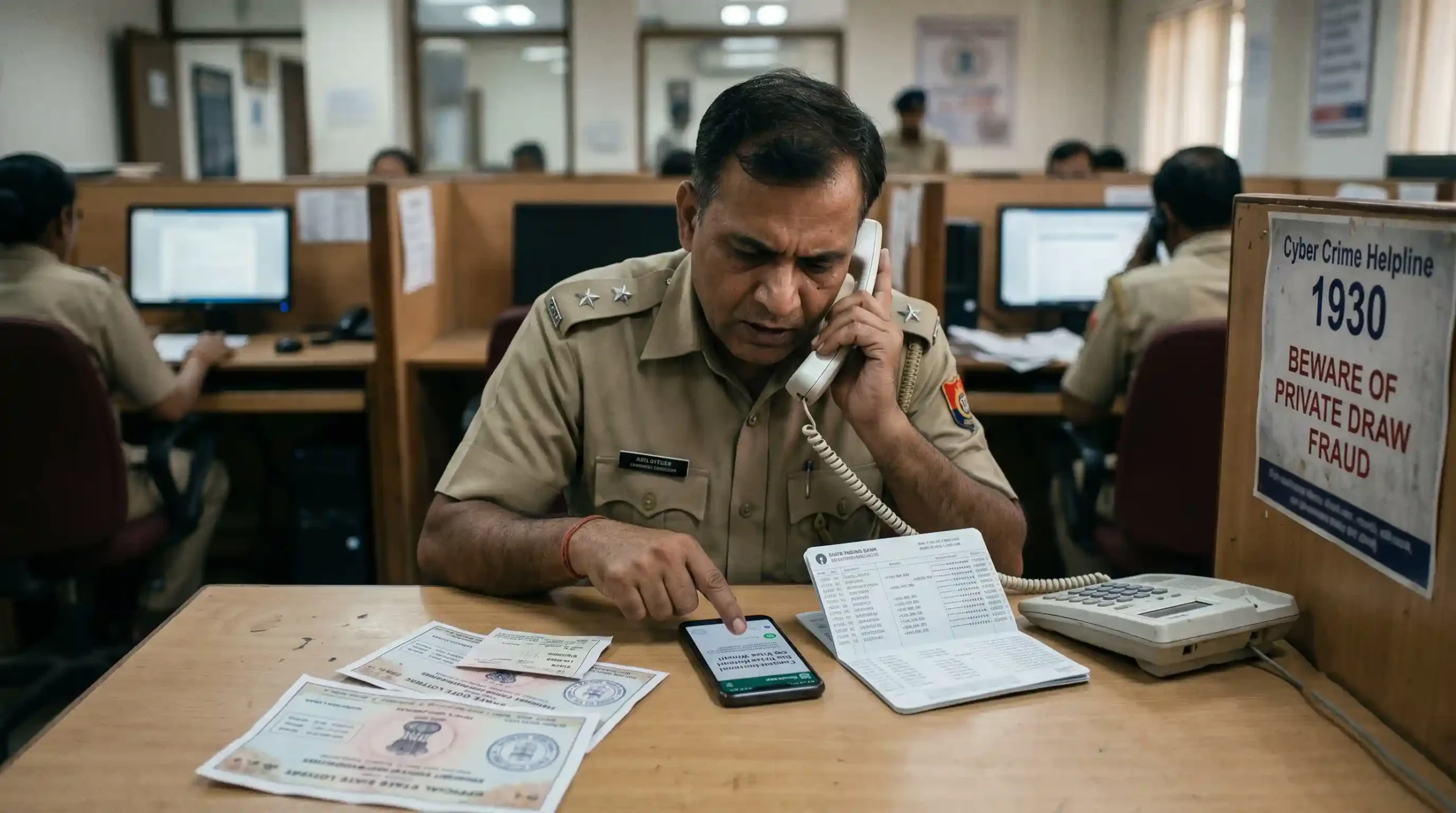
10. How do I report illegal lottery sales in Tamil Nadu? You should report illegal physical ticket sales to your local state police station. If you encounter fraudulent online lottery websites or WhatsApp scams, report them immediately to the 1930 national cyber helpline or at cybercrime.gov.in.

What To Do Next

If you reside in Tamil Nadu, your best financial defense involves completely ignoring all lottery advertisements, whether they appear in your local neighborhood or on your smartphone.

  • Do Not Engage: Never click on links in SMS or WhatsApp messages claiming you have won a “lucky draw” or a “brand lottery.”
  • Educate Your Family: Ensure that vulnerable family members, especially the elderly, understand that playing the lottery online in Tamil Nadu breaks the law and almost certainly represents a scam.
  • Report Suspicious Activity: If an online lottery scammer actively targets you and asks for banking details, call 1930 or file an official report at the National Cyber Crime Reporting Portal.
  • Verify Regional Laws: If you travel and want to know where you can safely and legally play, refer back to our pillar guide on the lottery legal states in India.
What the Lotteries Act 1998 Lets Each State Decide

Disclaimer: This guide provides informational content only and does not serve as legal advice. Always confirm current laws with the relevant government authority or a qualified legal professional.

If you have ever wondered why purchasing a lottery ticket is perfectly legal in Kerala but a punishable crime just across the border in Karnataka, the answer lies in one central law. Everything comes down to the lotteries regulation act 1998.

Before lawmakers enacted this central legislation, the Indian lottery market suffered from a lack of regulation, leading to widespread financial distress and the rapid growth of private, black-market draws. Consequently, the 1998 Act brought order to the system by creating a strict framework that empowered individual state governments. To understand exactly how this law affects where you live and whether you can safely play, review our master map of the Lottery Legal States in India.

In this guide, we break down exactly what the lotteries act explained means for you, how it regulates ticket sales, and why it forms the legal backbone of all state draws in the country.

Key Takeaways Under the Lotteries Regulation Act 1998

  • State Power: First, the Act gives individual states the absolute authority to permit or ban lotteries within their borders.
  • Government Monopoly: Second, private lotteries act as illegal enterprises; the law mandates that only state governments can organize and run draws.
  • Cross-Border Control: Third, states possess the right to prohibit the sale of other states’ lottery tickets within their jurisdiction.
  • Strict Operations: Finally, the subsequent lotteries regulation rules 2010 enforce rigid standards on how authorities print tickets, sell them, and distribute prizes to prevent fraud.

How the Central Lottery Law India Empowers States

While local officials manage lotteries, the central lottery law india provides the structural rulebook. Under the Indian Constitution, lotteries function as a “State subject,” but the central government stepped in with the 1998 Act to ensure national guidelines prevented private exploitation.

Primarily, the core function of the Act focuses on delegation. It does not explicitly force any state to run a lottery, nor does it force a state to ban them. Instead, it grants state lottery authorisation powers directly to the state legislative assemblies.

Section 4 Lotteries Act: Strict Requirements

Crucially, if a state wants to legally run a lottery, it must strictly adhere to the section 4 lotteries act. Specifically, this section outlines the mandatory conditions a state government must meet. If a state fails these conditions, its lottery operates illegally.

  • State Imprint: First, the state government must print the tickets and include the official state logo to ensure authenticity.
  • Treasury Direct: Second, officials must deposit all proceeds from ticket sales directly into the public state treasury.
  • Direct Draws: Third, the state government itself must conduct the draws or supervise them directly.
  • Frequency Limits: Finally, Section 4 limits the number of bumper draws a state can hold per year (traditionally capped at six) to prevent predatory daily gambling practices.

Because of these strict requirements, you will find that while some jurisdictions theoretically have authorisation, they do not currently run active draws. For example, you can see how this nuance plays out by reading our breakdown on whether is lottery legal in Maharashtra.

Understanding the Lotteries Regulation Rules 2010

Twelve years after passing the initial Act, the central government recognized the need for tighter operational security and introduced the lotteries regulation rules 2010.

While the 1998 Act decided who could run a lottery, the 2010 Rules decided how operators must run them. Lawmakers designed these rules to protect consumers by enforcing transparency. Specifically, they mandate that:

  • Ticket Security: Authorities must print tickets in high-security, government-approved presses.
  • Clear Payouts: States must pre-announce their prize structures transparently.
  • Agent Restrictions: Distributors and selling agents cannot manipulate prize money or conduct their own parallel draws.

Taxation Under the Lotteries Regulation Act 1998

Importantly, the lotteries regulation act 1998 governs the legality of the draw, but it works in tandem with national tax laws. Whenever a state runs a legal draw, officials must legally deduct tax at the source (TDS) before handing over the prize money.

Currently, the Income Tax Department taxes winnings at a flat 30% plus a 4% cess (totaling 31.2%) under Section 194B (which transitions to Section 393(3) effective April 1, 2026). If you want to understand how the 1998 Act interacts with tax liabilities, we highly recommend reading our Complete Guide to Lottery in India.

Frequently Asked Questions (FAQ)

Defining the Act and State Powers

1. What is the Lotteries (Regulation) Act 1998? Essentially, the lotteries regulation act 1998 serves as the central legislation providing the legal framework for lotteries in India. It delegates the absolute power to permit, regulate, or ban lotteries to individual state governments, ending unregulated private lotteries.

2. What does the Act allow state governments to do? Specifically, it allows states to run their own official government lotteries, appoint licensed distributors, or enact total legislative bans on all lotteries within their borders to protect local public welfare.

3. What makes a lottery legal under the Act? Legally, a lottery remains valid only if the state government organizes, conducts, and controls it. Furthermore, tickets must bear the official state logo, and officials must deposit all generated revenues directly into the public treasury.

Interstate Rules and Digital Laws

4. Can a state sell its lottery in another state? Yes, but only if the receiving state also legally permits lotteries and explicitly allows cross-border sales. Crucially, under Section 5 of the Act, a state possesses the legal right to ban tickets from any other state.

5. Does the Act cover online lotteries? Yes, the Act applies to all forms of lotteries. Consequently, states that authorize lotteries must explicitly license online versions. Currently, only a few states permit online draws, while most legal states restrict sales strictly to physical paper tickets.

6. Has the 2025 Online Gaming Act changed it? No. The 2025 Online Gaming Act regulates digital skill games, betting, and offshore platforms, but state-run lotteries remain governed primarily by the 1998 Act. Therefore, new digital policies simply help states enforce their existing lottery bans online.

Enforcement and Legal Definitions

7. What are the Lotteries (Regulation) Rules 2010? Basically, these represent detailed operational rules issued by the central government. Specifically, they strictly govern ticket printing at secure presses, transparent draw procedures, prize distributions, and the minimum frequency of draws.

8. Who enforces the Act? Primarily, state police, state commercial tax boards, and state lottery departments handle enforcement. However, the central government can intervene if a state directly violates the core operational provisions.

9. Can the central government ban a state’s lottery? Generally, the central government does not outright ban a state’s lottery. However, they can intervene if a state operates draws in direct violation of Section 4 conditions—such as illegally outsourcing complete control to a private company.

10. How does the Act define a lottery? Legally, the Act defines a lottery as a scheme for the distribution of prizes by lot or chance to persons participating by purchasing tickets. Importantly, this definition separates lotteries from games of skill.

What To Do Next

In conclusion, understanding your rights under the lotteries regulation act 1998 remains the best way to protect yourself from fraud. Because the law strictly bans private operators, you should never trust a private company claiming to run a nationwide draw.

  • Check Your Local Laws: First, ensure your state permits lotteries before attempting to play. Review our Lottery Legal States in India map.
  • Look for the State Imprint: Second, if you purchase a ticket, verify it contains the official state government logo and printing press details as mandated by the 2010 Rules.
  • Report Violations: Finally, if a private entity runs an illegal lottery in your area, report it to the National Cyber Crime Reporting Portal or call the 1930 national helpline.

Why Private Lotteries Are Illegal in India

Disclaimer: This guide is for informational purposes only and does not serve as legal advice. Always confirm current laws with the relevant authority or a qualified professional.

If you receive a WhatsApp message, SMS, or phone call claiming you have won a massive prize from a private company or a “national brand draw,” scammers are likely targeting you. When comparing a private vs government lottery in india, the legal difference is absolute: state-run draws are the only legal lotteries in the country.

Understanding the government lottery meaning—a draw that a state government strictly organizes, conducts, and controls—acts as your first line of defense against financial fraud. Every single private or pan-India lottery breaks the law. This guide explains why these laws exist, how to spot a fake private lottery, and what to do if fraudsters target you. To see a complete picture of where state-run draws are permitted, start with our master map of the lottery legal states in India.

Key Takeaways

  • Private Lotteries are Banned: First, no private company, brand, or individual possesses the legal right to run a lottery in India.
  • State Control Only: Second, only state governments hold the constitutional authority to organize and run lotteries.
  • Zero Pan-India Lotteries: Third, a legal “national” or “Pan-India” lottery does not exist.
  • Advance Fee Fraud: Finally, if an agent asks you to pay a “processing fee” or “advance tax” to release your winnings, you are facing a guaranteed scam.

Private vs Government Lottery in India: The Core Difference

When evaluating a private vs government lottery in india, you must base the legal separation entirely on ownership and control.

A state’s finance or lottery department prints, regulates, and distributes a legal government lottery. The revenue goes directly to the state treasury to fund public welfare projects. On the other hand, independent companies or individuals run private lotteries solely for personal profit. Because the potential for financial exploitation remains so high, Indian law strictly bans private entities from operating lotteries.

Who Can Run Lottery in India?

The Lotteries (Regulation) Act of 1998 strictly limits the answer to who can run lottery india.

Only state governments possess the legal right to organize, conduct, or promote lotteries. Furthermore, a state can only run a lottery if its own legislative assembly permits it. A private company cannot simply apply for a “lottery license” and begin selling tickets. While state governments do hire private companies as “distributors” or “selling agents,” the actual lottery remains entirely the property of the government.

For a deeper dive into how this federal law empowers the states, read our guide on exactly what the Lotteries Act 1998 lets each state decide.

The Myth of the “Pan India Lottery Legal” Status

A common tactic scammers use involves claiming their draw operates as a “Pan-India” or “National” lottery that the central government approved.

Is a pan india lottery legal? Absolutely not. A national lottery simply does not exist in India. Because lotteries act as a state subject, a ticket printed by one state (like Kerala) can only sell in another state if that second state explicitly permits it. Many states strictly enforce cross-border bans. If you are curious about which regions forbid all lotteries, review our breakdown of the states where lottery is banned in India.

Penalties: Private Lottery Illegal India

Because lawmakers rigidly enforce the private lottery illegal india status, organizers face severe penalties. Ultimately, understanding the rules of a private vs government lottery in india protects you from participating in these criminal acts.

Under the Indian Penal Code (IPC) and the Lotteries Regulation Act, running a fake private lottery constitutes cheating, forgery, and illegal gambling. Authorities can seize assets, freeze bank accounts, and sentence operators to years in prison.

It is also vital to understand how the law treats these offenses in a broader context. To see how lawmakers separate lotteries from other forms of betting, explore our cornerstone guide on the lottery vs gambling India legal difference.

‘Lucky Draws’ vs Lotteries

Many private companies run promotional “lucky draws” or contests (for example, “Buy a car, enter to win a TV”). Are these the same as lotteries?

Legally, no. A legitimate promotional contest does not require you to pay an entry fee specifically to win a cash prize. The moment a company asks you to buy a ticket strictly for the chance of winning a cash jackpot, the promotion crosses the legal line into an illegal private lottery.

Frequently Asked Questions (FAQ)

Understanding Legal Differences

1. What is the difference between private and government lottery? A state government organizes, regulates, and guarantees a government lottery, using profits to fund state welfare. In contrast, an independent entity organizes a private lottery for personal profit. In India, all private lotteries are completely illegal.

2. Are private lotteries legal anywhere in India? No. Private lotteries are completely illegal across the entire country. The Lotteries (Regulation) Act 1998 specifically limits the power to organize lotteries exclusively to state governments.

3. Who is allowed to run a lottery in India? Only the specific state governments that have legally permitted lotteries within their borders may run them. The law strictly forbids private individuals, brands, and corporations from organizing lotteries.

National Draws and Verification

4. Is a pan-India or online private lottery legal? No. A legal “Pan-India” or national lottery does not exist. Furthermore, any online private lottery targeting Indian citizens acts as an illegal operation, usually run by overseas syndicates or domestic scammers.

5. How do I tell a government lottery from a fake one? An authorized state vendor sells a real government lottery ticket, which features official state seals. Furthermore, officials publish the results on the state’s official gov.in website. Conversely, a fake private lottery usually contacts you directly via SMS or WhatsApp asking for advance fees.

6. How do I verify a lottery is government-run? To verify a lottery, check the official State Lottery Directorate’s website (which will end in .gov.in). Do not trust links sent via WhatsApp. Verify the authorized distributor list directly through the state’s official channels.

Laws, Penalties, and Corporate Draws

7. Why are private lotteries banned? Lawmakers ban private lotteries to protect citizens from widespread financial fraud, unregulated gambling addiction, and black-market economies. State control ensures accountability, transparency, and the redirection of profits to public welfare.

8. Can a company run a lottery with a licence? No. A private company cannot obtain a license to run its own lottery. While a state government can license a private company to act as a distributor or marketing agent for the state’s tickets, the lottery remains government-owned.

9. What are the penalties for running a private lottery? Organizing a private lottery acts as a criminal offense under the Lotteries (Regulation) Act and the Indian Penal Code. Penalties include severe fines, asset confiscation, and lengthy prison sentences for cheating and illegal gambling.

10. Are ‘lucky draws’ and contests the same as lottery? No. A legal “lucky draw” operates as a promotional contest tied to a product purchase without a separate entry fee. If you must pay money simply for a chance to win a cash prize, the draw acts as an illegal private lottery.

What To Do Next

If you are researching a private vs government lottery in india because someone contacted you claiming you won a prize, you must protect yourself immediately.

  • Cease Contact: Do not reply to the message, and do not call the number provided.
  • Do Not Pay: Never transfer “tax money” or “processing fees” to claim a prize.
  • Report It: Help shut down the scammers. Report the phone numbers and bank details they provided to the authorities by calling 1930 or by filing a complaint at the official cybercrime.gov.in portal.
  • Learn the Rules: To understand where and how you can legally participate in state-run draws, return to our master guide on the lottery legal states in India.
States Where Lottery Is Banned in India (and Why)

Disclaimer: This guide is for informational purposes only and does not serve as legal advice. Always confirm current state laws with the official state lottery department or a qualified legal professional.

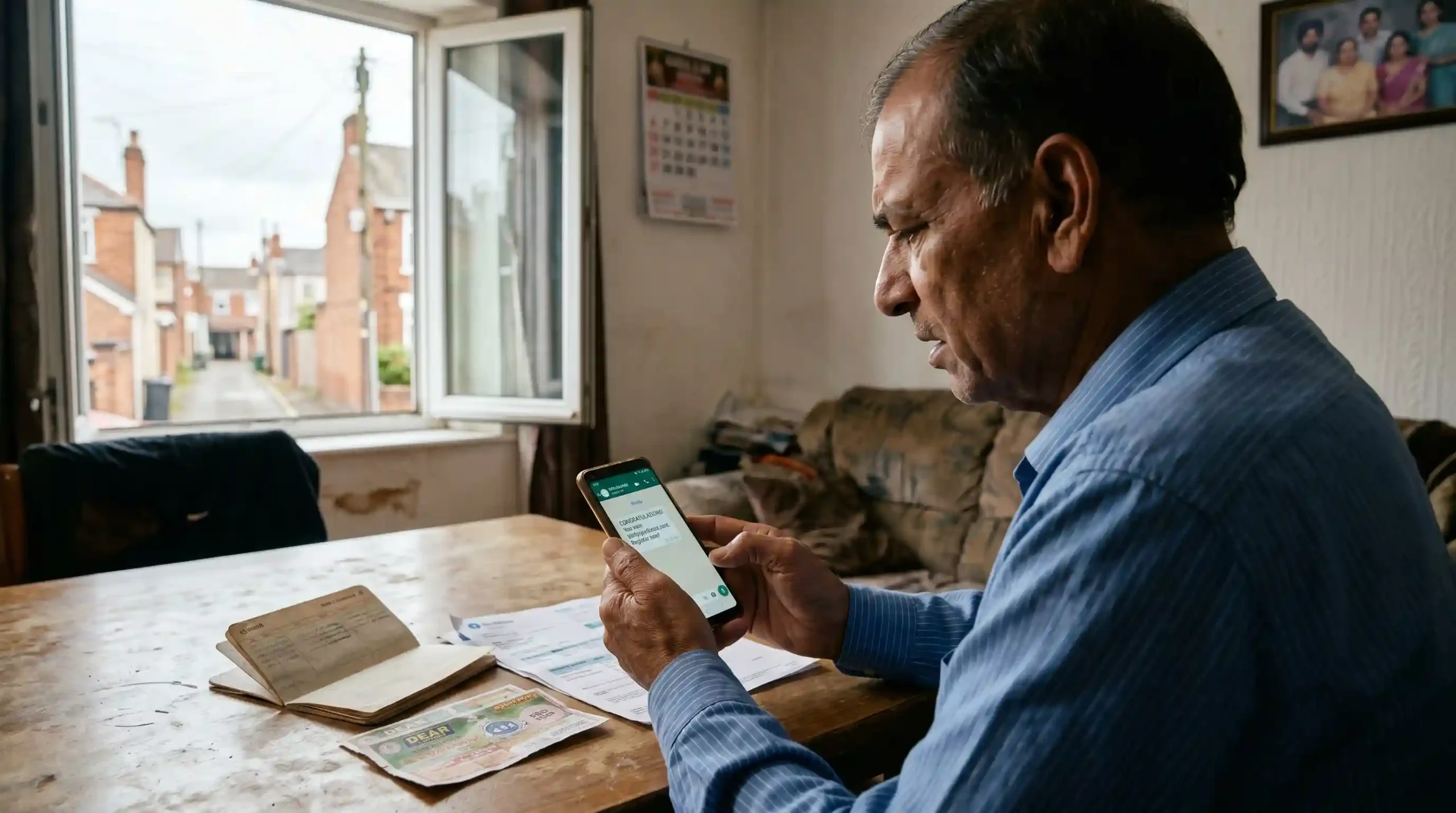
Finding out where you can legally buy a ticket is simple. However, understanding the states where lottery is banned in india is equally critical. Specifically, state governments in India hold the absolute power to decide if they allow lotteries within their borders. Therefore, if you live in a state that bans lotteries, you break the law when you buy a ticket—whether you purchase it in print or online.

Furthermore, you risk not only losing your money to unverified sellers, but you also face legal consequences. Consequently, the law gives you absolutely no recourse if a fraudster cheats you. In this guide, we cover the complete banned list, explain exactly why states enforce these bans, and show how the law affects your ability to play. Additionally, to see the full national picture, you can refer to our master map of the lottery legal states in India.
Key Takeaways

  • Purchasing is a Crime: First, buying a lottery ticket while residing in a banned state is illegal, regardless of where the ticket originated.
  • No Online Loophole: Second, the government strictly prohibits online lotteries in states that ban physical lotteries.
  • State Control: Third, the Lotteries Regulation Act 1998 allows states to block the sale of other states’ lottery tickets within their borders.
  • Zero Payouts: Finally, if you win using a ticket purchased illegally in a banned state, you cannot legally claim the prize money.

Complete List of States Where Lottery is Banned in India

While about 13 states currently permit lotteries, the vast majority of Indian states and Union Territories ban them completely.

Specifically, the states where lottery is banned in india include major regions such as Tamil Nadu, Karnataka, and Gujarat. Additionally, other states like Bihar, Uttar Pradesh, Rajasthan, Andhra Pradesh, and Telangana also prohibit the sale and distribution of lottery tickets.

Therefore, if you physically reside in any of these states, you cannot legally participate in any government or private lottery draw.

Why Lottery Banned in India: The Core Reasons

When researching why these bans exist, you will find the reasons almost always tie back to public welfare and socio-economic protection. Historically, state governments enact bans for the following reasons:

  1. Financial Hardship: First, daily draws frequently led to low-income earners spending disproportionate amounts of their daily wages on tickets, which caused severe debt.
  2. Gambling Addiction: Second, officials categorized lotteries alongside gambling, prompting states to ban them to curb addiction.
  3. Law and Order: Third, the rise of illegal, unregulated single-digit lotteries created massive black markets that state police forces struggled to control.

The Karnataka and Tamil Nadu Bans

Notably, two of the most prominent bans occurred in southern India.

For instance, the Karnataka state government brought a complete lottery ban into full effect in 2007. Specifically, they banned all forms of lotteries, including online and out-of-state lotteries, to protect rural and low-income families from financial ruin.

Similarly, if you are asking about Tamil Nadu, the state enforces a strict ban. Indeed, Tamil Nadu completely banned all lotteries in 2003 under intense public pressure regarding gambling addiction and financial distress among daily wage workers. To learn more, read our dedicated breakdown: is lottery legal in Tamil Nadu.

Are Gambling Banned States India and Lottery States the Same?

Generally, lawmakers regulate lotteries and gambling differently, but the rules often overlap. For example, the Public Gambling Act of 1867 prohibits running a gambling house, but individual state laws take precedence.

In many cases, states that ban gambling also ban lotteries. However, the legal definition of “gambling” versus “lottery” can differ. Specifically, the Lotteries Regulation Act 1998 governs lotteries, whereas state gaming acts cover casinos and betting. To understand this nuance, read our Complete Guide to Lottery in India.

Penalties in States Where Lottery is Banned in India

Crucially, if you buy a ticket in a banned jurisdiction, you participate in an illegal transaction. Consequently, you face multiple risks:

  1. No Legal Recourse: First, if the seller refuses to pay your winnings, you cannot go to the police or a consumer court. The law views your original purchase as a criminal offense.
  2. Confiscation: Second, authorities will confiscate any winnings you attempt to claim while residing in a banned state.
  3. Fines and Prosecution: Third, selling or distributing tickets in a banned state carries severe penalties, including jail time and heavy fines. Furthermore, buying them makes you liable under state gaming acts.

Frequently Asked Questions (FAQ)

Explaining the State Bans

1. Which states have banned lottery in India? Primarily, the states where lottery is banned in india include Tamil Nadu, Karnataka, Gujarat, Bihar, Uttar Pradesh, Rajasthan, Andhra Pradesh, and Telangana. In contrast, only about 13 states legally permit state-run lotteries.

2. Why did Tamil Nadu and Karnataka ban lotteries? Historically, both Tamil Nadu (in 2003) and Karnataka (in 2007) banned lotteries to protect low-income citizens from gambling addiction. Specifically, daily paper and single-digit lotteries fueled severe financial ruin for many families.

3. What reasons do states give for banning lottery? Mainly, states cite the protection of public welfare. Specifically, they point to rising debt among the working class, increases in domestic disputes, and the spread of unregulated black-market gambling networks.

Cross-Border and Online Rules

4. Is it illegal to buy a lottery ticket in a banned state? Yes, absolutely. If your state government bans lotteries, you violate state law when you purchase any ticket—whether printed locally or brought in from another state.

5. Can I play an online lottery from a banned state? No, you cannot. If your state bans physical lotteries, it also bans online lotteries. Furthermore, the Lotteries Regulation Act 1998 allows states to block out-of-state and online sales within their borders.

Winnings and Legal Penalties

6. What happens if I win in a state where it’s banned? Unfortunately, you cannot legally claim the prize. Because purchasing the ticket was an illegal act, the ticket is invalid in the eyes of the law. Consequently, you have no legal right to the winnings.

7. Can I be penalised for buying a banned-state ticket? Yes. While law enforcement typically targets sellers and distributors with jail time and massive fines, buyers also participate in illegal gambling. Therefore, buyers can face fines or prosecution under local laws.

8. Is gambling banned in the same states as lottery? Often, yes, but they operate under different laws. While the Lotteries Regulation Act 1998 governs lotteries, state-specific gaming acts restrict gambling. For instance, states like Gujarat strictly ban both activities.

Government Law and Future Changes

9. Are bans permanent or can they be lifted? Technically, the constitution does not lock these bans permanently, but they remain highly stable. While state legislatures possess the power to reverse a ban by passing new laws, they rarely do so due to political and social concerns.

10. Which is the latest state to ban lottery? While major bans like Tamil Nadu (2003) and Karnataka (2007) remain the most well-known, other states continually update their digital gaming acts. Specifically, they do this to enforce bans against modern online lotteries. Always verify your current local laws.

What to Do Next

In conclusion, if you live in one of the states where lottery is banned in india, your safest action is total avoidance.

  • Do not pay advance fees: First, if someone contacts you claiming you won a lottery in a banned state, do not pay them. It is guaranteed to be a scam.
  • Verify your state’s status: Second, if you are traveling or moving, review our state-by-state map on the pillar page to see where you can safely play.
  • Report online fraudsters: Finally, if an app or WhatsApp group aggressively sells tickets in a banned state like Karnataka or Tamil Nadu, report them immediately. You can call the 1930 national cyber helpline or file a report online at cybercrime.gov.in.

Lottery Legal States in India: State-by-State Map

Disclaimer: This guide is for information only and does not act as legal advice. Always ask the official state lottery department or a legal expert for the current rules.

Buying a lottery ticket in India isn’t as simple as walking into a shop. First, while the central government sets the main rules, individual state governments hold the power to permit or ban lotteries. Therefore, if you are researching the lottery legal states in india, you need the facts before you hand over your money.

Furthermore, you face real risks. Specifically, you break the law if you buy a ticket in a state that bans lotteries. Consequently, the law gives you absolutely no protection if a scammer cheats you. In this guide, we break down the ~13 legal states, the regions with absolute bans, and the laws you must understand before you play. Additionally, for real-time updates on online bans and the newest digital policies, you can also read our guide on states running legal lottery.

Key Takeaways

  • Know Your State: Currently, roughly 13 lottery legal states in india exist. Conversely, the remaining states completely ban the practice.
  • No Legal Help in Banned States: Importantly, you commit a crime and leave yourself open to fraud if you buy a ticket while living in a banned state.
  • Government Only: Moreover, the law makes every private or pan-India lottery strictly illegal. Indeed, Indian law permits only state-run draws.
  • Cross-Border Rules: Finally, the Lotteries Regulation Act 1998 lets states block the sale of other states’ lottery tickets inside their borders.

The 13 Lottery Legal States in India

Currently, roughly 13 states approve lotteries. However, “approved” does not always mean active. For example, some states run massive daily operations. On the other hand, others only hold seasonal bumper draws or have confusing, inactive statuses.

Below, you will find the current state-by-state map and table of the lottery legal states in india.

StateLegal StatusRuns Own Lottery?Online Permitted?Official Source
KeralaLegalYesNo (Paper Only)Kerala State Lotteries Dept.
West BengalLegalYesNo (Paper Only)Directorate of State Lotteries, WB
NagalandLegalYesYes (Licensed)Directorate of State Lotteries, Nagaland
SikkimLegalYesYes (Licensed)Sikkim State Lotteries Dept.
PunjabLegalYes (Bumper)No (Paper Only)Directorate of Punjab State Lotteries
GoaLegalYesYes (Licensed)Directorate of Lotteries, Goa
MizoramLegalYesNoDirectorate of Institutional Finance
MeghalayaLegalYesNoMeghalaya State Lottery Dept.
AssamLegalYesNoBodoland Territorial Council
Arunachal PradeshLegalYesNoArunachal Pradesh State Lottery
ManipurLegalYesNoManipur State Lotteries
MaharashtraAMBIGUOUS*RarelyNoMaharashtra State Lottery Dept.
Madhya PradeshAMBIGUOUS*RarelyNoMP Commercial Tax Dept.

*Note: Maharashtra and Madhya Pradesh have unclear rules. Specifically, while the Act allows them, these states rarely run draws. Therefore, always verify the current status before you buy.

Deep Dives into Legal States

If you live in a legal state, the specific rules for claiming prizes and buying tickets online will vary. Consequently, we break down the exact rules for the most popular participating states:

States Where Lottery is Banned in India

On the contrary, state laws restrict lotteries if a state does not appear on the permitted list. For instance, Tamil Nadu, Karnataka, and Gujarat completely ban lotteries. In these locations, the government strictly bans all forms of lotteries—whether physical, online, or from another state.

Therefore, to understand why these bans exist and the penalties you face, read our dedicated guide on the states where lottery is banned in india. Alternatively, if you live in Tamil Nadu, you can read about the specific 2003 ban here: is lottery legal in tamil nadu.

The Law: Lotteries Regulation Act 1998

Basically, the Lotteries Regulation Act 1998 establishes the framework for the lottery legal states in india. Ultimately, this central law sets the fundamental rules of the game:

  1. State Power: First, it gives state governments the absolute power to decide if they will permit or ban lotteries within their borders.
  2. Cross-Border Sales: Second, it lets a state ban the sale of tickets from other states within its borders.
  3. Government Control: Third, it ensures that only state governments can organize, conduct, or promote a lottery.

Private vs Government Lottery in India

Crucially, you defend yourself against scams best when you understand the difference between a private vs government lottery in india.

Under Indian law, only state-run draws are legal. As a result, every private or pan-India lottery breaks the law entirely. Therefore, a company, brand, or individual commits fraud if they offer you a ticket or tell you that your mobile number has won a “lucky draw.”

Frequently Asked Questions (FAQ)

Basic State Legality Rules

1. How many states is lottery legal in India?

In short, the lottery legal states in india number about 13. Specifically, this list includes states like Kerala, West Bengal, Nagaland, Sikkim, Goa, and Punjab. Meanwhile, the remaining states and union territories ban lotteries entirely.

2. Which states have legal government lotteries?

Currently, states with active, legal government lotteries include Kerala, West Bengal, Sikkim, Nagaland, Punjab, Goa, Mizoram, Meghalaya, Assam, Arunachal Pradesh, and Manipur. However, Maharashtra and Madhya Pradesh permit them under the law but rarely hold active draws.

3. Why is lottery banned in some Indian states?

Historically, many states, such as Tamil Nadu, Karnataka, and Gujarat, banned lotteries to protect citizens from financial ruin and gambling problems. Indeed, state governments possess the legal right to ban lotteries within their borders to uphold public welfare.

Cross-Border and Online Legality

4. Can I buy a lottery ticket from another state?

Yes, if you live in a state that permits lotteries, you can sometimes purchase tickets from other legal states, provided your state allows cross-border sales. Conversely, you break the law entirely if you buy any ticket while living in a banned state.

5. Is online lottery legal in India?

Actually, only a few specific states explicitly authorize online lotteries, such as Goa, Sikkim, and Nagaland. Consequently, states that ban physical lotteries also ban online lotteries entirely.

6. Are private or pan-India lotteries legal?

No, absolutely not. As a matter of fact, every private or pan-India lottery breaks the law. Indian law permits only state-run draws. Therefore, any private company claiming to run a nationwide lottery operates a scam.

General Law and Safety Checks

7. What law governs lottery legality in India?

Primarily, the Lotteries (Regulation) Act 1998, along with the Lotteries (Regulation) Rules 2010, governs the rules. Essentially, this central legislation gives individual states the authority to organize, conduct, or ban lotteries.

8. Can a state change its lottery status?

Yes, absolutely. Because the 1998 Act empowers state governments, a state legislature can pass a law or issue an order to legalize or ban lotteries, just as Tamil Nadu did in 2003.

9. Is it illegal to buy a ticket in a banned state?

Yes, it is. Specifically, you break the law if you buy a lottery ticket while physically located in a banned state. As a result, you cannot legally claim a prize, you risk legal penalties, and you have no help against fraud.

10. How do I check if a lottery is legal where I live?

Above all, you should verify the current status directly with your official State Lottery Department or your state’s Commercial Tax Department. Furthermore, never rely on the word of a ticket seller or an online proxy app.

What to Do Next

In conclusion, understanding the map serves as only the first step. If you live in one of the lottery legal states in india and plan to purchase a ticket, make sure you understand the money rules.

  • Verify your seller: First, ensure the state government officially licenses your vendor.
  • Know the tax laws: Second, read our Complete Guide to Lottery in India to understand tax deductions and financial planning.
  • Report Fraud: Finally, report the issue immediately to the National Cyber Crime Reporting Portal at cybercrime.gov.in or call the 1930 national helpline if a private lottery scam or an illegal cross-border operator approaches you.

5 Signs a Lottery Winning SMS Is Fake

Already responded to a suspicious text message? Do this now:

  • Do not send money or share OTPs. If they ask for an advance fee to give you your prize, it is a scam.
  • Do not click any links. If you did, do not type any information on the page that opens.
  • Report financial loss instantly. If you have already lost money, call the National Cyber Crime Helpline at 1930 immediately, and file a report atcybercrime.gov.in.
  • Contact your bank. Tell them to freeze your account to stop any more money from being taken.

It usually starts with a sudden, unexpected text message. Your phone buzzes, and the screen shows a message claiming you have won a massive cash prize in a lucky draw. If you are reading this right now, chances are you are looking at a fake lottery winning sms and wondering if it is real.

Stop, take a breath, and do not tap anything.

Our complete guide to the playbook of lottery scams in India shows that a fake lottery winning sms is usually the very first trap scammers use. They use a massive prize as bait to steal your money or your bank details. Real lotteries simply do not work this way. Here is exactly how to spot a scam text before it costs you your savings.

Key Takeaways

  • The most vital rule: Never click links, call the number, or reply to an unexpected text claiming you won a lottery.
  • No upfront fees: Real lotteries take taxes out before paying you; they never ask winners to send money first.
  • Silence is safety: Replying “STOP” to a spam text only proves to scammers that your phone number is active.
  • Act fast if tricked: If you shared your details, call 1930 immediately to stop the fraud.

How to Spot a Fake Lottery Winning SMS

Scammers send out thousands of text messages every day, hoping just a few people will reply. While the exact words change, their tricks are always the same. Look for these five clear red flags in any message claiming you won a prize.

1. You Never Bought a Ticket for That Draw

The golden rule of lotteries is simple: you cannot win a game you did not play. Scammers often use the names of major brands, phone networks, or popular TV shows to make their texts look real. If you get a text about a draw you did not buy a ticket for, it is a fake.

2. The Text Demands an Advance Fee or ‘Tax’

A classic sign of an advance fee lottery scam is the demand for a “processing fee,” “registration charge,” or “GST clearance” before you can get your prize.

Real Lottery Taxes: Under Indian law, real lottery wins have a flat 30% tax plus a 4% Health and Education Cess, bringing the total cut to 31.2%. This Tax Deducted at Source (TDS) is taken out before the prize is paid to you, according to theIncome Tax Department of India. A real lottery will never ask you to pay taxes out of your own pocket using UPI or a bank transfer.

3. It Includes a Suspicious Link

A real state lottery will tell you to check the official government gazette or verified department website. A fake lottery winning sms will almost always include a shortened or strange-looking link. This is known as smishing. Clicking this link may put harmful viruses on your phone or take you to a fake website built to steal your passwords.

4. The Sender Wants You to Switch to WhatsApp

Official government lotteries do not handle real business using private WhatsApp numbers. If the text tells you to contact a “Lottery Manager” on a standard 10-digit mobile number, you are talking to a scammer’s call centre. This trick is very common with the fake KBC lottery WhatsApp message fraud.

Warning: Be highly suspicious of messages sent from normal 10-digit mobile numbers. Real business texts use official 6-character sender IDs (like AD-LOTTRY) required by theTelecom Regulatory Authority of India.

5. It Threatens You With a Deadline

Scammers want you to panic. They will say that your prize will be cancelled or given to someone else if you do not reply within 24 hours. This fake rush is meant to stop you from thinking clearly or checking their claims.

What to Do If You Receive a Scam SMS

If you spot these signs, your best defense is doing nothing at all.

  • Do not reply: Not even to insult the scammer or text “STOP”. Replying proves your number belongs to a real person.
  • Block the sender: Use your phone’s settings to block the contact.
  • Report the message: You can report spam texts through your phone provider or the DND app. For your own safety, practice Responsible Lottery Play by ignoring unexpected offers.

If the scam goes further and you realize you have been tricked into sending money or sharing an OTP, drop everything. Follow the exact steps to report the scam in India to give yourself the best chance of getting your money back.

Frequently Asked Questions

How do I know if a lottery winning SMS is fake?

An SMS is fake if you didn’t enter the draw, if the message has strange links, if it comes from a standard 10-digit mobile number instead of a business ID, or if it demands an upfront fee to claim the money.

Do real lotteries notify winners by SMS?

No. Real, government-backed state lotteries in India print winning numbers in the official state gazette and on their official websites. They do not text winners directly, because physical tickets are not linked to your phone number.

What are common red flags in a scam lottery text?

Red flags include terrible spelling, promises of massive wealth in foreign money, fake deadlines (like “claim within 24 hours”), links to unknown websites, and instructions to keep your win a secret.

Why does the SMS include a link or phone number?

The link is meant to put harmful software on your phone or send you to a fake login page to steal your bank details. The phone number connects you to a professional thief trained to trick you into sending money.

Is it safe to reply STOP or call the number?

No. Replying “STOP,” insulting the scammer, or calling the number proves that your phone number is active. This will instantly cause you to get even more spam and scam texts from other numbers.

What happens if I click the link in the SMS?

Clicking the link may silently download viruses or tracking software onto your phone. It might also send you to a very realistic fake website that asks for your bank details, Aadhaar number, or UPI PIN to “verify” you.

How do scammers get my mobile number?

Scammers buy lists of active phone numbers from data thieves on the internet, steal them from hacked apps, or use software to guess and text thousands of random phone numbers all at once.

Should I report the sender to my telecom or 1930?

If you have not lost any money, report the number as spam to your phone provider (for example, by forwarding the text to 1909). If you have lost money or shared your bank details, call the cybercrime helpline at 1930 immediately.

Can I block and trace a scam SMS sender?

You should always block the sender using your smartphone’s settings. Tracing the sender is extremely hard for everyday people, as scammers use fake numbers and untraceable internet connections. Leave the tracing to the police.

What if I already shared an OTP or details?

Act right away. Call your bank’s emergency number to freeze your accounts and block your cards or UPI access. Then, call 1930 to report the fraud and file a formal police complaint at cybercrime.gov.in.

Scammed by a Lottery? The First 24 Hours Matter

Already been targeted or scammed? Do this now.

Did you click a link in a deepfake celebrity lottery endorsement and share your bank details? Stop all communication immediately.

  1. First, call 1930 (the National Cyber Crime Helpline) right now. Specifically, this action freezes your transaction.
  2. Second, file a formal cyber fraud complaint at theNational Cyber Crime Reporting Portal.
  3. Finally, contact your bank immediately. Furthermore, instruct them to block your debit cards and your UPI access.

You scroll through your social media feed, and suddenly, a familiar face appears. For instance, you see a trusted actor or a famous news anchor personally promising you a guaranteed spot in a massive prize draw. However, do not trust it. In reality, this video is a deepfake celebrity lottery endorsement, and it is a highly deceptive scam designed to steal your money. Indeed, this method ranks as one of the most dangerous lottery scams in India today.

Therefore, you must understand exactly how these scams operate. Fraudsters weaponise artificial intelligence (AI) to bypass your natural caution. Consequently, scammers clone famous faces to trick you into false trust. As a result, users click malicious links or pay fake entry fees.

In this guide, we explain these fabricated videos in detail. First, you will learn the distinct digital tells. Second, you will discover the exact steps to take to protect your finances.

Key Takeaways

  • Never Trust the Face Value: Most notably, scammers use AI to generate videos that promise guaranteed lottery wins.
  • Look for the “Tells”: Unnatural blinking, robotic vocal tones, and blurry jawlines clearly expose a deepfake.
  • Celebrities Are Victims Too: Furthermore, fraudsters steal public footage. Thus, the celebrity does not endorse the lottery.
  • Never Click the Link: Specifically, fraudsters use “Sign Up Now” buttons to steal your KYC details and banking information.
  • Report Immediately: Flag the video on the social platform. Additionally, report any financial loss directly to the cyber helpline.

What is a Deepfake Celebrity Lottery Endorsement?

Primarily, fraudsters rely on advanced software to manipulate existing video and audio. First, they scrape hours of public interviews from a famous person. Next, they feed this data into an AI tool. Consequently, the AI learns the person’s facial expressions, voice pitch, and cadence.

How AI Generates These Fake Videos

Once the AI finishes training, the scammer types a specific script. For example, they might type, “Click the link below to enter my exclusive ₹50 Lakh lottery draw!” Subsequently, the software generates a highly realistic video. Thus, the AI makes the cloned celebrity say those exact words.

The Celebrity is Not Involved: You must understand that the public figure did not approve this message. In fact, criminals stole their digital identity to sell a fake prize draw. Therefore, the video is AI, not a real advertisement.

How to Spot a Fake Video Endorsement

Deepfake technology improves rapidly. However, it rarely looks perfect. Fraudsters prioritize speed over quality. Consequently, their videos often contain distinct visual and audio errors.

Visual and Audio Red Flags

When you see a suspicious ad on your feed, carefully look for these specific warning signs:

  • Lip-Sync Failures: The mouth movements do not perfectly align with the spoken words. In particular, pay close attention to sharp consonant sounds like P, B, or M.
  • Unnatural Eye Movements: Similarly, deepfakes struggle with natural blinking. Therefore, the eyes might stare blankly or look in the wrong direction.
  • Audio Glitches: Listen closely to the voice. It often sounds slightly robotic or flat. In addition, it completely lacks natural emotional inflection.
  • Blurry Edges: Look closely at the jawline and hair. Often, you will see a slight blurring where the AI mask meets the original head.

The Trap Inside a Deepfake Celebrity Lottery Endorsement

These fake videos share one ultimate goal. Ultimately, they desperately want you to click the link provided in the video caption. Once you click, you immediately step into a highly structured trap.

Step-by-Step Data Theft

First, the link directs you to a phishing portal. This website perfectly mimics an official state lottery page. Second, the site prompts you to register. Specifically, they ask for your name, phone number, PAN card, and bank details.

Third, the scammers trigger the “processing fee” trap. They tell you that you won. However, they demand a small, refundable fee via UPI to release the funds. Finally, scammers might use your number to send a fake lottery SMS. Alternatively, they might add you to a Telegram lottery group scam to extract even more money.

The Real Role of Brand Ambassadors

Legal state lotteries sometimes hire public figures for marketing. Nevertheless, legitimate brand ambassadors always operate under strict boundaries.

The Golden Rule of Endorsements: Legitimate brand ambassadors appear in verified campaigns to promote the brand. However, they never run direct prize draws. Furthermore, they never message you privately. Finally, they absolutely never ask you to send money to unlock a ticket.

For absolute peace of mind, always practice safety first. Therefore, read our Complete Guide to Lottery in India to understand exactly how legal draws actually function.

How to Report a Deepfake Celebrity Lottery Endorsement

If you spot a deepfake celebrity lottery endorsement, taking swift action protects both you and your community.

Immediate Actions to Take

First, do not engage. Never comment on the video, because social media algorithms view comments as engagement. Consequently, the platform simply shows the video to more people.

Second, report the video in-app. Specifically, use the reporting tool on Facebook, Instagram, or YouTube. Then, select “Scam” or “Misleading AI content” to instantly alert the moderators.

Finally, handle financial fraud aggressively. If you clicked the link and transferred money, you must immediately report a lottery scam in India.

Where to Report: Call the National Cyber Crime Reporting Helpline at 1930. Alternatively, file a detailed report at theofficial government cyber portal. —

Frequently Asked Questions

Understanding AI Lottery Scams

1. Are celebrity lottery endorsement videos real?

No. Videos showing a celebrity personally promising a guaranteed lottery win are scams. Criminals use artificial intelligence to steal the celebrity’s face. Consequently, they trick you into clicking malicious links.

2. What is a deepfake lottery endorsement?

It is a fraudulent video created using advanced software. First, scammers clone a famous person’s face and voice. As a result, they make it appear as though the celebrity endorses a fake prize draw.

3. Which celebrities do scammers fake in lottery ads?

Scammers typically target highly trusted figures. For instance, they clone veteran actors, popular news anchors, and top cricketers. Therefore, the familiar faces immediately generate false trust among the public.

Spotting the Digital Tells

4. How can I tell a video is AI-generated?

Look for specific visual errors. Often, you will notice unnatural blinking and lips that do not match the spoken words. Furthermore, listen for flat audio and look for blurry edges around the jawline.

5. Do lottery ‘brand ambassadors’ run prize draws?

No. Legal lotteries hire celebrities for general brand marketing. However, these ambassadors never run personal prize draws. Moreover, they also never ask the public for upfront entry fees.

6. Why do these ads appear in my social feed?

Scammers buy ad space on social media platforms just like legitimate businesses. Consequently, they use broad targeting to reach millions of users quickly before safety systems catch the fake video.

Protecting Your Data and Money

7. What do the linked sites try to collect?

The links lead directly to dangerous phishing websites. Fraudsters design these pages specifically to steal your personal information. Consequently, they want your mobile number, PAN details, banking information, and UPI PINs.

8. How do I report a deepfake ad or page?

First, do not click the link. Second, use the three dots on the social media post. Finally, report the ad directly to the platform as “Fraud” or “Scam”.

9. Is sharing a deepfake endorsement illegal?

Knowingly creating and distributing deepfakes to defraud people constitutes a cybercrime in India. While accidentally sharing one is not a crime, you must delete it immediately to protect your friends.

10. What if I clicked the link or paid?

If you paid any money, call the cyber helpline at 1930 immediately. Consequently, this step freezes your account. Next, file a formal complaint at cybercrime.gov.in and alert your bank.

That Celebrity Lottery Video Is a Deepfake

Already been targeted or scammed? Do this now.

Did you click a link in a deepfake celebrity lottery endorsement and share your bank details? Stop all communication immediately.

  1. First, call 1930 (the National Cyber Crime Helpline) right now. Specifically, this action freezes your transaction.
  2. Second, file a formal cyber fraud complaint at theNational Cyber Crime Reporting Portal.
  3. Finally, contact your bank immediately. Furthermore, instruct them to block your debit cards and your UPI access.

You scroll through your social media feed, and suddenly, a familiar face appears. For instance, you see a trusted actor or a famous news anchor personally promising you a guaranteed spot in a massive prize draw. However, do not trust it. In reality, this video is a deepfake celebrity lottery endorsement, and it is a highly deceptive scam designed to steal your money. Indeed, this method ranks as one of the most dangerous lottery scams in India today.

Therefore, you must understand exactly how these scams operate. Fraudsters weaponise artificial intelligence (AI) to bypass your natural caution. Consequently, scammers clone famous faces to trick you into false trust. As a result, users click malicious links or pay fake entry fees.

In this guide, we explain these fabricated videos in detail. First, you will learn the distinct digital tells. Second, you will discover the exact steps to take to protect your finances.

Key Takeaways

  • Never Trust the Face Value: Most notably, scammers use AI to generate videos that promise guaranteed lottery wins.
  • Look for the “Tells”: Unnatural blinking, robotic vocal tones, and blurry jawlines clearly expose a deepfake.
  • Celebrities Are Victims Too: Furthermore, fraudsters steal public footage. Thus, the celebrity does not endorse the lottery.
  • Never Click the Link: Specifically, fraudsters use “Sign Up Now” buttons to steal your KYC details and banking information.
  • Report Immediately: Flag the video on the social platform. Additionally, report any financial loss directly to the cyber helpline.

What is a Deepfake Celebrity Lottery Endorsement?

Primarily, fraudsters rely on advanced software to manipulate existing video and audio. First, they scrape hours of public interviews from a famous person. Next, they feed this data into an AI tool. Consequently, the AI learns the person’s facial expressions, voice pitch, and cadence.

How AI Generates These Fake Videos

Once the AI finishes training, the scammer types a specific script. For example, they might type, “Click the link below to enter my exclusive ₹50 Lakh lottery draw!” Subsequently, the software generates a highly realistic video. Thus, the AI makes the cloned celebrity say those exact words.

The Celebrity is Not Involved: You must understand that the public figure did not approve this message. In fact, criminals stole their digital identity to sell a fake prize draw. Therefore, the video is AI, not a real advertisement.

How to Spot a Fake Video Endorsement

Deepfake technology improves rapidly. However, it rarely looks perfect. Fraudsters prioritize speed over quality. Consequently, their videos often contain distinct visual and audio errors.

Visual and Audio Red Flags

When you see a suspicious ad on your feed, carefully look for these specific warning signs:

  • Lip-Sync Failures: The mouth movements do not perfectly align with the spoken words. In particular, pay close attention to sharp consonant sounds like P, B, or M.
  • Unnatural Eye Movements: Similarly, deepfakes struggle with natural blinking. Therefore, the eyes might stare blankly or look in the wrong direction.
  • Audio Glitches: Listen closely to the voice. It often sounds slightly robotic or flat. In addition, it completely lacks natural emotional inflection.
  • Blurry Edges: Look closely at the jawline and hair. Often, you will see a slight blurring where the AI mask meets the original head.

The Trap Inside a Deepfake Celebrity Lottery Endorsement

These fake videos share one ultimate goal. Ultimately, they desperately want you to click the link provided in the video caption. Once you click, you immediately step into a highly structured trap.

Step-by-Step Data Theft

First, the link directs you to a phishing portal. This website perfectly mimics an official state lottery page. Second, the site prompts you to register. Specifically, they ask for your name, phone number, PAN card, and bank details.

Third, the scammers trigger the “processing fee” trap. They tell you that you won. However, they demand a small, refundable fee via UPI to release the funds. Finally, scammers might use your number to send a fake lottery SMS. Alternatively, they might add you to a Telegram lottery group scam to extract even more money.

The Real Role of Brand Ambassadors

Legal state lotteries sometimes hire public figures for marketing. Nevertheless, legitimate brand ambassadors always operate under strict boundaries.

The Golden Rule of Endorsements: Legitimate brand ambassadors appear in verified campaigns to promote the brand. However, they never run direct prize draws. Furthermore, they never message you privately. Finally, they absolutely never ask you to send money to unlock a ticket.

For absolute peace of mind, always practice safety first. Therefore, read our Complete Guide to Lottery in India to understand exactly how legal draws actually function.

How to Report a Deepfake Celebrity Lottery Endorsement

If you spot a deepfake celebrity lottery endorsement, taking swift action protects both you and your community.

Immediate Actions to Take

First, do not engage. Never comment on the video, because social media algorithms view comments as engagement. Consequently, the platform simply shows the video to more people.

Second, report the video in-app. Specifically, use the reporting tool on Facebook, Instagram, or YouTube. Then, select “Scam” or “Misleading AI content” to instantly alert the moderators.

Finally, handle financial fraud aggressively. If you clicked the link and transferred money, you must immediately report a lottery scam in India.

Where to Report: Call the National Cyber Crime Reporting Helpline at 1930. Alternatively, file a detailed report at theofficial government cyber portal. —

Frequently Asked Questions

Understanding AI Lottery Scams

1. Are celebrity lottery endorsement videos real?

No. Videos showing a celebrity personally promising a guaranteed lottery win are scams. Criminals use artificial intelligence to steal the celebrity’s face. Consequently, they trick you into clicking malicious links.

2. What is a deepfake lottery endorsement?

It is a fraudulent video created using advanced software. First, scammers clone a famous person’s face and voice. As a result, they make it appear as though the celebrity endorses a fake prize draw.

3. Which celebrities do scammers fake in lottery ads?

Scammers typically target highly trusted figures. For instance, they clone veteran actors, popular news anchors, and top cricketers. Therefore, the familiar faces immediately generate false trust among the public.

Spotting the Digital Tells

4. How can I tell a video is AI-generated?

Look for specific visual errors. Often, you will notice unnatural blinking and lips that do not match the spoken words. Furthermore, listen for flat audio and look for blurry edges around the jawline.

5. Do lottery ‘brand ambassadors’ run prize draws?

No. Legal lotteries hire celebrities for general brand marketing. However, these ambassadors never run personal prize draws. Moreover, they also never ask the public for upfront entry fees.

6. Why do these ads appear in my social feed?

Scammers buy ad space on social media platforms just like legitimate businesses. Consequently, they use broad targeting to reach millions of users quickly before safety systems catch the fake video.

Protecting Your Data and Money

7. What do the linked sites try to collect?

The links lead directly to dangerous phishing websites. Fraudsters design these pages specifically to steal your personal information. Consequently, they want your mobile number, PAN details, banking information, and UPI PINs.

8. How do I report a deepfake ad or page?

First, do not click the link. Second, use the three dots on the social media post. Finally, report the ad directly to the platform as “Fraud” or “Scam”.

9. Is sharing a deepfake endorsement illegal?

Knowingly creating and distributing deepfakes to defraud people constitutes a cybercrime in India. While accidentally sharing one is not a crime, you must delete it immediately to protect your friends.

10. What if I clicked the link or paid?

If you paid any money, call the cyber helpline at 1930 immediately. Consequently, this step freezes your account. Next, file a formal complaint at cybercrime.gov.in and alert your bank.

Inside the Telegram Lottery Group Scam in India

Targeted by a Telegram group admin? Do this now.

  1. Do not send money. Never pay “VIP access fees,” “taxes,” or “processing charges” to group admins.
  2. Do not share documents. Do not send photos of your Aadhaar card, PAN, or bank passbook in a chat.
  3. Leave and block. Exit the group immediately and block the admin’s account.
  4. Dial 1930. If you already sent funds, call the National Cyber Crime Helpline instantly to freeze the transfer.
  5. Report the channel. File an official complaint at the National Cyber Crime Reporting Portal. If you recently joined an anonymous messaging channel promising guaranteed jackpot numbers, you are likely inside a telegram lottery group scam. Because the platform allows massive, anonymous public channels, it has become a major hunting ground for fraudsters looking for victims. Specifically, a telegram lottery group scam uses intense psychological manipulation to drain your savings.

As a core part of our commitment to Responsible Lottery Play , we are exposing exactly how this digital illusion operates. Furthermore, to understand how this fits into the broader ecosystem of digital fraud, please read our master guide on the playbook used in lottery scams in India .

Key Takeaways

  • The Wins Are Fake: The screenshots of “winners” receiving massive payouts are entirely staged.
  • Admins Want Advance Fees: The ultimate goal of a telegram lottery group scam is to extort upfront “VIP” fees or fake taxes from you.
  • Never Share KYC: Legitimate lotteries do not ask for your PAN or Aadhaar card via anonymous Telegram DMs.
  • Act Quickly: If you spot fake payout proofs, leave the group, block the admins, and report the channel to the Cyber Crime Portal.

How a Telegram Lottery Group Scam Operates

Fraudsters rely heavily on creating a false sense of community and success. Consequently, they build a fake environment where winning seems guaranteed.

Staged ‘Winner’ Posts and Admin Tactics

When you enter a fake lottery channel, you will immediately see a flood of activity. First, the admins post daily “winning numbers.” Next, anonymous accounts post screenshots of their bank accounts, claiming they just received a massive payout. However, this is a carefully orchestrated illusion. The group admins control multiple fake accounts (bots) to post these forged screenshots. Therefore, the “winners” you see are just the scammers talking to themselves.

Faking Proof of Payouts

Scammers easily forge bank SMS alerts and digital payment receipts using basic photo-editing apps. Consequently, a screenshot of a credited bank balance in a Telegram group is never proof of a legitimate lottery payout.

The Shift to Private Chat

Once you express interest in the group, the trap springs. Specifically, an admin will send you a Direct Message (DM). This is the hallmark of a typical telegram lottery group scam. In the private chat, the admin will offer you a “sure-shot” winning number or VIP membership. But, there is a catch. They will demand an upfront payment via UPI to unlock this secret information. Furthermore, they will apply extreme pressure, claiming the draw happens in minutes.

Extorting Fees and KYC Details

If you pay the initial VIP fee, the fraud escalates quickly. The admin will then claim you won the jackpot. However, they will invent new hurdles to prevent you from getting the money.

  • Fake Taxes: They will demand you pay a “processing fee” or “GST” to release the funds.
  • Data Theft: Next, they will ask for your PAN card, Aadhaar card, and bank account numbers, claiming it is required for “official KYC.”
  • The Blackhole: Ultimately, you will never receive a payout. Once you stop paying fees, the admin will simply block you and delete the chat history.

The Legal Reality of Lottery Tax Under Indian law, legitimate state lottery winnings exceeding Rs. 10,000 are subject to a flat 30% tax plus a 4% cess (effectively 31.2%). Crucially, this tax is deducted at the source (TDS) before the prize is paid out. You never pay this tax upfront from your own pocket to an anonymous admin.

Escaping the Trap: How to Leave and Report

If you are currently in one of these groups, you must act quickly to protect yourself. Unlike WhatsApp lottery scams where they text you directly, Telegram groups require you to proactively leave.

First, take screenshots of the admin’s username and the fake payment requests. Next, tap the group name, scroll to the bottom, and select “Leave Channel.” Finally, to report the activity effectively, you must file your evidence with the authorities. If you have already lost money, immediately read our guide detailing the critical victim recovery steps you must take in the first 24 hours.

Frequently Asked Questions

Group Mechanics and Fake Proof

1. Are Telegram lottery groups real or scams?

Almost universally, anonymous Telegram lottery groups promising guaranteed wins or secret numbers are scams. Legitimate, state-backed lotteries operate through authorized physical retailers and official government websites, never through unverified messaging channels.

2. How do staged ‘winner’ posts trick members?

Scammers use multiple fake accounts to post forged bank screenshots and voice notes thanking the admin for “huge payouts.” Consequently, new members see this fake community success and falsely believe the group is legitimate and profitable.

3. Why do admins move you to a private chat?

Admins move you to a private Direct Message (DM) to isolate you from the group. In a private chat, they can aggressively pressure you for money and manipulate you without other members warning you that it is a scam.

4. How do scammers fake proof of payouts?

Fraudsters use simple photo-editing software or fake SMS generator apps to create convincing images of bank deposit alerts or UPI success screens. Therefore, digital screenshots posted by strangers are never reliable proof of real money.

Demands and Financial Risk

5. What fees or details do they eventually ask for?

Initially, they ask for a small “VIP entry fee.” Later, they demand larger payments for “GST,” “customs clearance,” or “bank transfer charges.” Finally, they will ask for your Aadhaar, PAN, and banking details to steal your identity.

6. What if I shared my bank or KYC details there?

Act instantly. Call your bank’s 24/7 fraud department to freeze your accounts and block your cards. Since scammers now have your ID, you must file an official report at cybercrime.gov.in to protect yourself against future identity theft.

7. Can I recover money sent through a Telegram scam?

Recovery is incredibly difficult, but possible if you act within the “golden hour.” You must dial the 1930 National Cyber Crime Helpline immediately after the transfer. This gives authorities a brief window to potentially freeze the scammer’s destination bank account.

Reporting and Context

8. Are these groups linked to the post-ban gambling shift?

Yes. Following strict government crackdowns and advertising bans on illegal offshore betting apps, many criminal syndicates moved their operations to Telegram. Consequently, they re-branded their gambling rings as “lottery prediction” groups to trap victims.

9. How do I leave and report a scam Telegram group?

First, take screenshots of the scammer’s profile and payment demands. Next, open the group settings and tap “Leave Channel.” Use Telegram’s in-app reporting tool, and then submit your screenshots to the official cybercrime portal.

10. How do I report a Telegram channel to authorities?

Because Telegram is an encrypted platform, local police need your digital evidence. Dial 1930 to report financial loss immediately. Then, go to the National Cyber Crime Reporting Portal and upload the channel link, admin usernames, and your chat screenshots.

A Lottery ‘Refund’ on UPI Only Drains Your Account

If you are on the phone with someone claiming your ticket purchase failed and offering your money back, stop and read this carefully: you are likely the target of a upi lottery refund fraud. Specifically, scammers trick victims into approving a payment under the disguise of sending a refund. Because digital payments happen instantly, falling for this trap can drain your bank account in seconds.

As a core part of our commitment to Responsible Lottery Play, we are exposing exactly how this digital trap works. Ultimately, to understand the wider context of how these criminals operate across India, please review our comprehensive guide on the playbook used in lottery scams in India. ### Key Takeaways

  • PIN Means Pay: First and foremost, your UPI PIN is only used to send money or check your balance, never to receive a refund.
  • Beware the ‘Collect Request’: Specifically, scammers use the UPI ‘collect’ feature to initiate a debit from your account.
  • Screen Sharing is Dangerous: Additionally, never install remote apps like AnyDesk if a “lottery official” asks you to.
  • Act Quickly: Most importantly, if you made a payment, report it within the “golden hour” to maximize your chances of recovery.

How UPI Lottery Refund Fraud Works

Fraudsters deeply exploit the speed and convenience of India’s digital payment infrastructure. Specifically, they rely on the fact that many users misunderstand how the Unified Payments Interface functions when receiving money.

Typically, a upi lottery refund fraud begins with a sudden phone call or SMS. First, the scammer poses as a customer service agent from a state lottery or a popular digital payment app. Next, they claim a recent transaction failed or that you are entitled to a special cashback reward. To complete the illusion, they send a notification directly to your Google Pay, PhonePe, or Paytm app.

Why Am I Asked to Approve a ‘Collect Request’?

Unlike a standard bank transfer where you initiate the payment, the system allows a merchant or individual to request money from you. Consequently, this specific feature is hijacked to create a upi collect request scam.

When the scammer triggers this request, your phone displays a notification. However, the scammer will aggressively instruct you to approve the prompt and enter your 4-digit or 6-digit PIN. If you follow their instructions, you are actively authorizing your bank to transfer your funds into the scammer’s account.

The RBI’s Golden Rule for UPI TheReserve Bank of India (RBI)strictly mandates customer awareness regarding UPI PINs. The fundamental rule is: UPI PIN is required ONLY for making a payment, not for receiving money.

Spotting a Fake Refund UPI Fraud Quickly

Fortunately, preventing a fake refund upi fraud is simple once you recognize the psychological tricks the fraudsters use. Always watch for these immediate red flags:

  • The Word “Pay”: Even if the scammer says they are sending money, the primary button on your UPI app will clearly say “Pay” or “Send”.
  • Fabricated Fees: Sometimes, they rebrand the scam as a lottery processing fee upi charge. Consequently, they claim you must pay a small refundable tax to unlock a larger prize.
  • High-Pressure Tactics: Furthermore, the caller will create extreme urgency. For instance, they might claim the refund link will expire in exactly two minutes if you do not act instantly.

In addition to direct collect requests, scammers heavily abuse QR codes. Often, they will send you a QR code via WhatsApp, calling it your “cashback voucher.”

QR Code Danger: Crucially, scanning a QR code is functionally identical to making a payment. Therefore, if you scan a code and your app asks for your UPI PIN, you are about to send money directly to a fraudster.

Avoiding the Screen-Sharing Trap

Should I install any app they recommend? Absolutely never. Frequently, a common escalation of this fraud involves the scammer asking you to download screen-sharing applications like AnyDesk, QuickSupport, or TeamViewer. If you install these apps, the scammer can watch your screen, read your OTPs, and see you type your UPI PIN. As a result, this gives them total control over your bank account.

Stopping a UPI Lottery Refund Fraud Attack

Unfortunately, reversing a UPI transaction is incredibly difficult. Because UPI is a real-time settlement system, the money leaves your account and enters the scammer’s wallet instantaneously. Consequently, a traditional reverse upi payment fraud procedure is rarely as simple as pressing an “undo” button.

Do I Contact My Bank or 1930 First?

If you realize you have been defrauded, time is your only weapon. First, immediately dial 1930. This connects you to the National Cyber Crime Helpline, which has the power to contact the receiving bank and potentially freeze the scammer’s account. For detailed steps, see our exact guide on how to report a lottery scam in India. Next, call your bank’s emergency hotline. Specifically, ask them to block your UPI ID, freeze your debit cards, and log a formal fraud dispute. Afterward, you must read our timeline on lottery scam victim recovery to understand your remaining legal and financial options. —

Frequently Asked Questions

Understanding the Mechanics of UPI Fraud

1. How does upi lottery refund fraud work?

Essentially, a scammer calls claiming your lottery purchase failed or you won cashback. Then, they send a UPI “collect request” to your phone. Finally, they trick you into entering your UPI PIN, which actually transfers your money to them instead of processing a refund.

2. Why am I asked to approve a ‘collect request’?

Specifically, the scammer uses the collect request feature to pull money from your account. By approving it, you are officially giving your bank permission to debit your funds and send them to the scammer’s wallet.

3. Does receiving money ever need my UPI PIN?

Absolutely never. You never need to enter your 4-digit or 6-digit UPI PIN to receive money, refunds, or cashback. In fact, your PIN is solely a security measure used to authorize money leaving your bank account.

4. What is a fake refund or cashback lottery scam?

This is a social engineering trick where fraudsters use the promise of returned money or a small prize to lower your defenses. Consequently, you become so focused on getting the “refund” that you ignore the warnings on your UPI app.

Identifying the Scam

5. How do I spot a malicious UPI request?

First, look at the action button; it will say “Pay” instead of “Receive.” Second, the app will prompt you for your UPI PIN. Therefore, if you see a PIN screen when you are expecting to receive money, it is undoubtedly a scam.

6. How do scammers use QR codes in lottery fraud?

Often, scammers send a QR code via WhatsApp, calling it a “prize voucher.” However, scanning a QR code is only meant for sending money to a merchant. If you scan it and enter your PIN, your money will be stolen immediately.

7. Should I install any app they recommend?

No, never. Scammers will often ask you to download apps like AnyDesk or TeamViewer under the guise of “customer support.” Actually, these are remote access apps that let the scammer view your screen, read your OTPs, and steal your banking passwords.

Taking Immediate Action

8. What if I already entered my UPI PIN?

Above all, act instantly. First, hang up the phone. Next, open your banking app and disable your UPI ID or transfer your remaining balance to a trusted family member. Finally, call your bank’s fraud hotline to report the unauthorized transaction.

9. Do I contact my bank or 1930 first?

First, dial 1930, the National Cyber Crime Helpline. They have the fastest mechanism to alert the scammer’s receiving bank and attempt a freeze. Immediately after hanging up with 1930, call your own bank to secure your account.

10. Can I reverse a UPI payment to a scammer?

Unfortunately, an automatic reversal is almost impossible because UPI payments are settled instantly. However, if you report the crime to 1930 within the first “golden hour” and file at the National Cyber Crime Reporting Portal, authorities might successfully freeze the funds in the scammer’s account before they withdraw it.