
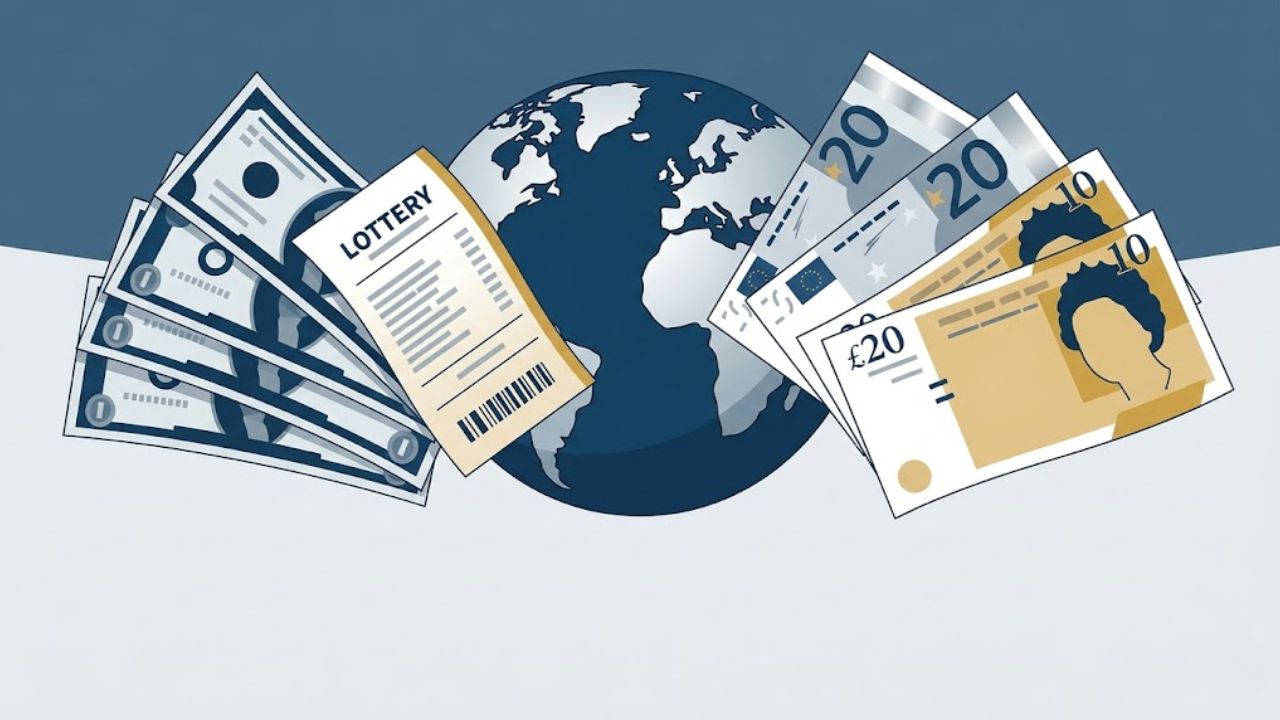
When examining the global lottery landscape, it becomes clear that the lottery is much more than just a local tradition. In India, millions of people interact with daily draws like the Nagaland State Lottery, checking results on their phones or at local kiosks. However, the concept of the lottery stretches far beyond any single country’s borders.
From the ancient dynasties of China to the multi-billion-dollar jackpots of the modern United States, lotteries have shaped economies, funded massive infrastructure projects, and captured the human imagination.
This comprehensive guide explores the world lottery landscape. We will travel through the ancient history of lotteries, examine how giants like the US Powerball and Europe’s EuroMillions operate, look at the biggest jackpots in human history, and understand how governments worldwide use lottery revenue for economic development.
The Ancient History of the Global Lottery Landscape
The modern paper ticket you hold in your hand has ancestors dating back over two millennia. The fundamental concept of the lottery – pooling resources for a chance at a randomized reward – is deeply embedded in human civilization.
The Chinese Origins: Keno and the Great Wall
The earliest recorded lotteries date back to the Chinese Han Dynasty (between 205 and 187 BC). Ancient Keno slips have been discovered from this era. Historians believe these early lotteries were established by the government to fund major state projects, including the construction of the Great Wall of China, without having to raise taxes on the populace.
The Roman Empire: Dinner Parties and Civic Funding
In the West, lotteries began as entertainment. During the Roman Empire, high-status dinner parties featured a primitive form of lottery where every guest received a ticket, and prizes consisted of fancy dinnerware or luxury items.
However, it was Emperor Augustus Caesar who introduced the first public lottery in Europe. The funds raised from the sale of tickets were used for civic repairs in the City of Rome, and the winners received prizes in the form of articles of unequal value.
The European Renaissance
The word “lottery” itself is believed to come from the Dutch word lot, meaning “fate.” In the 15th century, towns in the Netherlands and modern-day Belgium held public lotteries to raise money for town fortifications and to help the poor. This model laid the groundwork for state-sponsored lotteries worldwide.
How Lottery Works in the United States: Powerball and Mega Millions
When people think of life-altering, unimaginable wealth, they usually think of the United States lottery system. Unlike India, where lotteries are strictly state-managed affairs, the US features massive multi-jurisdictional games that pool players from over 40 states.
The Mechanics of Powerball and Mega Millions
The two titans of the American lottery world operate on a “progressive jackpot” system. If no one matches all the winning numbers in a draw, the jackpot rolls over to the next draw, growing larger each time. This creates a snowball effect, frequently resulting in jackpots exceeding $1 billion.
- Ticket Cost: A standard ticket usually costs $2.
- The Odds: The odds of winning the Powerball jackpot are incredibly steep – about 1 in 292.2 million.
- The Payout Structure: Winners have a crucial choice. They can take their winnings as an “annuity” (paid out over 30 years) or take a “lump sum” cash option, which is significantly smaller than the advertised jackpot but paid immediately.
The sheer scale of these games creates global news, driving “lottery fever” where people who never usually play suddenly buy tickets just to be part of the cultural moment.
European Lotteries: EuroMillions and El Gordo Explained
Europe offers a different approach to the lottery, focusing on transnational cooperation and deeply ingrained cultural traditions.
EuroMillions: The Transnational Giant
Launched in 2004, EuroMillions is a transnational lottery requiring seven correct numbers to win the jackpot. It is co-organized by the national lotteries of countries like the UK, France, Spain, and others. Because it pools the populations of multiple European nations, the jackpots routinely reach hundreds of millions of euros. Notably, unlike the US where winnings are heavily taxed, many European countries pay out lottery winnings tax-free.
Spain’s El Gordo: The Fat One
Perhaps the most unique lottery in the world is the Sorteo Extraordinario de Navidad, Spain’s Christmas Lottery. Its massive prize pool has earned it the nickname “El Gordo” (The Fat One).
Instead of a progressive jackpot that makes one person a billionaire, El Gordo is designed to share the wealth.
- Tickets are pre-printed with five-digit numbers.
- Because full tickets are expensive (around €200), they are divided into décimos (tenths) costing €20.
- Entire villages, families, or groups of coworkers often buy décimos of the same number.
When a number wins, the prize is shared among everyone holding a fraction of that ticket. This creates a massive, communal celebration across Spain every December 22nd.
Biggest Jackpots in the Global Lottery Landscape
The scale of international jackpots is staggering, especially when converted to Indian Rupees. Here are the historic milestones that changed the global lottery landscape:
- $2.04 Billion (Powerball, USA, 2022): The largest single lottery payout in world history. A single ticket purchased in California claimed this astronomical sum.
- $1.586 Billion (Powerball, USA, 2016): This historic jackpot was split between three winning tickets in California, Florida, and Tennessee.
- $1.537 Billion (Mega Millions, USA, 2018): Won by a single ticket in South Carolina.
- €240 Million (EuroMillions, Europe, 2023): An Austrian player claimed the maximum capped jackpot for the European game.
To put this in perspective, the first prize for a daily Lottery Sambad draw in India is typically one crore rupees (approx. $120,000 USD). The global jackpots operate in an entirely different financial stratosphere, but with dramatically lower odds of winning.
How Governments Shape the Global Lottery Landscape
A fundamental question about state-sponsored lotteries is: Where does the money go? Globally, modern lotteries are essentially voluntary taxes. Governments use the proceeds to fund public goods without raising mandatory income or sales taxes.
- United States: Most states earmark lottery revenue specifically for public education, funding scholarships, school construction, and teacher pensions.
- United Kingdom: The UK National Lottery is famous for its “Good Causes” fund. It heavily subsidizes the arts, national heritage sites, charities, and Olympic sports training.
- India: Similar to global models, Indian states use lottery revenue for public welfare. For example, the Kerala State Lottery funds the Karunya health insurance scheme, which provides medical assistance to underprivileged families. Revenue from Nagaland and West Bengal lotteries also flows into state development and public infrastructure.
To dive deeper into how the legal and financial frameworks operate locally, read our Complete Guide to Lottery in India – History & Legality.
Lottery and Economic Development: What Research Shows
Economists have long debated the role of lotteries in economic development. The research presents a complex picture of benefits and drawbacks.
The Economic Benefits
Lotteries are highly efficient revenue generators for governments. They create jobs in retail, distribution, and printing. The funds raised can fast-track public works—such as hospitals and schools—that might otherwise stall due to budget deficits.
The Economic Criticisms
However, researchers consistently highlight a “regressive” nature to lottery sales. Studies in North America and Europe show that lower-income households tend to spend a higher percentage of their income on lottery tickets compared to wealthier households. When viewed as a voluntary tax, this means the financial burden falls disproportionately on those least able to afford it.
This is why regulatory frameworks are vital. Understanding the balance between economic generation and consumer protection is crucial for any state running a lottery.
Comparing the Global Lottery Landscape to the Indian System
Understanding the global landscape helps contextualize the Indian experience.
While US and European players wait days or weeks for massive progressive draws, Indian players engage in a high-frequency, low-cost model. The Lottery Sambad: History, Draws, Prizes, and How to Check Results guide explains how tickets cost just six rupees, with draws happening three times a day.
Furthermore, while the US operates multi-state games, the Indian Supreme Court allows individual states to ban the sale of lottery tickets from other states. Currently, only 13 Indian states legally conduct lotteries.
Taxation also differs wildly. While countries like the UK have no tax on lottery winnings, India imposes a strict 30% flat tax (plus cess) under Section 194B of the Income Tax Act.
Playing Globally, Playing Safely
Whether you are dreaming of a billion-dollar American jackpot or checking your daily Nagaland State Lottery ticket, the psychology of the game remains exactly the same. The thrill of the “affordable dream” is a universal human experience.
However, the risks are also universal. Problematic play and gambling disorders affect a percentage of players worldwide.
Global best practices dictate that players should set strict budgets, treat lottery tickets as entertainment rather than investments, and never chase losses. For a detailed look at how to protect yourself mentally and financially, explore our dedicated pillar on Responsible Lottery Awareness for Lottery Sambad Players in India.
Frequently Asked Questions (FAQ)
Can an Indian citizen play international lotteries like Powerball or EuroMillions?
Yes, but with caveats. Indian citizens can legally play international lotteries through authorized online courier services that purchase physical tickets on their behalf. However, players must comply with India’s Foreign Exchange Management Act (FEMA) regarding international transactions, and any winnings brought into India are subject to heavy taxation.
Which country has the oldest continuously running lottery?
The Netherlands holds this record. The Staatsloterij (State Lottery) was established in 1726 and has been running continuously ever since.
Are international lottery winnings taxed in India?
Yes. If an Indian resident wins an international lottery, the winnings are subject to Indian income tax laws (typically a flat 30% under Section 194B, plus applicable surcharges), regardless of the tax laws in the country where the lottery originated.
Why doesn’t India have a massive national jackpot like the US Powerball? Lotteries in India are governed at the state level under the Lotteries (Regulation) Act, 1998. Because there is no centralized national lottery operator, and states operate their own independent games, a unified, cross-country progressive jackpot does not currently exist.
Is the lottery considered gambling globally? Legally, it varies. Most international jurisdictions classify lotteries as a specialized form of state-sanctioned gaming, heavily regulated and separated from private casino gambling. In India, state-run lotteries are specifically exempted from the definition of illegal gambling under the Public Gambling Act, provided they follow state regulations.
This pillar article is part of our comprehensive educational series at LotterySambadResult.news. We are dedicated to providing clear, factual, and responsible information regarding lotteries in India and around the globe.