Claiming a Foreign Lottery Prize from India

What To Do Now: Received a “You Won” Message? * Do not pay any upfront fees. * Legitimate lotteries deduct taxes before payout. * They never ask you to wire money for “customs” or “processing fees.” * Do not share your bank details, Aadhaar, or PAN. * Stop contact and report it. * Call the national cybercrime helpline at 1930 immediately. * Alternatively, file a report at the National Cyber Crime Reporting Portal.

Many people receive messages claiming they won an international jackpot. Others legally buy a ticket while traveling abroad on vacation. In both cases, you are likely wondering about the real rules for claiming foreign lottery winnings in india.

The stakes are incredibly high. Therefore, a simple mistake can cost you your life savings to a fraudster. It can also trigger severe financial penalties under Indian law. Earlier, we looked at this topic in our main guide. Specifically, it explores if can Indians play foreign lotteries. To clarify, bringing foreign money home safely requires strict adherence to legal banking channels.

Key Takeaways

  • Most messages are scams: First, if you did not physically buy a ticket yourself while abroad, the message is a scam.
  • FEMA laws govern the transfer: Second, bringing real winnings home involves clearing strict Foreign Exchange Management Act (FEMA) checks.
  • Proof is mandatory: Third, you must provide the original physical winning ticket to your bank. You also need proof of your legal purchase abroad.
  • Taxes are heavy: Finally, real foreign winnings face a flat 31.2% tax deduction in India. However, relief under the DTAA may apply.

Stop: Is Your “You Won” Message a Scam?

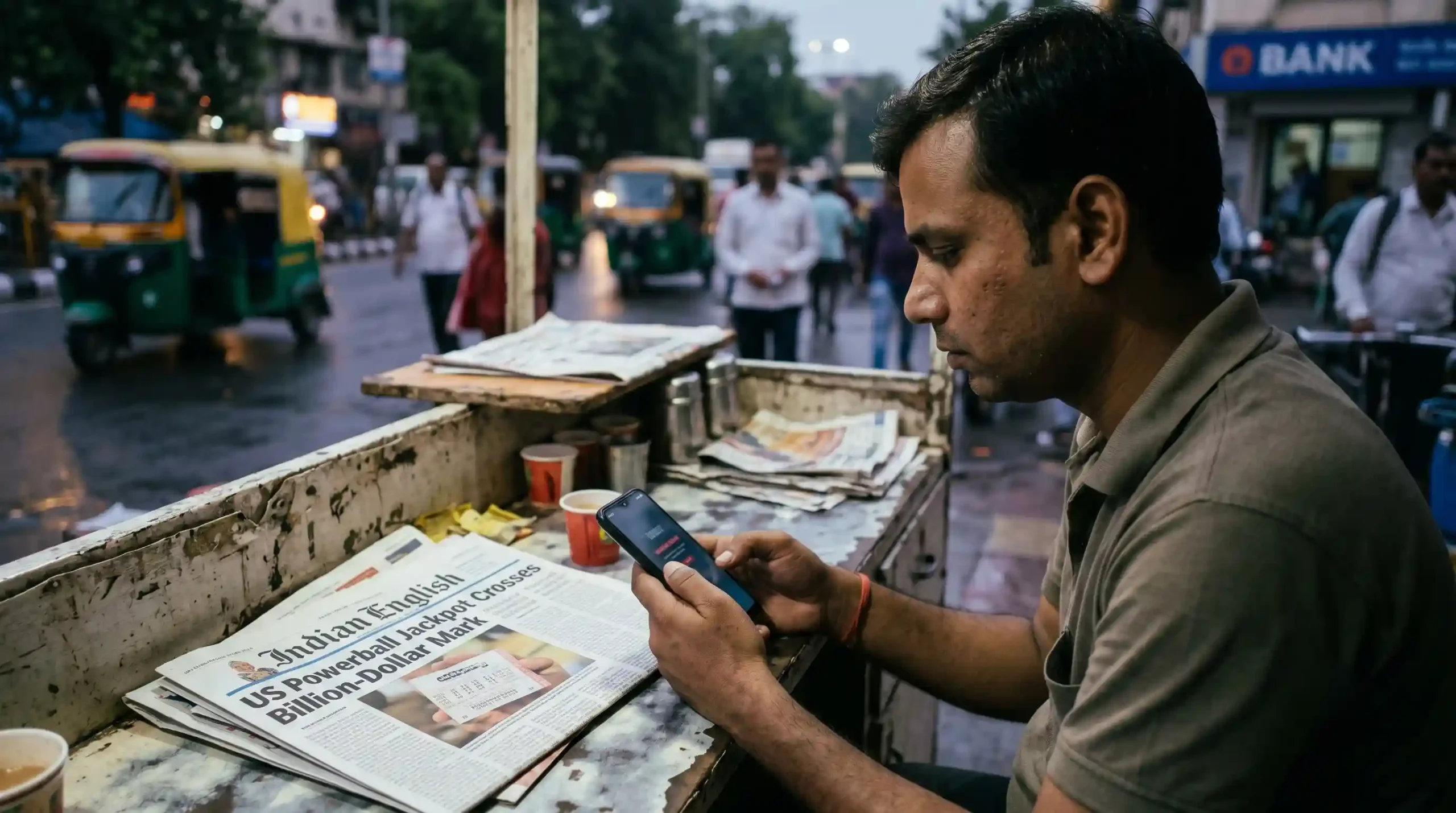
Before detailing the banking process, we must address the most common scenario. Unsolicited emails, WhatsApp messages, or SMS texts claiming you won a foreign lottery are almost always advance-fee scams.

Scammers use the names of real lotteries to trick you. They want you to pay fake “conversion fees.” Legitimate lotteries never ask you to wire money first. If you are actively being targeted, visit our Fraud & Scam Defense Hub. Learn how to protect yourself right away.

The Legitimate Process for Claiming Foreign Lottery Winnings in India

You might legally buy a ticket while physically abroad. This is the clean exception to India’s restrictive betting laws. If you actually win, you face a strict repatriation process.

Processing a legitimate prize claim means your local bank will act as a strict intermediary. They work directly with the Reserve Bank of India (RBI).

Step 1: Secure Required Proof and Documentation

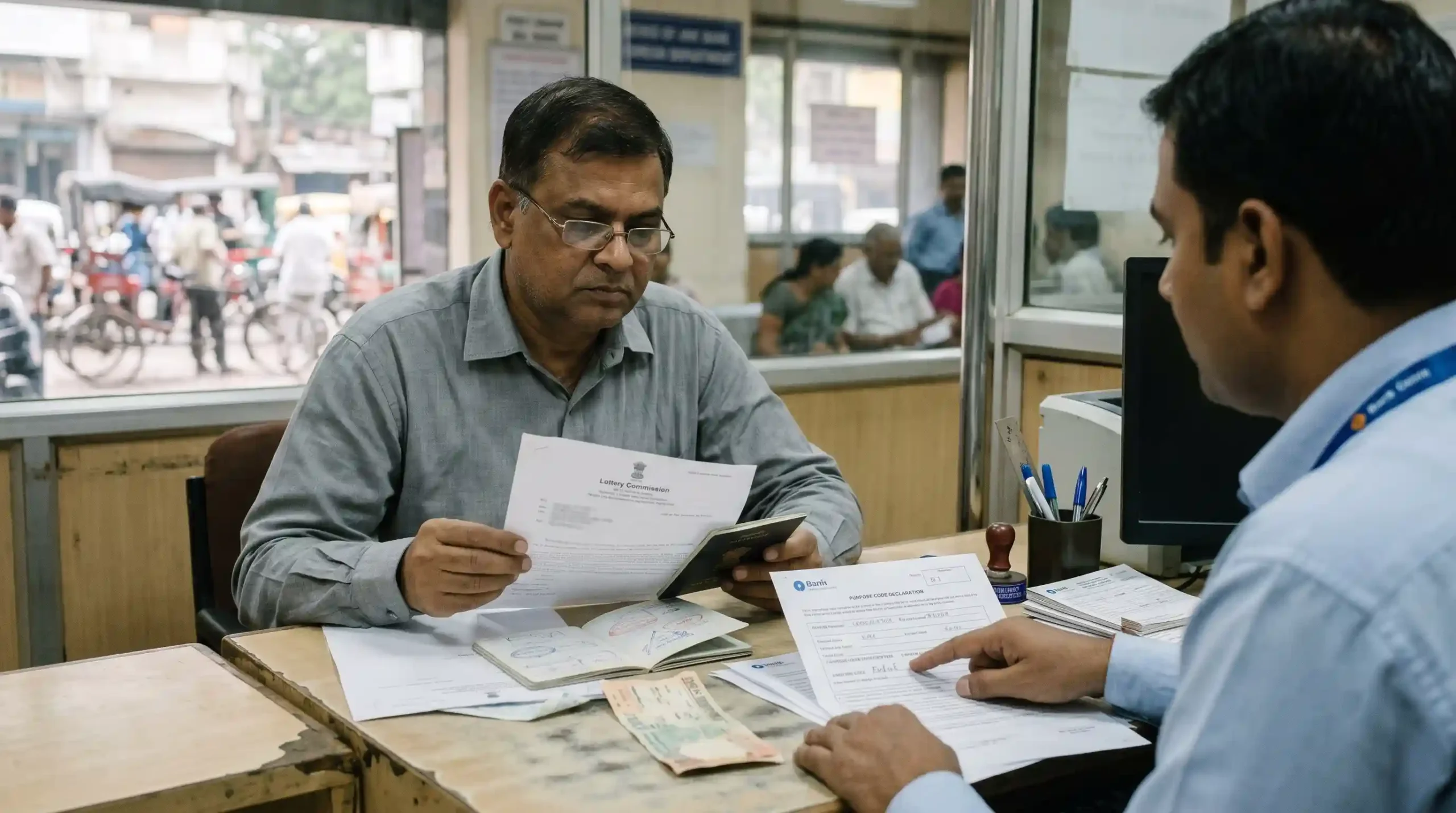
Indian banks will not process large, unexpected incoming wire transfers without verification. To satisfy anti-money laundering laws and FEMA regulations, you must provide absolute proof.

You will generally need:

  • The original physical winning paper ticket.
  • You can also use officially notarized proof of surrender.
  • Official, verifiable letters from the foreign lottery commission.
  • Proof of your legal presence in that country at the time of purchase.
  • This includes passport entry/exit stamps or a valid visa.

Step 2: Bank Verification and Forex Clearance

When the lottery commission wires the funds, they do not enter your account immediately. Instead, they are temporarily held by your Indian bank’s foreign exchange (forex) department.

You must submit a specific purpose code declaration for the incoming remittance. The bank will closely check your documents before crediting your account. If you are claiming one of the world’s biggest lottery jackpots, expect this compliance process to take significant time. It will likely involve legal counsel as well.

Winnings and the Tax Reality: 31.2% and DTAA Relief

Once the money arrives, the Income Tax Department requires its share. By law, declaring these funds on your Income Tax Return (ITR) is mandatory.

Tax Note The prize is taxed at a flat 30%, plus a 4% health and education cess. This makes the total tax exactly 31.2%.

Navigating Double Taxation

However, you might have already paid massive federal taxes in the host country. This often happens before the money is even sent. To avoid paying taxes twice on the exact same amount, you must use the Double Taxation Avoidance Agreement (DTAA).

If you are a non-resident, the rules for how an NRI can buy US lottery tickets differ regarding the initial purchase. However, repatriation still requires strict compliance. Always consult a qualified Chartered Accountant. Alternatively, read our detailed breakdown on tax on foreign lottery winnings to understand your exact liability.

Frequently Asked Questions

1. How do I claim foreign lottery winnings in India? To claim real winnings, you must process an incoming wire transfer through your Indian bank. You must provide documentary proof of the legal ticket purchase abroad. Finally, you must declare the income under FEMA and Income Tax regulations.

2. Can I legally bring foreign winnings into India? Yes. You can legally repatriate winnings into India. However, you must unequivocally prove the ticket was purchased legally. This means you were physically present in the foreign jurisdiction at that time.

3. What FEMA rules apply to repatriating winnings? FEMA strictly monitors inward remittances. Therefore, you must submit a valid purpose code to your bank. You must also provide documentation proving the funds are from a legitimate lottery win and not illegal gambling.

4. How much tax do I pay on foreign winnings? Foreign lottery winnings brought into India are taxed at a flat 30% plus a 4% cess. This results in a total tax deduction of 31.2% on the gross amount.

5. Is there relief from double taxation (DTAA)? Yes. If India has a DTAA with that country, you can claim a credit for taxes already paid abroad. A tax professional must compute this for you.

6. What proof do I need that the win is real? Your bank and tax authorities will demand the original winning ticket. They also require official lottery letters and passport stamps proving you were in the country.

7. How do I know a ‘you won’ message is a scam? If you did not personally buy a physical ticket, it is a scam. Furthermore, if the message asks for any upfront payment for “customs” or “fees,” it is fraud.

8. Which bank process handles foreign winnings? Incoming funds are routed through your bank’s foreign exchange department. They will hold the wire transfer until you submit the required FEMA purpose codes and proof.

9. Do I declare foreign winnings in my ITR? Yes. You are legally required to declare all repatriated foreign lottery winnings in your Indian Income Tax Return (ITR). Report it under “Income from Other Sources”.

10. What if I won while physically abroad? Buying a ticket while physically abroad is the only clean legal exception. You can legally claim the prize. However, you must still follow banking repatriation rules and pay the 31.2% tax.

Your Next Steps

If you are dealing with a suspicious message, stop all contact immediately. Report the incident via the 1930 cybercrime helpline.

If you have a legitimate, verified win, do not attempt to move the money yet. First, retain a qualified Chartered Accountant to guide you through FEMA compliance. To understand the broader legal landscape, review our main pillar on whether can Indians play foreign lotteries.


The World’s Biggest Lottery Jackpots, Explained

Many non-resident and resident Indians follow global lottery news with great interest. Naturally, when prizes hit astronomical figures, you might ask yourself about the biggest lottery jackpots in the world. For instance, how do these massive sums scale up, and who actually wins them?

However, before dreaming of multi-billion dollar windfalls, players from India must first check domestic legal limits. As we explained in our core reference on whether can Indians play foreign lotteries, strict cross-border payment laws heavily restrict local participation. Therefore, playing from within India carries severe financial risks.

Key Takeaways

  • The absolute world record: First, the record lottery jackpot stands at a staggering $2.04 billion, which was won in the United States in 2022.
  • US games dominate the field: Second, the US Powerball and Mega Millions games hold all of the top ten largest payouts in history.
  • Massive scaling vs strict caps: Third, while American games grow infinitely, major European alternatives use fixed prize ceilings.
  • Vastly outpaces domestic prizes: Finally, the biggest indian lottery prize maxes out at ₹25 Crore, which is completely dwarfed by multi-billion dollar global pools.

What is the Biggest Lottery Jackpot Ever Won?

When tracking history, the numbers speak for themselves. The absolute highest prize pool in human history accumulated in November 2022.

Breaking Down the $2.04 Billion Record

Specifically, a single ticket matched all winning numbers to claim a mind-boggling $2.04 billion Powerball jackpot. This monumental draw marked the first time any lottery crossed the two-billion-dollar milestone. Consequently, it set a permanent benchmark for the biggest powerball jackpot ever recorded.

Who Won the Record Jackpot?

The historic winning ticket was purchased at a local gas station in Altadena, California. Later, the lucky winner was revealed to be a California resident named Edwin Castro. Instead of taking the full amount over 30 years, he selected the immediate cash lump sum option. As a result, his initial payout before taxes was a massive $997.6 million.

Which Lottery Has the Largest Jackpots Globally?

If you are looking for consistently massive prizes, the United States is the undisputed leader. An international comparison shows that two specific games hold a monopoly on global records.

The Powerball and Mega Millions Dominance

The US Powerball and Mega Millions games hold every single spot in the global top ten list. For example, the mega millions record peaked at $1.602 billion in August 2023, which was won by a single player in Florida. Additionally, Powerball has produced multiple other jackpots crossing $1.5 billion, including a famous $1.586 billion split draw.

US Jackpots vs India’s Biggest Lottery Prize

To put it simply, the scale of these games is entirely different. For instance, the biggest indian lottery prize is the Kerala Thiruvonam Bumper, which caps its top award at ₹25 Crore (roughly $3 million). Conversely, a standard entry-level US jackpot starts at around $20 million (₹166 Crore) and scales upwards from there. Therefore, even the smallest US jackpot easily outclasses India’s largest raffle draws.

How Do Jackpots Grow So Massive?

Many lottery fans wonder how these pools reach such absurd valuations. Specifically, the astronomical growth relies on two synchronized factors: mathematical design and human behavior.

The Power of Rollover Mechanics

First, these games use a rollover system. When a drawing occurs and no player matches the exact winning numbers, the ticket revenue rolls over into the next draw. Consequently, the prize continues to snowball multiple times a week.

The Impact of Extremely Long Odds

Second, the games feature extremely long mathematical odds. For example, as we highlight in our comparison of can Indians legally play Powerball, the odds of matching all numbers are 1 in 292.2 million. Because it is so difficult to win, the jackpot safely rolls over for months. Therefore, this long dry spell allows the pool to accumulate massive wealth from millions of ticket buyers globally.

The Financial Reality: Cash Payouts and Tax Rules

While a multi-billion dollar headline sounds incredible, the real-world payout is heavily reduced by structural design and government intervention.

Are Advertised Jackpots Paid in Full?

No, winners do not receive the headline amount in a single bank transfer. To clarify, the advertised jackpot represents a 30-year annuity option. If you want your money immediately, you must choose the cash cash option. This automatically slashes the prize pool by roughly 45% to 50% right from the start.

How Are These Huge Winnings Taxed?

After the lump-sum reduction, tax authorities step in. For instance, the US Internal Revenue Service (IRS) imposes an immediate 30% federal withholding tax on non-resident alien winners. Furthermore, if you are a resident looking into the rules for tax on foreign lottery winnings, Indian law demands a flat 30% tax plus a 4% cess under local income tax provisions. Therefore, after dual-layered deductions, a winner keeps less than a third of the original publicized jackpot.

Frequently Asked Questions

Records and Comparisons

1. What is the biggest lottery jackpot ever won?

The biggest jackpot in history is the $2.04 billion Powerball prize won in November 2022. Specifically, a single lucky ticket purchased in California matched all numbers, setting an absolute global milestone for lottery payouts.

2. Which lottery has the largest jackpots?

The US Powerball and Mega Millions lotteries consistently produce the largest jackpots in the world. For example, these two American multi-state games hold every single position in the top ten largest lottery wins globally.

3. How big can Powerball and Mega Millions get?

Both games are uncapped mathematically. Therefore, the jackpots can grow infinitely until a player successfully matches the winning combination. As a result, rolled-over prize pools regularly scale past the $1.5 billion mark.

4. What’s India’s biggest lottery prize?

India’s largest prize is the seasonal Thiruvonam Bumper, organized by the Kerala State Lottery Department. Specifically, the top prize is set at ₹25 Crore. However, after structural taxes, the winner takes home roughly ₹15.75 Crore.

Mechanics and Payout Realities

5. How do jackpots grow so large?

Jackpots grow through a rollover mechanic. Specifically, if a draw produces no top-tier winner, the ticket sale revenue transfers into the next pool. Consequently, this rollover cycle compounds over months to create massive totals.

6. Who won the record jackpots?

The all-time record $2.04 billion jackpot was won by Edwin Castro in California. In contrast, other historical billion-dollar prizes have been claimed by private family trusts, office syndicates, and anonymous ticket partnerships.

7. Are advertised jackpots paid in full?

No, advertised jackpots are not paid out in full as a single cash sum. To clarify, the large headline figure represents a 30-year annuity plan. Selecting an immediate cash payout reduces the gross amount by roughly half.

Taxes and Global Eligibility

8. How are huge jackpots taxed?

Winnings face deep, multi-layered taxation. First, the US IRS automatically withholds a flat 30% federal tax from non-resident winners. Second, bringing the remaining money to India triggers a flat 31.2% domestic tax rate.

9. Why are US jackpots bigger than India’s?

US jackpots are larger because they rely on massive, multi-state player bases and exceptionally hard mathematical odds. Conversely, Indian state lotteries operate as localized raffles with fixed ticket print runs and capped revenue limits.

10. Has an Indian ever won a major world jackpot?

No resident Indian living in India has ever won a major international jackpot. This is because domestic FEMA regulations strictly prohibit citizens from remitting funds abroad to participate in foreign games or betting platforms.

Final Steps to Keep Safe

In conclusion, tracking the largest lottery win in history is highly entertaining. However, you must always separate fantasy from legal reality. For resident Indians, the strict framework of the Reserve Bank of India makes online cross-border tickets an illegal and high-risk venture.

If you want to understand how these rules apply to other major lotteries, read our comprehensive review comparing Mega Millions vs EuroMillions. To stay fully informed on domestic risks, read our central pillar explaining if can Indians play foreign lotteriessafely.

Powerball vs Kerala Bumper: The Odds Compared

Every time a huge US jackpot makes global news, players naturally wonder about the real math behind the games. How do the powerball vs kerala bumper odds really compare? On one hand, you see billion-dollar prizes abroad. On the other hand, you see festive announcements right here at home. Behind the hype, it is vital to know your true chance of winning in either game.

We previously looked at the legal rules of cross-border play in our main guide, exploring whether can Indians play foreign lotteries . Today, we will put the laws aside and look strictly at the numbers. Let’s compare the fixed math of American draws against the printed ticket runs of Indian state bumpers.

Key Takeaways

  • Powerball is fixed: The odds of winning the US Powerball are always 1 in 292.2 million, no matter how many tickets are sold.
  • Kerala depends on printing: A Kerala bumper prize depends on the total tickets sold. Usually, your chances are roughly 1 in 8 to 10 million.
  • Kerala is mathematically easier: You are much more likely to win a local bumper than the Powerball.
  • Prizes differ wildly: While easier to win, the local bumper offers a much smaller top prize than the giant US game.

Understanding Powerball vs Kerala Bumper Odds: The US Game

To understand any lottery odds comparison , you must first look at how the games are built. Powerball uses a strict drawing machine with numbered balls.

How Powerball Math Works

Players choose five numbers from 1 to 69, and then choose one red Powerball number from 1 to 26. Because of this exact math formula, the powerball odds never change. As a result, your chance of matching all six numbers is always exactly 1 in 292,201,338. You can view these exact rules on the official Powerball site.

Why Are Powerball Odds So Low?

You might wonder why the game makers make it so hard. The answer is on purpose. The game is built to be extremely hard to win. As a result, the prize pool rolls over week after week without a winner. This creates the massive, billion-dollar jackpots that drive ticket sales around the world.

Did You Know? Because the odds are 1 in 292.2 million, millions of people can play without anyone winning. This is exactly how the jackpot grows so large over several months.

How Kerala Bumper Odds Compare: The Raffle System

In contrast, the kerala bumper odds work on a completely different system. The Kerala State Lottery runs a raffle draw rather than a ball-matching game.

How the Kerala Raffle Works

Instead of picking balls to match your numbers, the state prints a limited number of physical paper tickets. Each ticket has a unique code. During the draw, a winning code is picked only from the pool of sold tickets. You can check past draw results on the Kerala State Lotteries Directorate official portal.

Figuring Out Your Real Chances

Therefore, your odds are directly tied to how many tickets are printed and sold. For massive festival draws, like the Thiruvonam Bumper, the state might print 80 lakh to 1 crore tickets (8 to 10 million). If exactly 1 crore tickets are sold, and you buy one, your odds of winning the first kerala bumper prize are exactly 1 in 10,000,000. Tax Note: Whether you win a US jackpot or a local bumper, the taxman takes a share. In India, lottery winnings face a flat 30% tax deduction at source (TDS) under Section 194B, plus a 4% health and education cess. This makes the total tax 31.2%. —

Powerball vs Kerala Bumper Odds: The Direct Match-Up

When we directly compare powerball vs kerala bumper odds, the difference is huge. Both games offer very different chances to players.

Which is Easier to Win?

Mathematically, the Kerala Bumper is much easier to win. A 1 in 10 million chance is very hard, but it is still roughly 29 times more likely to happen than a 1 in 292.2 million chance.

However, you must weigh this against the payout. The biggest Indian bumper prizes usually stop around ₹25 to ₹30 Crores. Meanwhile, US jackpots easily pass $1 billion (over ₹8,000 Crores).

Does Buying More Tickets Help?

Many players think buying a large stack of tickets greatly improves their chance of winning lottery prizes. In simple math, it does increase your odds slightly. However, in real life, the change is tiny.

For example, buying 10 Powerball tickets changes your odds from 1 in 292 million to 10 in 292 million. You still have a 99.99999% chance of losing. Buying 10 Kerala Bumper tickets gives you a 10 in 10 million chance. Therefore, always play safely. Never spend money you cannot afford to lose.

Safety Tip: When chasing huge foreign jackpots, resident Indians often use unverified online courier websites. This breaks FEMA laws. Stick to legal domestic lotteries if you live in a state where they are allowed.

Frequently Asked Questions

Basic Math and Chances

1. What are the odds of winning Powerball?

The odds of winning the Powerball jackpot are exactly 1 in 292,201,338. These odds are set by math based on the number of balls in the machine. They never change.

2. What are the odds of a Kerala bumper lottery?

The odds change depending on the specific bumper. They are set by the total number of tickets printed and sold. For major festival bumpers, your chances are usually 1 in 8 million to 1 in 10 million.

3. Which is easier to win, Powerball or Kerala bumper?

The Kerala Bumper is much easier to win. Your chances of winning a 1 in 10 million raffle are about 29 times better than winning a 1 in 292.2 million drawing game.

Game Rules and Payouts

4. Why are Powerball odds so long?

The makers design the game with extremely hard odds. This ensures that the jackpot is rarely won. The prize money then rolls over and grows into a massive sum.

5. How do the jackpot sizes compare?

Powerball jackpots have no limit and often reach billions of dollars. In contrast, the top Kerala Bumper prize is a fixed amount. It is usually between ₹10 Crore and ₹30 Crore.

6. Do better odds mean a better bet?

Not always. While Kerala gives you a better chance to win, lotteries are games of extreme chance. You will likely lose your money. Neither game is a good investment.

7. How are lottery odds calculated?

Draw games like Powerball use math to count all possible ball combinations. Raffle games like the Kerala Bumper simply divide 1 by the total number of paper tickets sold.

Real Expectations

8. Does buying more tickets meaningfully help?

No. Buying 10 or 100 tickets barely changes your chances when facing odds in the millions. It slightly increases your odds but greatly increases your money risk.

9. Which has a better prize-to-odds ratio?

Powerball often has a better ratio when the jackpot passes $1 billion. The potential payout grows huge, while the 1 in 292.2 million odds stay exactly the same.

10. What’s the realistic chance of winning either?

Realistically, the chance of winning the top prize in either game is almost zero. You should treat lottery tickets strictly as fun, not as a real financial plan.

Final Thoughts on Your Real Chances

Whether you prefer the huge payouts of global games or the better local odds, lottery math is always harsh. If you want a deeper dive into how different global games compare to each other, read our guide on Mega Millions vs EuroMillions for Indians . For a wider view of safe and legal play locally, check our Complete Guide to Lottery in India.

Mega Millions vs EuroMillions: Which for Indians?

Many non-resident Indians see massive jackpots in the news. Naturally, you might wonder about mega millions vs euromillions. For instance, can you buy a ticket from India? Can you claim a giant prize safely? The stakes are indeed very high. Therefore, a mistake with financial laws can cause serious legal trouble.

Earlier, we covered this topic in our main guide. Specifically, it explores if can Indians play foreign lotteries. To clarify, the main legal issue comes from Indian outward money transfer rules. On the other hand, foreign game rules are much less strict. Fortunately, your NRI status works in your favor.

Key Takeaways

  • Keep physical proof: Above all, you must have the actual paper ticket and a valid photo ID to claim a prize safely.
  • Citizenship is not a barrier: You do not need US citizenship to buy a ticket. Thus, you can still legally win a jackpot.
  • FEMA laws are bypassed: NRIs use their own foreign funds. Therefore, buying tickets abroad does not break India’s money transfer bans.
  • Taxes are heavy: First, the US will take federal taxes right away. Second, bringing the money to India adds more complex tax rules.

Mega Millions vs EuroMillions: Core Differences

Many people think only American citizens can play US lotteries. However, this is a common myth. In fact, it is simply not true. An international lottery comparison shows that these games welcome foreign players.

Mega Millions is a huge game played across 45 US states. It is famous for jackpots that can grow without any limits. On the other hand, EuroMillions is an international lottery played across nine European countries. This includes the UK, France, and Spain. Instead of growing forever, EuroMillions uses a strict prize limit to distribute cash to more players. Therefore, mega millions india searchers must notice these structural choices.

The Financials: Jackpots, Ticket Prices, and Payouts

When evaluating mega millions vs euromillions numbers, the differences become very clear. Both games use different rules to manage their prize money.

Which Has Bigger Jackpots?

Mega Millions definitively has bigger jackpots. Because it has no maximum cap, the prize rolls over until someone wins. This has resulted in huge payouts, including a record $1.602 billion prize. Meanwhile, EuroMillions is strictly capped at €250 million. ### Which is Cheaper to Enter?

A standard Mega Millions ticket costs $2, which is roughly ₹166. On the other hand, a EuroMillions line costs €2.50 or £2.50. This amounts to roughly ₹225 to ₹260. Therefore, the US game is slightly cheaper for players.

Lump Sum vs Annuity Payouts

This is a critical difference for winners. Mega Millions advertises a 30-year annuity jackpot. If you want the cash immediately, the cash option is roughly cut in half before taxes. In contrast, EuroMillions pays its advertised jackpot entirely as a single lump sum.

Did You Know? The publicized jackpots in the US are always the 30-year annuity figures. The actual cash value of a Mega Millions jackpot is usually about 50% of the headline number.

Winning Chances: Mega Millions Odds vs EuroMillions Odds

Bigger jackpots naturally require harder odds. Therefore, when evaluating your real chances under a mega millions vs euromillions match-up, you must check the mega millions odds and euromillions odds closely.

The euromillions odds for winning the top jackpot are exactly 1 in 139,838,160. In contrast, the mega millions odds for the top prize are a staggering 1 in 302,575,350. Consequently, it is more than twice as hard to win the US jackpot. If you want to see how these stack up against local choices, look at our guide on Powerball vs Kerala Bumper odds.

The Legal Catch: Can Indians Play Either Game?

The reality of mega millions india and euromillions india play is heavily limited by domestic laws. Therefore, you must proceed with great caution.

Do Both Face the Same FEMA Restriction?

Yes. The Foreign Exchange Management Act (FEMA) of 1999 strictly bars resident Indians from sending money out of the country for lotteries. Therefore, you cannot legally transfer rupees to buy foreign tickets from within India. ### Is Either Safer to Attempt from India?

Neither option is safe to attempt online from India. Because of FEMA, domestic players often rely on unofficial online ticket sites. However, we strongly advise against this. If a dispute over a major ticket arises, you will have no legal protection in Indian or foreign courts.

The only legal way to play is to physically travel to that country. Then, you can buy the ticket in person at an official store.

Scam Alert: If you receive an email or WhatsApp message claiming you have won a Mega Millions or EuroMillions prize that you did not explicitly buy a physical ticket for, it is an advance-fee fraud scam. Do not reply or send processing fees.

Bringing Winnings Home and the Tax Reality

Winning is certainly amazing. However, keeping the money is the real challenge. If an Indian resident or NRI wins a major jackpot, foreign governments step in immediately. For instance, the US IRS will take a flat 30% tax from non-residents. ### Indian Tax on Foreign Winnings

The tax rules get even heavier if you bring the money back to India. Specifically, this means you must follow the official rules for claiming foreign lottery winnings in India.

Dealing with Double Taxation

If you move the funds to an Indian bank account, local tax laws apply. Specifically, India taxes foreign lottery prizes at a flat 30% plus a 4% cess. As a result, this makes the total tax rate 31.2%.

Tax Note: Naturally, you do not want to pay 30% to the US and another 31.2% to India. Therefore, you must use the Double Taxation Avoidance Agreement (DTAA). Always talk to a certified chartered accountant. Learn exactly how NRI lottery winnings are taxed in India. Ultimately, this will help you claim the right tax credits. —

Frequently Asked Questions

Basic Comparisons and Odds

1. What’s the difference between Mega Millions and EuroMillions?

Mega Millions is a US lottery with uncapped jackpots that pay out over 30 years or as a smaller cash lump sum. In contrast, EuroMillions is a European game with a fixed jackpot cap that pays prizes out as a single lump sum.

2. Which has better odds for players?

EuroMillions has much better odds. Specifically, the chance of winning the EuroMillions jackpot is 1 in 139.8 million. On the other hand, Mega Millions jackpot odds are much harder at 1 in 302.6 million.

3. Which has bigger jackpots?

Mega Millions features much bigger jackpots because it has no prize cap. Therefore, rolls can push the prize past $1.5 billion. Conversely, EuroMillions is strictly capped at a maximum of €250 million.

Legal Rules and FEMA Restrictions

4. Can Indians play either of them?

Technically, foreign game rules do not bar Indian citizens. However, resident Indians are blocked by FEMA laws from sending money abroad to buy tickets. Therefore, playing via online couriers from India is a major legal risk.

5. How are winnings from each taxed in India?

If you bring the money back to India, it faces a flat 30% tax plus a 4% cess, totaling 31.2%. However, you can use DTAA rules to claim credits for taxes already paid in the US or Europe.

6. Which is cheaper to enter?

Mega Millions is slightly cheaper for players. Specifically, a standard ticket costs $2, which is about ₹166. In contrast, a EuroMillions line costs €2.50 or £2.50, which amounts to roughly ₹225 to ₹260.

7. Do both face the same FEMA restriction?

Yes. FEMA strictly prohibits all outward money transfers from India for lottery purchases or gambling. Therefore, this rule applies equally to both the US and European games.

Prize Claims and Taxation

8. Which countries can officially play each?

Mega Millions is officially played in 45 US states, Washington D.C., and the US Virgin Islands. Meanwhile, EuroMillions is officially played in nine European nations, including the UK, France, Spain, and Austria.

9. How are jackpots paid, lump sum or annuity?

EuroMillions always pays its jackpots as a one-time cash lump sum. On the other hand, Mega Millions defaults to a 30-year annuity. Choosing the immediate cash option reduces the prize significantly.

10. Is either safer to attempt from India?

Neither game is safe to play online from India. Because direct participation violates FEMA, players must use unverified courier sites. Consequently, this creates massive financial risks if you win.

Final Thoughts Before You Play

When comparing the biggest lottery jackpots in the world, both options offer immense wealth. However, for resident Indians, the legal barriers and tax realities far outweigh the odds. Always understand the risks of outward remittance laws before spending money online. For a deeper look, review our central pillar on whether can Indians play foreign lotteries.

Can an NRI Buy US Lottery Tickets? What’s Allowed

Many non-resident Indians see massive jackpots in the news. Naturally, you might wonder, can an NRI buy US lottery tickets legally? For instance, can you buy a ticket and claim a giant prize without breaking Indian or US laws? The stakes are indeed very high. Therefore, a mistake with financial laws can cause serious legal trouble.

Earlier, we covered this topic in our main guide. Specifically, it explores if can Indians play foreign lotteries . To clarify, the main legal issue comes from Indian outward money transfer rules. On the other hand, US game rules are much less strict. Fortunately, your NRI status works in your favor.

Key Takeaways

  • Keep physical proof: Above all, you must have the actual paper ticket and a valid photo ID to claim a prize safely.
  • Citizenship is not a barrier: You do not need US citizenship to buy a ticket. Thus, you can still legally win a jackpot.
  • FEMA laws are bypassed: NRIs use their own foreign funds. Therefore, buying tickets abroad does not break India’s money transfer bans.
  • Taxes are heavy: First, the US will take federal taxes right away. Second, bringing the money to India adds more complex tax rules.

The Big Question: Can an NRI Buy US Lottery Tickets and Win?

Many people think only American citizens can play US lotteries. However, this is a common myth. In fact, it is simply not true. US lotteries definitely allow non-citizen residents to play and win locally.

Official Rules for Non-Citizens

First and foremost, US lotteries welcome non-citizens. For example, this includes NRIs on work visas, student visas, or green cards. As a result, when people ask, can an NRI buy US lottery tickets, the answer is a resounding yes. You can safely buy tickets and claim prizes. But, there is one strict rule. Specifically, you must buy the ticket legally from an official store. Furthermore, the store must be inside a participating state.

You might wonder if you can legally play Powerball . As an Indian national living in the US, the answer is undoubtedly yes. Just make sure you follow local state laws closely.

Safety Tip: Never use unauthorized third-party courier websites to buy tickets. Consequently, if you win a huge jackpot, you need the actual paper ticket. Ultimately, the lottery commission only accepts the physical ticket as legal proof.

NRI vs Resident Indian: Why FEMA Matters

Resident Indians face major legal hurdles to buy US tickets. Primarily, the main reason is the Foreign Exchange Management Act (FEMA) of 1999. Overall, the FEMA issue is for India-resident buyers.

The Strict RBI Guidelines

The Reserve Bank of India (RBI) has strict rules. For instance, it stops resident Indians from sending money out of the country. Therefore, you cannot send money abroad to buy lottery tickets or gamble. ### Why the Rules Differ for NRIs

So, why is this different for an NRI? To begin with, an NRI buys a ticket in the US using local money. In other words, this is money earned abroad. Consequently, no funds cross Indian borders to pay for the ticket.

Because of this, you do not break FEMA rules. After all, FEMA focuses on money leaving India. Therefore, your NRI status legally protects you from these domestic bans.

Bringing Winnings Home and the Tax Reality

Winning is certainly amazing. However, keeping the money is the real challenge. If an NRI wins a major US jackpot, the US government steps in. Immediately, the Internal Revenue Service (IRS) will take federal taxes.

For non-resident aliens, this tax rate is usually a flat 30%. In addition, you may also owe local state taxes. ### Indian Tax on Foreign Winnings

You might choose to keep the money in a foreign bank. If so, it usually stays outside the Indian tax system. Generally, NRIs only pay Indian tax on money earned or received in India.

But, you might want to bring the money home. Consequently, this means you must follow the rules for claiming foreign lottery winnings in India .

Dealing with Double Taxation

If you move the funds to an Indian NRO account, Indian tax laws apply. Specifically, India taxes lottery winnings at a flat 30%. Moreover, they also add a 4% health and education cess. As a result, this makes the total tax rate 31.2%.

Tax Note: Naturally, you do not want to pay 30% to the US and another 31.2% to India. Therefore, you must use the Double Taxation Avoidance Agreement (DTAA). Always talk to a certified chartered accountant. Learn exactly how NRI lottery winnings are taxed in India . Ultimately, this will help you claim the right tax credits. —

Frequently Asked Questions

1. Can an NRI buy US lottery tickets?

Yes. Generally, US lotteries allow non-citizen residents to play and win locally. Therefore, citizenship is not a requirement to buy a ticket.

2. Do US lotteries allow non-citizens to play and win?

Yes. Indeed, non-citizen residents can legally play and win. You just need to buy the ticket legally from an official store in the state.

3. Is it different for an NRI vs a resident Indian?

Yes. Mainly, the FEMA issue is for India-resident buyers. In contrast, NRIs use their own foreign funds. Thus, this bypasses outward money rules.

4. Can an NRI bring lottery winnings back to India?

Yes. An NRI can send winnings to an Indian bank account. However, you must show documents proving it is a legal lottery prize.

5. How are an NRI’s foreign lottery winnings taxed?

First, they face US tax. Later, if brought to India, Indian tax laws apply. Therefore, you must use the DTAA to claim tax credits and avoid double paying.

6. Does FEMA apply to an NRI playing abroad?

No. Specifically, FEMA targets money leaving India. Since NRIs use foreign money outside of India, this avoids the strict outward bans.

7. Can an NRI play online from outside India?

Yes, if you live in a US state with official online lottery sales. On the other hand, avoid using unofficial offshore courier sites because they carry high risks.

8. What proof is needed to claim as an NRI?

First, you need the original winning paper ticket. Second, you also need a valid photo ID, like a passport, to prove your identity.

9. Is there double taxation on US lottery wins?

It is definitely possible. However, the DTAA between India and the US helps. Specifically, it lets taxpayers claim a credit for taxes paid in the US.

10. Should an NRI declare foreign winnings in India?

Yes. Ultimately, if you move the funds to India, you must declare them. Furthermore, you should report this money on your Indian Income Tax Return.

Next Steps for NRIs

In conclusion, playing the lottery as an NRI is legal. However, the tax rules are very complex. Therefore, always keep your physical tickets safe. Most importantly, if you win, speak to a tax expert before moving funds. To learn more about local limits, read our main guide on whether can Indians play foreign lotteries .

Can Indians Legally Play Powerball? The Honest Answer

When the US Powerball jackpot crosses the billion-dollar mark, players worldwide want a ticket. If you are reading this, you are likely wondering: can Indians legally play Powerball?

The honest answer is that while US rules do not ban you, Indian financial laws heavily restrict you. Not cleanly from India: FEMA restricts the payment, though winners abroad can claim.

Before you try to play Powerball from India, you need to understand the serious legal and financial boundaries involved. For a broader overview of the global landscape, read our primary pillar on whether Indians can legally play foreign lotteries.

Key Takeaways

  • FEMA Blocks Payments: The Reserve Bank of India bars you from sending money out of India to buy a Powerball ticket.
  • US Rules Allow Non-Citizens: Non-US residents can legally win Powerball with a valid, physical ticket.
  • Couriers Are Risky: Third-party websites that buy tickets on your behalf operate in a legal gray area that we do not endorse.
  • High Taxation: If you win legally while abroad, India taxes foreign lottery winnings at a flat 31.2%.

The US Rulebook: Who Is Allowed to Win?

From the perspective of the Multi-State Lottery Association (MUSL) in the United States, there are no nationality restrictions on who can play or win.

If you hold a valid, winning ticket purchased from an authorized retailer within a participating US jurisdiction, you are eligible to claim the prize. This makes the us lottery for indians entirely legal under American law.

The legal friction does not come from the US side—it comes from India.

The Indian Rulebook: Why FEMA Blocks You

If you want to know if is Powerball India legal, you have to look at how you are paying for the ticket.

Under the Foreign Exchange Management Act (FEMA) of 1999, the Reserve Bank of India (RBI) strictly regulates outward remittances.

Indian financial law explicitly categorizes sending money abroad for lottery tickets, sweepstakes, or gambling as a prohibited transaction.

  • You cannot legally use an Indian credit card, debit card, or bank account to buy an international ticket.
  • Banks are legally required to block these transactions.
  • Attempting to bypass these banking controls can result in severe penalties or account freezes.

This means paying from India hits FEMA restrictions directly.

How Would an Indian Even Buy a Ticket?

Because of banking blocks, many players turn to a Powerball ticket courier or messenger website.

These platforms claim to buy physical tickets in the US on your behalf and upload a scanned copy to your account. While they market themselves heavily during massive draws, they present severe risks.

Safety Tip: The Courier Trap Courier and messenger routes are a gray-area we do NOT endorse or link. Funding these accounts from India usually violates FEMA laws. Furthermore, these sites operate entirely outside Indian consumer protection jurisdiction. If a platform refuses to pay out or disappears, Indian authorities cannot recover your funds.

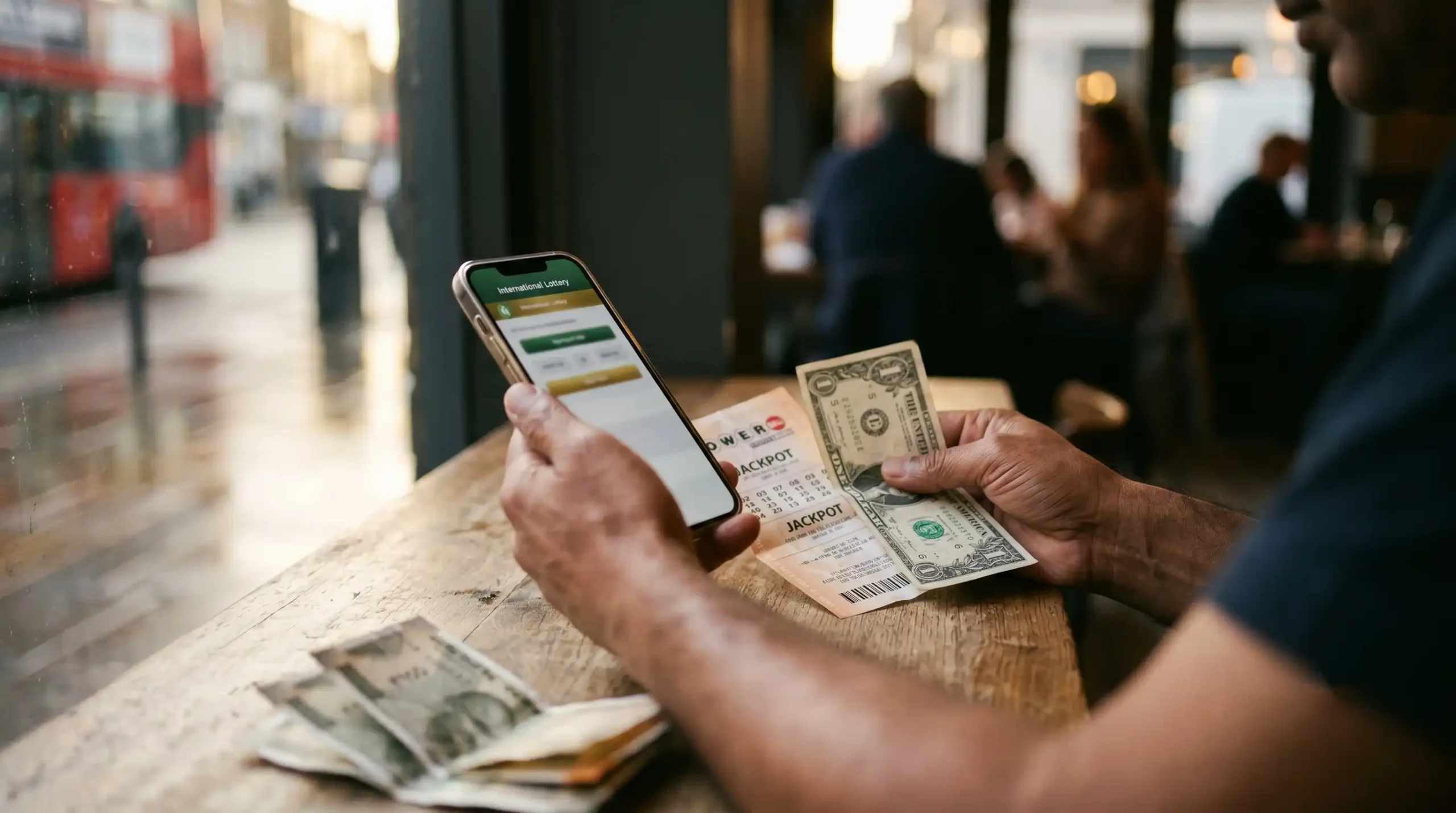
The only genuinely clean, legal way for an Indian citizen to buy a Powerball ticket is to purchase it in person while physically traveling in the United States.

Taxes and Claiming Realities

If you are lucky enough to legally secure a ticket while abroad and win, bringing the money home requires strict compliance.

Tax Liability

Under Section 115BB of the Income Tax Act, all lottery winnings are taxed at a flat 30%, plus a 4% health and education cess.

This brings the effective tax rate to 31.2%. You must declare these winnings in your Income Tax Return. For a complete breakdown of compliance, read our dedicated guide on how foreign lottery winnings are taxed in India. Before dreaming of the world’s biggest lottery jackpots, it is vital to weigh these Powerball odds and legal hurdles carefully.

Frequently Asked Questions (FAQ)

1. Can Indians legally play Powerball? Not cleanly from India. While US rules allow anyone to win, Indian law (FEMA) prohibits sending money out of the country to buy lottery tickets. The only completely legal way is buying a ticket in person while in the US.

2. Do you need to be a US citizen to win Powerball? No. Non-US residents can win Powerball with a valid ticket. The lottery operators do not restrict winners based on nationality, provided the ticket was legally purchased from an authorized retailer.

3. How would an Indian even buy a Powerball ticket? Online, players often try to use a Powerball ticket courier site. However, funding these sites from India violates banking laws. Legally, an Indian would need to buy it physically while traveling in the US.

4. Does FEMA block paying for Powerball from India? Yes. The Reserve Bank of India, under FEMA regulations, classifies outward remittances for the purchase of lottery tickets as strictly prohibited transactions. Banks will block direct payments.

5. Are Powerball courier or messenger sites legal in India? Courier/messenger routes are a gray-area. Because they require sending money abroad for lotteries—which FEMA prohibits—using them is risky, and they offer no legal protection under Indian law.

6. What tax applies if an Indian wins Powerball? If you legally claim a prize and bring it to India, it is subject to a flat 30% tax plus a 4% cess, making the effective rate 31.2% under Section 115BB of the Income Tax Act.

7. Can I claim a Powerball prize from India? Yes, winners abroad can claim. If you hold a valid, legally purchased ticket, you can claim the prize. However, repatriating the funds to India requires strict FEMA and tax compliance.

8. What are Powerball’s odds of winning? The odds of winning the Powerball jackpot are incredibly slim, standing at approximately 1 in 292.2 million. The odds are identical for every player, regardless of where they are from.

9. Has anyone from India won Powerball? While people of Indian origin (such as NRIs or US residents) have won various US lottery prizes, there are no notable records of an Indian citizen winning the Powerball jackpot while residing in India.

10. Is playing Powerball from India worth the risk? Given the strict FEMA rules blocking outward remittances and the lack of consumer protection on gray-area courier websites, playing directly from India carries significant financial and legal risks that generally outweigh the extremely long odds.

What to Do Next:

If you are weighing the risks of international games, see how these US jackpots stack up against European alternatives in our comparison of Mega Millions vs EuroMillions.

Always remember that unsolicited messages claiming you have won an international lottery are advance-fee scams. Do not pay them.

Can Indians Play Foreign Lotteries? The Legal Reality

LEGAL & SAFETY WARNING

There is no officially approved, legally protected way to buy foreign lottery tickets online directly from India using Indian rupees. Under the Foreign Exchange Management Act (FEMA), sending money out of India to play the lottery is strictly banned. Trying to get around these laws using third-party courier websites carries high financial risk, and your money or winnings could be frozen.

Big, billion-dollar international jackpots are very tempting, leading many people to ask: can Indians play foreign lotteries? Every time a record-breaking prize makes global news, players naturally wonder if they can join in. But the reality of trying to play foreign lottery from india is very complicated.

It is a legal gray area that leans heavily toward restricted. Indian law does not let you just swipe a credit card and buy a ticket from overseas.

Whether you are wondering is online lottery legal india or if you can use an international courier app, this guide explains the exact legal hurdles, the FEMA money rules, and the real risks involved before you spend a single rupee.

Key Takeaways

  • FEMA Restrictions: The Reserve Bank of India strictly stops you from sending money out of India to buy lottery tickets.
  • Courier Risks: Third-party websites that buy tickets for you operate in a risky middle ground; we do not endorse or link to them.
  • State Bans Apply: If your specific Indian state bans lotteries, joining an international lottery india adds severe local legal risks.
  • The Clean Exception: Buying a ticket in person while physically traveling abroad is perfectly legal.
  • Taxation: If you do legally win while abroad, the Indian government taxes foreign lottery wins at a flat rate of 31.2%.

The Core Issue: Can Indians Play Foreign Lotteries Under FEMA?

The biggest roadblock to foreign lottery legality is not the lottery companies themselves—it is India’s financial rules.

Foreign lotteries usually do not care about the nationality of the winner. If you hold a valid, winning ticket, they will pay you. However, the Indian government strictly controls how Indian rupees can leave the country.

Why Buying Tickets Online Hits a Legal Wall

Under the Foreign Exchange Management Act (FEMA) of 1999, the Reserve Bank of India (RBI) controls money sent abroad.

The law clearly lists sending money for lottery tickets, sweepstakes, and banned magazines as forbidden transactions. This means:

  • You cannot use an Indian credit card, debit card, or bank transfer to buy a foreign ticket.
  • Your bank must legally block transactions flagged as gambling or lottery buys.
  • Trying to get around this with FEMA lottery remittance loopholes (like using hidden crypto channels) is illegal and can get your bank account frozen.

This is the main reason why finding a simple answer to how can indians play foreign lotteries like Powerball from home is so difficult.

State Bans and Online Gaming Rules

Lotteries in India are controlled by state governments. Each state decides whether to allow, regulate, or ban them entirely.

Can You Play if Your State Bans Lotteries?

Right now, only 13 Indian states allow lotteries. If you live in a state where lotteries are completely banned—like Bihar, Delhi, or Karnataka—joining an offshore lottery makes your legal risk much worse. State police can and do charge people for joining banned online gambling activities.

The Impact of PROGA 2025 and the IT Act

The Prevention and Regulation of Online Gaming Act (PROGA) 2025, along with the Information Technology (IT) Act, adds more limits.

Under these laws, the government often orders internet providers to block offshore betting and unapproved lottery websites. Using a VPN to visit these sites breaks the rules of the lotteries and skirts Indian cyber laws.

The Clean Exception: Buying While Traveling

When asking whether can Indians play foreign lotteries legally, there is one completely clear exception: buy the ticket while you are physically in that country.

If you travel to the US on a tourist visa, you are free to walk into a store, buy a ticket with local cash, and claim the prize if you win.

The same rules apply to NRIs living abroad.

The legal problem only happens when you try to move money from India to an overseas business.

The Reality of Foreign Lottery Courier Websites

Many players look for shortcuts using online lottery courier or messenger services. These companies say they will buy physical tickets for you in the host country and upload a scanned copy to your account.

Why We Do Not Endorse Courier Sites

These websites exist in a legal gray area. Because FEMA stops money from leaving India for lotteries, adding money to these third-party wallets can break Indian financial laws. Also, these sites operate outside Indian consumer protection rules. If they refuse to pay your winnings or disappear with your money, Indian police cannot help you. We intentionally do not link to these services.

Tax Rules on Foreign Winnings

If you do manage to legally win—for example, while traveling—bringing that money back to India brings strict tax duties.

Tax Reality

Under Section 115BB of the Income Tax Act, all lottery winnings (local or foreign) are taxed at a flat 30%, plus a 4% health and education cess. This makes the final tax rate 31.2%. You cannot deduct the cost of your tickets.

Also, you might face taxes in the host country. While Double Taxation Avoidance Agreements (DTAA) might give some relief, you must report these winnings in your tax return. For a full guide, read our page on how foreign winnings are taxed in India.

Frequently Asked Questions (FAQ)

Legal and Payment Rules

1. Can Indians legally play foreign lotteries?

It is a restricted legal area. While foreign lotteries do not ban Indians from winning, Indian law (FEMA 1999) stops you from sending money out of the country to buy lottery tickets. Playing is only cleanly legal if you physically buy the ticket abroad.

2. Does FEMA allow paying for foreign lottery tickets?

No. The Foreign Exchange Management Act (FEMA) and the RBI’s Liberalised Remittance Scheme clearly ban sending money abroad to buy lottery tickets, sweepstakes, or related gambling games.

3. Is it legal to play Powerball or EuroMillions from India?

Doing so directly from India using online platforms breaks FEMA money rules. While third-party messenger sites offer access, they operate in a risky legal area and are not approved by the Indian government.

State Laws and Website Blocking

4. Can I play a foreign lottery if my state bans lottery?

No. If your home state (like Delhi or Bihar) completely bans lotteries, joining any lottery—domestic or international—carries heavy local legal risks. State laws apply to your online actions inside that area.

5. Does the 2025 Online Gaming Act cover foreign lotteries?

Yes. PROGA 2025 and the IT Act strictly control real-money games and gambling. The government uses these laws to actively block access to offshore betting and unapproved international lottery websites.

6. Is buying a foreign ticket while abroad legal?

Yes. This is the clean exception. If you are physically present in the foreign country (as a tourist, worker, or NRI) and buy a ticket locally using local money, it is completely legal.

Taxes, Risks, and Scams

7. Are foreign lottery winnings taxed in India?

Yes. If you bring legal foreign lottery winnings back to India, they are taxed under Section 115BB at a flat rate of 30%, plus a 4% cess, totaling 31.2%. They must be declared in your tax return.

8. Can the government block foreign lottery websites?

Yes. Under the Information Technology Act, the Ministry of Electronics and Information Technology (MeitY) routinely tells internet providers (ISPs) to block unapproved offshore gaming and lottery websites to protect users.

9. Are foreign lottery courier sites legal in India?

They operate in an unregulated, risky area. Funding these accounts from India usually breaks FEMA rules. Because they are not recognized under Indian law, you have no legal help if you are scammed.

10. What are the risks of playing a foreign lottery?

The main risks include breaking FEMA rules, having your bank account frozen for illegal money transfers, heavy tax duties, and falling for advance-fee scams that offer fake lottery prizes.

What to Do Next:

If you get an out-of-the-blue message saying you have won an international prize, it is almost certainly a fake-fee fraud.

Read our complete guide to foreign lottery scams to protect yourself.

If you legally won a prize while abroad, review the strict steps for claiming a foreign lottery prize from India to ensure you follow FEMA and tax laws safely.

Global Lottery Landscape: A Complete Guide to World Lotteries

global lottery landscape

When examining the global lottery landscape, it becomes clear that the lottery is much more than just a local tradition. In India, millions of people interact with daily draws like the Nagaland State Lottery, checking results on their phones or at local kiosks. However, the concept of the lottery stretches far beyond any single country’s borders.

From the ancient dynasties of China to the multi-billion-dollar jackpots of the modern United States, lotteries have shaped economies, funded massive infrastructure projects, and captured the human imagination.

This comprehensive guide explores the world lottery landscape. We will travel through the ancient history of lotteries, examine how giants like the US Powerball and Europe’s EuroMillions operate, look at the biggest jackpots in human history, and understand how governments worldwide use lottery revenue for economic development.


The Ancient History of the Global Lottery Landscape

The modern paper ticket you hold in your hand has ancestors dating back over two millennia. The fundamental concept of the lottery – pooling resources for a chance at a randomized reward – is deeply embedded in human civilization.

The Chinese Origins: Keno and the Great Wall

The earliest recorded lotteries date back to the Chinese Han Dynasty (between 205 and 187 BC). Ancient Keno slips have been discovered from this era. Historians believe these early lotteries were established by the government to fund major state projects, including the construction of the Great Wall of China, without having to raise taxes on the populace.

The Roman Empire: Dinner Parties and Civic Funding

In the West, lotteries began as entertainment. During the Roman Empire, high-status dinner parties featured a primitive form of lottery where every guest received a ticket, and prizes consisted of fancy dinnerware or luxury items.

However, it was Emperor Augustus Caesar who introduced the first public lottery in Europe. The funds raised from the sale of tickets were used for civic repairs in the City of Rome, and the winners received prizes in the form of articles of unequal value.

The European Renaissance

The word “lottery” itself is believed to come from the Dutch word lot, meaning “fate.” In the 15th century, towns in the Netherlands and modern-day Belgium held public lotteries to raise money for town fortifications and to help the poor. This model laid the groundwork for state-sponsored lotteries worldwide.


How Lottery Works in the United States: Powerball and Mega Millions

When people think of life-altering, unimaginable wealth, they usually think of the United States lottery system. Unlike India, where lotteries are strictly state-managed affairs, the US features massive multi-jurisdictional games that pool players from over 40 states.

The Mechanics of Powerball and Mega Millions

The two titans of the American lottery world operate on a “progressive jackpot” system. If no one matches all the winning numbers in a draw, the jackpot rolls over to the next draw, growing larger each time. This creates a snowball effect, frequently resulting in jackpots exceeding $1 billion.

  • Ticket Cost: A standard ticket usually costs $2.
  • The Odds: The odds of winning the Powerball jackpot are incredibly steep – about 1 in 292.2 million.
  • The Payout Structure: Winners have a crucial choice. They can take their winnings as an “annuity” (paid out over 30 years) or take a “lump sum” cash option, which is significantly smaller than the advertised jackpot but paid immediately.

The sheer scale of these games creates global news, driving “lottery fever” where people who never usually play suddenly buy tickets just to be part of the cultural moment.


European Lotteries: EuroMillions and El Gordo Explained

Europe offers a different approach to the lottery, focusing on transnational cooperation and deeply ingrained cultural traditions.

EuroMillions: The Transnational Giant

Launched in 2004, EuroMillions is a transnational lottery requiring seven correct numbers to win the jackpot. It is co-organized by the national lotteries of countries like the UK, France, Spain, and others. Because it pools the populations of multiple European nations, the jackpots routinely reach hundreds of millions of euros. Notably, unlike the US where winnings are heavily taxed, many European countries pay out lottery winnings tax-free.

Spain’s El Gordo: The Fat One

Perhaps the most unique lottery in the world is the Sorteo Extraordinario de Navidad, Spain’s Christmas Lottery. Its massive prize pool has earned it the nickname “El Gordo” (The Fat One).

Instead of a progressive jackpot that makes one person a billionaire, El Gordo is designed to share the wealth.

  • Tickets are pre-printed with five-digit numbers.
  • Because full tickets are expensive (around €200), they are divided into décimos (tenths) costing €20.
  • Entire villages, families, or groups of coworkers often buy décimos of the same number.

When a number wins, the prize is shared among everyone holding a fraction of that ticket. This creates a massive, communal celebration across Spain every December 22nd.


Biggest Jackpots in the Global Lottery Landscape

The scale of international jackpots is staggering, especially when converted to Indian Rupees. Here are the historic milestones that changed the global lottery landscape:

  • $2.04 Billion (Powerball, USA, 2022): The largest single lottery payout in world history. A single ticket purchased in California claimed this astronomical sum.
  • $1.586 Billion (Powerball, USA, 2016): This historic jackpot was split between three winning tickets in California, Florida, and Tennessee.
  • $1.537 Billion (Mega Millions, USA, 2018): Won by a single ticket in South Carolina.
  • €240 Million (EuroMillions, Europe, 2023): An Austrian player claimed the maximum capped jackpot for the European game.

To put this in perspective, the first prize for a daily Lottery Sambad draw in India is typically one crore rupees (approx. $120,000 USD). The global jackpots operate in an entirely different financial stratosphere, but with dramatically lower odds of winning.


How Governments Shape the Global Lottery Landscape

A fundamental question about state-sponsored lotteries is: Where does the money go? Globally, modern lotteries are essentially voluntary taxes. Governments use the proceeds to fund public goods without raising mandatory income or sales taxes.

  • United States: Most states earmark lottery revenue specifically for public education, funding scholarships, school construction, and teacher pensions.
  • United Kingdom: The UK National Lottery is famous for its “Good Causes” fund. It heavily subsidizes the arts, national heritage sites, charities, and Olympic sports training.
  • India: Similar to global models, Indian states use lottery revenue for public welfare. For example, the Kerala State Lottery funds the Karunya health insurance scheme, which provides medical assistance to underprivileged families. Revenue from Nagaland and West Bengal lotteries also flows into state development and public infrastructure.

To dive deeper into how the legal and financial frameworks operate locally, read our Complete Guide to Lottery in India – History & Legality.


Lottery and Economic Development: What Research Shows

Economists have long debated the role of lotteries in economic development. The research presents a complex picture of benefits and drawbacks.

The Economic Benefits

Lotteries are highly efficient revenue generators for governments. They create jobs in retail, distribution, and printing. The funds raised can fast-track public works—such as hospitals and schools—that might otherwise stall due to budget deficits.

The Economic Criticisms

However, researchers consistently highlight a “regressive” nature to lottery sales. Studies in North America and Europe show that lower-income households tend to spend a higher percentage of their income on lottery tickets compared to wealthier households. When viewed as a voluntary tax, this means the financial burden falls disproportionately on those least able to afford it.

This is why regulatory frameworks are vital. Understanding the balance between economic generation and consumer protection is crucial for any state running a lottery.


Comparing the Global Lottery Landscape to the Indian System

Understanding the global landscape helps contextualize the Indian experience.

While US and European players wait days or weeks for massive progressive draws, Indian players engage in a high-frequency, low-cost model. The Lottery Sambad: History, Draws, Prizes, and How to Check Results guide explains how tickets cost just six rupees, with draws happening three times a day.

Furthermore, while the US operates multi-state games, the Indian Supreme Court allows individual states to ban the sale of lottery tickets from other states. Currently, only 13 Indian states legally conduct lotteries.

Taxation also differs wildly. While countries like the UK have no tax on lottery winnings, India imposes a strict 30% flat tax (plus cess) under Section 194B of the Income Tax Act.


Playing Globally, Playing Safely

Whether you are dreaming of a billion-dollar American jackpot or checking your daily Nagaland State Lottery ticket, the psychology of the game remains exactly the same. The thrill of the “affordable dream” is a universal human experience.

However, the risks are also universal. Problematic play and gambling disorders affect a percentage of players worldwide.

Global best practices dictate that players should set strict budgets, treat lottery tickets as entertainment rather than investments, and never chase losses. For a detailed look at how to protect yourself mentally and financially, explore our dedicated pillar on Responsible Lottery Awareness for Lottery Sambad Players in India.


Frequently Asked Questions (FAQ)

Can an Indian citizen play international lotteries like Powerball or EuroMillions?

Yes, but with caveats. Indian citizens can legally play international lotteries through authorized online courier services that purchase physical tickets on their behalf. However, players must comply with India’s Foreign Exchange Management Act (FEMA) regarding international transactions, and any winnings brought into India are subject to heavy taxation.

Which country has the oldest continuously running lottery?

The Netherlands holds this record. The Staatsloterij (State Lottery) was established in 1726 and has been running continuously ever since.

Are international lottery winnings taxed in India?

Yes. If an Indian resident wins an international lottery, the winnings are subject to Indian income tax laws (typically a flat 30% under Section 194B, plus applicable surcharges), regardless of the tax laws in the country where the lottery originated.

Why doesn’t India have a massive national jackpot like the US Powerball? Lotteries in India are governed at the state level under the Lotteries (Regulation) Act, 1998. Because there is no centralized national lottery operator, and states operate their own independent games, a unified, cross-country progressive jackpot does not currently exist.

Is the lottery considered gambling globally? Legally, it varies. Most international jurisdictions classify lotteries as a specialized form of state-sanctioned gaming, heavily regulated and separated from private casino gambling. In India, state-run lotteries are specifically exempted from the definition of illegal gambling under the Public Gambling Act, provided they follow state regulations.


This pillar article is part of our comprehensive educational series at LotterySambadResult.news. We are dedicated to providing clear, factual, and responsible information regarding lotteries in India and around the globe.